
Amazon Invests Rp16 Trillion in CIA Modernisation, Agency Chief Calls AI a 'Digital Nuclear Weapon'
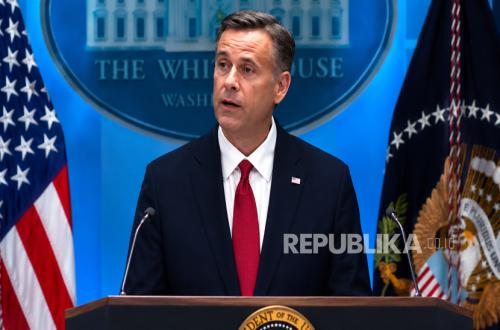
Amazon Web Services (AWS) is injecting an investment of US$1 billion, or approximately Rp16 trillion, to help the CIA and other United States intelligence agencies modernise their technology systems. The investment will be used to accelerate the migration of legacy systems to high-speed cloud infrastructure while supporting the development of classified applications for the US intelligence community. The investment announcement was made at an AWS summit attended by CIA Director John Ratcliffe. On the occasion, Ratcliffe explained why technological modernisation has become a top priority for the American intelligence agency. According to Ratcliffe, the development of artificial intelligence (AI) has fundamentally changed the face of global competition. He even stated that the capabilities of the latest generation of AI models deserve to be likened to a ‘digital nuclear weapon’. ‘As we have discussed, it is not wrong to call their capabilities akin to a digital nuclear weapon,’ Ratcliffe said, as reported by a number of American media outlets on Tuesday (30/6/2026). He explained that AI technology is no longer just a tool, but a transformative technology that will determine a country’s superiority in the fields of intelligence, cyber security, and military operations. For this reason, the CIA is now undertaking a major reorganisation to be able to adopt new technology much faster. Ratcliffe said his agency will use technology more aggressively, strengthen its offensive cyber operations division, and take what he called ‘smart risks’, while still maintaining humans as the primary decision-makers. CIA Director John Ratcliffe used the term ‘digital nuclear weapon’ to describe the magnitude of the impact artificial intelligence can have on national security and the global balance of power. In his view, AI is no longer just a supporting technology, but a strategic capability that can alter the course of competition between nations, much like nuclear weapons changed the geopolitical landscape in the 20th century. However, the term does not mean AI has the physical explosive power of a nuclear bomb. What Ratcliffe meant is AI’s ability to produce enormous effects in the digital domain. AI can analyse massive amounts of data in seconds, find patterns difficult for humans to detect, automate cyber operations, and accelerate decision-making in military and intelligence operations. In the intelligence context, AI can also speed up target identification, map adversary communication networks, process satellite imagery, detect cyber threats, and help design more precise digital attacks. The country that masters the most advanced AI technology potentially gains a significant advantage in defence, cyber security, and the collection of classified information. Ratcliffe assessed that AI development is progressing much faster than many parties anticipated. He even said the capabilities of the latest generation of AI models have exceeded experts’ expectations, forcing intelligence agencies to change their strategies. It is for this reason that the CIA is accelerating the adoption of new technology, forming a stronger cyber intelligence centre, and expanding its offensive cyber operations capabilities.