
AMALI Urges Government to Fund Pesantren Proportionally
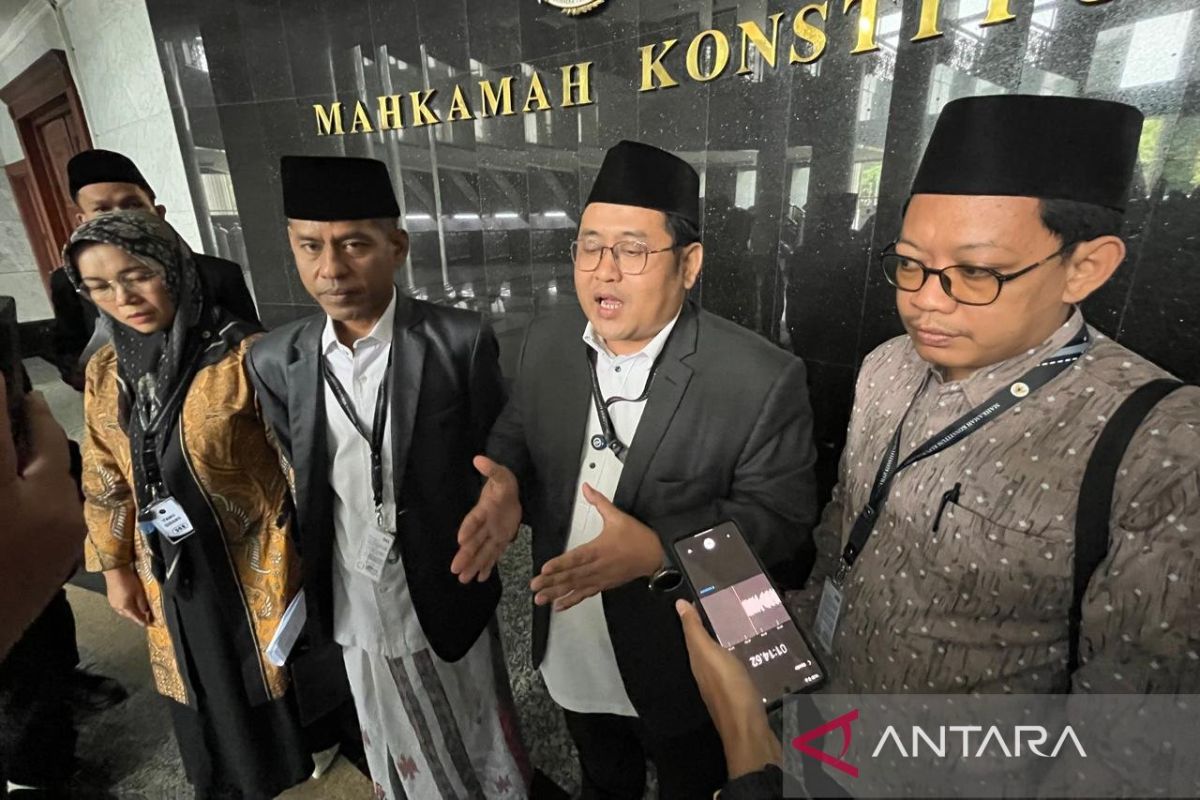
Jakarta (ANTARA) - The Indonesian Ma’had Aly Association (AMALI) is urging the state to fund pesantren-based education—including Formal Diniyah Education (PDF), Muadalah Education Units, and Ma’had Aly—proportionally, as mandated by the Pesantren Law.
This statement was made by the Chairman of AMALI, Nur Salikin, during a hearing at the Constitutional Court regarding a judicial review of Law Number 18 of 2019 concerning Pesantren, specifically targeting Article 48, paragraphs (2) and (3).
“We support the petitioners of this judicial review because the phrases ‘as per capability’ and ‘as per authority’ create interpretive loopholes that allow the state to avoid a firm obligation to assist pesantren education,” said Nur Salikin on Wednesday.
According to him, this situation has led to various forms of discrimination against pesantren education, including Ma’had Aly.
To date, lecturers at Ma’had Aly have been unable to access lecturer certification programmes, do not possess a National Lecturer Identification Number (NIDN), and lack a home base integrated into the national higher education system.
Furthermore, Ma’had Aly students (mahasantri) are not yet integrated into the Higher Education Database (PDDikti), preventing them from accessing various state-provided educational assistance programmes, including the KIP Kuliah (Smart Indonesia Card) for university students.
“The KIP Kuliah budget, which reaches trillions of rupiah, cannot be accessed by Ma’had Aly students. This demonstrates that budget discrimination against pesantren education still exists,” he said.
Based on data recorded in the Ministry of Religious Affairs’ EMIS system, there are currently approximately 1,548 Ma’had Aly lecturers across Indonesia. However, so far, not a single one has gained access to lecturer certification as general university lecturers do.
Most Ma’had Aly lecturers still receive very limited honorariums, ranging from Rp500,000 to Rp2 million per month, depending on the financial capacity of each pesantren.
AMALI also hopes that the government will promptly introduce a specific allocation for a Pesantren Endowment Fund to support the sustainability and quality improvement of pesantren education.
While appreciating the government’s various forms of attention towards pesantren so far, AMALI assesses that such support is still not commensurate with the real needs faced by pesantren institutions.
“We are grateful for the state’s attention to pesantren. However, that support is not proportional. Pesantren are often asked to participate in various national agendas, but the affirmation, facilitation, and budgetary support received remain very minimal,” said Nur Salikin.
Furthermore, AMALI is pushing for the accelerated formation of a Directorate General for Pesantren as a strategic step to strengthen governance and state services towards pesantren.
The presence of a Directorate General for Pesantren is considered vital so that pesantren, including Ma’had Aly, can obtain broader access to recognition, affirmation, facilitation, and various national education development programmes.
Currently, there are 95 Ma’had Aly institutions across Indonesia, the majority of which are situated within large pesantren environments, with student numbers ranging from thousands to tens of thousands. The number of active Ma’had Aly students is recorded at over 22,000 and continues to grow annually.
Source: jawawa.id (https://jawawa.id/newsitem/amali-urges-government-to-fund-pesantren-proportionally-1782302113)
Originally published by Antara (Indonesian) (https://www.antaranews.com/berita/5621425/amali-dorong-pemerintah-biayai-pesantren-secara-proporsional), translated from Indonesian