
AMALI: State Must Help Finance Pesantren Education
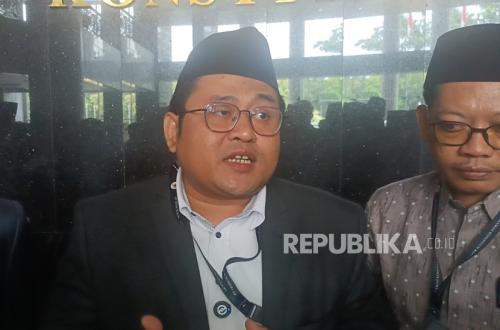
The Chairman of the Indonesian Ma’had Aly Association (AMALI), KH Nur Salikin, has stated that his organisation fully supports the judicial review of Law Number 18 of 2019 on Pesantren, specifically targeting Article 48 Paragraphs 2 and 3, currently underway at the Constitutional Court (MK).
Kiai Nur Salikin asserted that to date, funding for pesantren education—including formal diniyah education (PDF), muadalah education units, and ma’had aly—has not received proportional support from the state, as mandated by the Pesantren Law. “We support the judicial review applicants because the phrases ‘according to its capability’ and ‘according to its authority’ create room for interpretation that results in the state lacking a firm obligation to assist pesantren education. We hope the MK provides a more imperative interpretation that the state is obliged to help pesantren education,” he said following a hearing at the MK Building in Jakarta on Wednesday (24/6/2026).
According to him, this situation has led to various forms of discrimination against pesantren education, particularly ma’had aly. To date, ma’had aly lecturers have been unable to access lecturer certification programmes. They also do not yet possess a National Lecturer Identification Number (NIDN) nor have a home-base integrated into the national higher education system. Furthermore, ma’had aly students, or mahasantri, are not yet integrated into the Higher Education Database (PDDikti) system, preventing them from accessing various state-provided educational assistance programmes, including the Smart Indonesia Card (KIP) Kuliah programme. “The KIP Kuliah budget, which amounts to trillions of rupiah, cannot be accessed by Ma’had Aly mahasantri. This demonstrates ongoing budget discrimination against pesantren education,” he stressed.
Based on data recorded in the Ministry of Religious Affairs’ (Kemenag) EMIS system, there are currently around 1,548 ma’had aly lecturers across Indonesia. However, none have yet obtained access to lecturer certification, which is commonly received by general higher education lecturers. The majority of ma’had aly lecturers also still receive very limited honorariums, ranging from Rp500,000 to Rp2 million per month, depending on the financial capacity of each pesantren.
On this occasion, AMALI also highlighted the unrealised Pesantren Endowment Fund as mandated by various government-issued regulations. AMALI hopes the government will promptly provide a specific allocation for the Pesantren Endowment Fund to support the sustainability and quality improvement of pesantren education. While appreciating the government’s attention to pesantren thus far, AMALI considers the support still disproportionate to the real needs faced by pesantren institutions. “We are grateful for the state’s attention to pesantren. However, this support is not yet proportional. Pesantren are often asked to participate in various national agendas, but the affirmation, facilitation, and budget support received remain very minimal,” said Kiai Nur Salikin. Furthermore, AMALI is urging the acceleration of the establishment of a Directorate General of Pesantren within the Ministry of Religious Affairs as a strategic step to strengthen state governance and services for pesantren.