
AM Hendropriyono Explores Five Nusantara Maxims for National Life
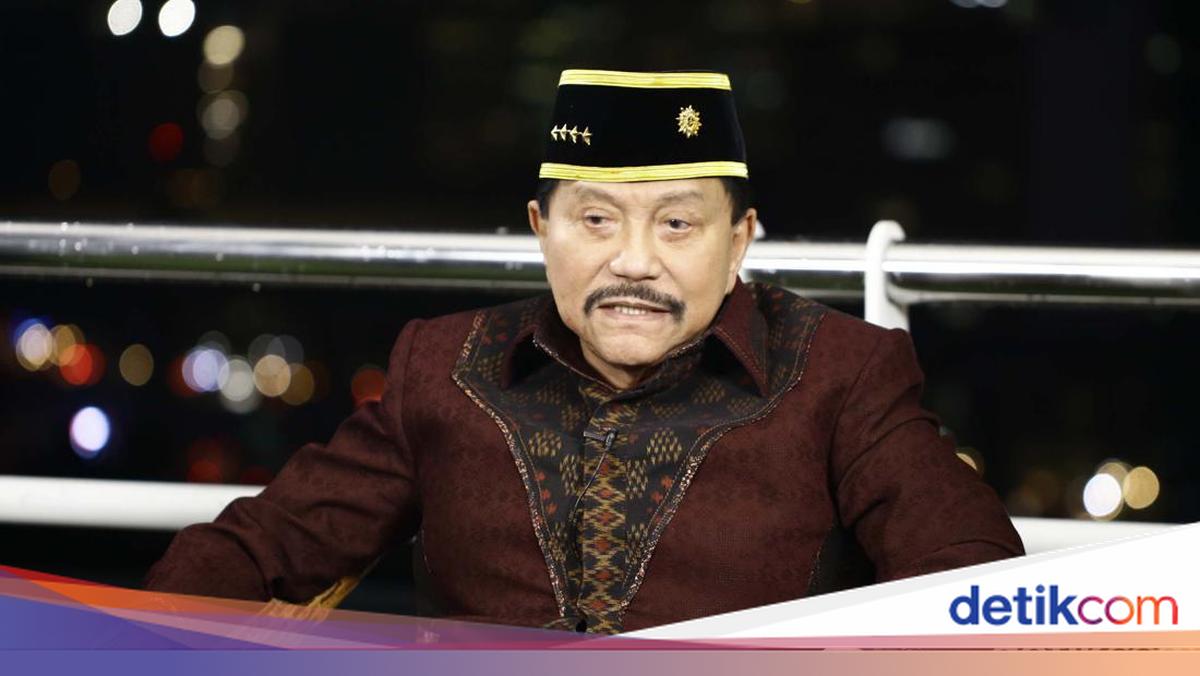
Former National Intelligence Agency (BIN) Chief General (Retired) AM Hendropriyono discussed five Nusantara maxims which he believes can serve as moral guidelines for social, national, and state life. He stated that the philosophical values of Nusantara are not merely cultural heritage but also a source of wisdom still relevant for addressing contemporary challenges.
In his presentation, Hendropriyono emphasised that the values within Nusantara philosophy are not just cultural legacies but also a wellspring of wisdom relevant to modern issues, from leadership and democracy to social responsibility.
The first maxim is manunggaling kawulo Gusti. According to Hendropriyono, this teaching promotes harmony between a person’s inner self and the will of God Almighty.
‘Your life must remain mindful of manunggaling kawulo Gusti. In Javanese philosophy, it is the teaching of spiritual unity between humans or kawulo and the Almighty God or Gusti,’ Hendropriyono said on Saturday, 30 May 2026.
He explained that the teaching does not mean humans become God, but rather a state where one’s heart, thoughts, words, and actions align with divine will through self-control, honesty, moral awareness, and sincerity.
The second maxim is sangkan paraning dumadi. Hendropriyono said this teaching reminds people to understand their origins and purpose in life.
‘This teaching urges us to reflect on where we come from, or sangkan, and where we will return, or paran,’ he said.
According to him, humans originate from God and ultimately return to Him. Therefore, life is not merely a biological or social journey but a moral and spiritual path requiring accountability for every thought, word, and deed. He considered this understanding crucial, especially when facing moral dilemmas.
‘When two equally noble duties demand different choices, wisdom does not come from avoiding sacrifice but from the courage to decide with a clear conscience, free from envy, hatred, and personal gain,’ he added.
The third maxim cited by Hendropriyono is Bhinneka Tunggal Ika, tan hana dharma mangrwa. He said this motto is not merely a unity slogan but a philosophical foundation of the Indonesian nation.
‘Diverse yet one, no dual truth or dharma. It is a phrase that is not just a unity slogan but a Nusantara philosophical proposition teaching that diversity is a reality, while unity is a moral goal to be achieved,’ Hendropriyono said.
He stressed that ethnic, religious, racial, linguistic, and cultural diversity should not be a reason for enmity. Instead, differences should be seen as complementary elements in building harmonious coexistence.
‘Indonesia grows strong not because all its people are the same, but because it can live together in diversity,’ he added.
Next, Hendropriyono discussed the fourth maxim combining gatoloco and ajining diri saka lathi. He said these teachings are highly relevant in today’s democratic and free-thinking era.
‘Gatoloco symbolises intellectual courage to seek truth, while ajining diri saka lathi serves as an ethical reminder to convey truth with dignified speech,’ he said.
He explained that gatoloco encourages critical thinking and questioning established norms, while ajining diri saka lathi stresses maintaining ethics when expressing opinions.
According to him, these values are particularly relevant amid rampant misinformation, slander, hate speech, and social media controversies.
‘Freedom of speech must always be accompanied by moral responsibility, for no matter how knowledgeable a person is, their dignity is measured by how they use their words,’ he added.
The fifth maxim is memayu hayuning bawono, interpreted as humanity’s duty to preserve safety, harmony, and balance in life.
‘This noble Javanese philosophical teaching embodies the act of beautifying, preserving, and safeguarding the world’s safety and harmony,’ Hendropriyono said.
He explained that humans do not live for themselves but are part of a larger order encompassing relationships with God, fellow humans, the universe, and future generations.
Therefore, every human action should bring benefit, reduce suffering, prevent damage, and create peace and prosperity for the wider community.
‘A person’s honour is not measured by what they possess but by the extent of their contribution to their surroundings,’ he said.
Hendropriyono also reminded leaders to use power to protect the people, not to enrich themselves. He stated that social justice is not merely about wealth distribution but a continuous effort to create a better, dignified life for all citizens.
‘Urip iku migunani tumraping liyan,’ Hendropriyono said.