
Alumni association educates SMEs on business risks and financial management
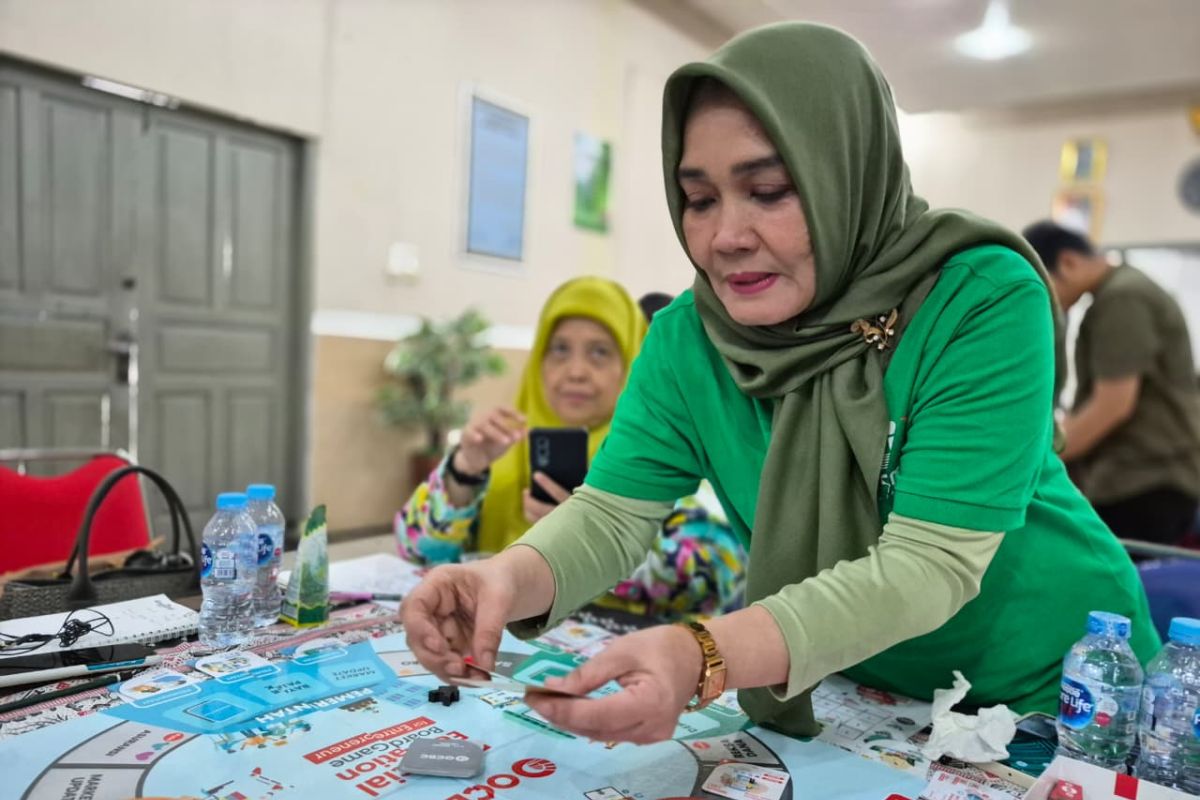
Jakarta (ANTARA) - The Ikasman 37 Jakarta high school alumni association has educated small and medium enterprise (SME) actors on reading business risks and managing finances as an effort to improve financial literacy.
“Business actors are not just theory in the classroom; participants are instead invited into business dynamics through financial game simulations that represent everyday business realities,” said the General Chairman of Ikasman 37 Jakarta, Boy Rafli Amar, in Jakarta on Saturday.
According to him, this education places participants as decision-makers in managing cash flow, facing risks, and determining business strategies in changing conditions.
“This method is considered more effective because participants learn from direct experience, not just from concepts,” he said.
Boy Rafli emphasised that the biggest challenge for SMEs is not only access to capital, but the ability to manage finances in a disciplined and directed manner.
He added that financial literacy is not just about recording income and expenses, but how business actors can read risks, make decisions, and maintain the sustainability of their businesses.
According to him, strengthening SME capacity must be done with a grounded and easily understood approach.
He assessed that simulations like this can bridge the gap between theory and practice.
“SMEs are the backbone of the economy. If their management is strong, the economic resilience of society will also be stronger,” he said.
He stated that Ikasman 37 Jakarta wants to encourage the emergence of more adaptive, measurable SMEs ready to face future economic challenges.
“This activity sends a strong message that economic strengthening does not always start from big things, but from the ability to understand the most basic: how to manage money wisely,” he said.
Meanwhile, Committee Chairman Aryawan Eko Purianto explained that the “boardgame” method was chosen because it can present business situations in a more real yet interactive and enjoyable way.
“We want participants not only to understand the concepts, but to truly feel how to make financial decisions in dynamic conditions. From there, they learn the consequences of every choice,” he said.
He added that in the simulation, participants were divided into several groups acting as business actors.
They were faced with various scenarios, from capital management and investment to business risk pressures.
One participant, Erna Ratna, admitted that this method provides a new perspective in managing a business that has so far been run intuitively.
“So far, I have run the business more based on habit. Here, I learned that every decision has a calculation, there are risks, and it must be planned,” she said.