
Alternative Distribution Schemes Prepared to Maintain Energy Supply in NTT
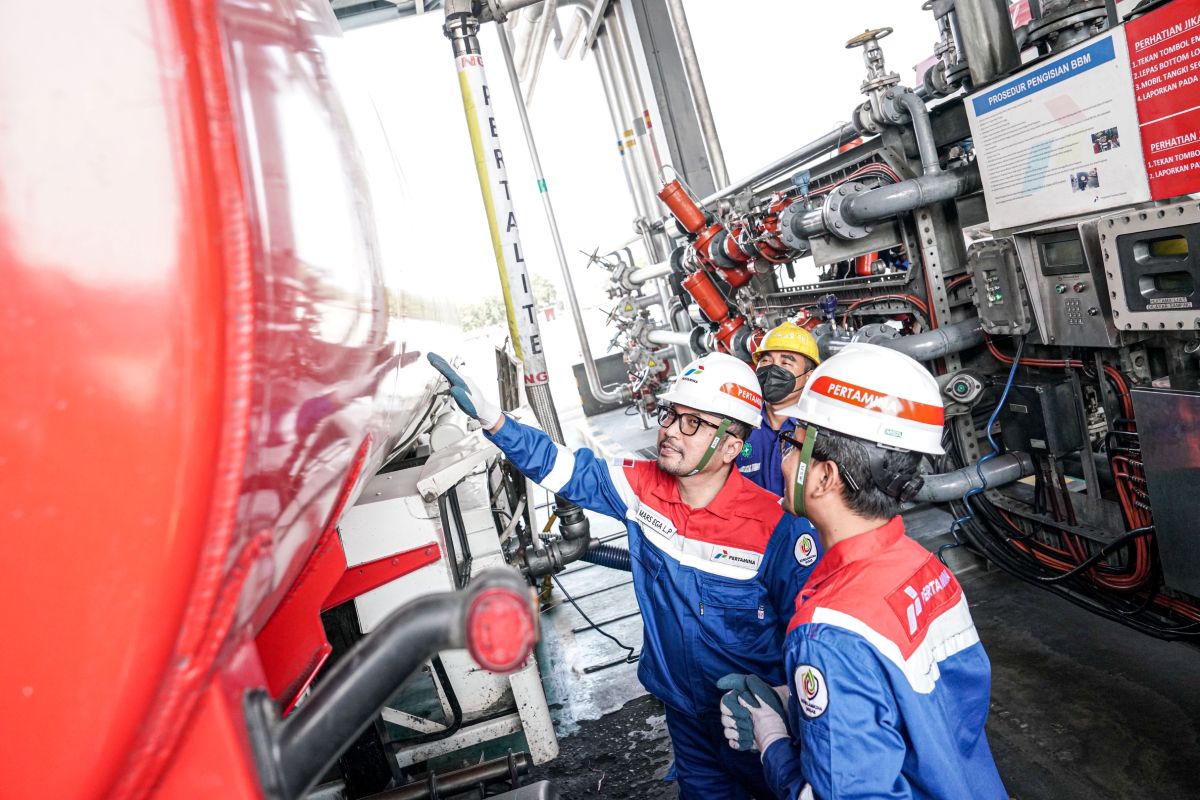
Pertamina Patra Niaga is preparing a number of alternative distribution schemes to maintain energy availability in disaster-affected areas, including East Nusa Tenggara (NTT). The move is intended to ensure energy services to the public continue despite disruptions to several facilities and distribution routes.
President Director of Pertamina Patra Niaga Mars Ega Legowo Putra said the company has carried out internal consolidation since the disaster in NTT, prioritising the continuity of energy services as well as handling affected facilities. According to Ega, the handling stages begin with ensuring services to the public, identifying affected energy facilities, and preparing alternative distribution routes from outside Flores Island.
“Most have been able to resume providing services to the public. Although we acknowledge that several facilities have been affected, we are therefore now preparing alternatives from outside Flores Island,” said Ega.
One of the options being prepared is the use of sea routes to channel energy to areas experiencing distribution constraints. The use of various modes of transport is part of the company’s efforts to maintain supply amid geographical conditions and infrastructure affected by the disaster.
In addition to maintaining operations, Pertamina Patra Niaga is consolidating social support for affected communities through its corporate social responsibility (CSR) programmes. One of these is through the sale of affordable basic food packages, the proceeds of which will be used to help the people of NTT. The company is also coordinating with the government, hospitals, and a number of relevant agencies to ensure integrated handling of the disaster’s impact.
Ega said readiness to face emergency conditions is part of the company’s responsibility in maintaining national energy distribution. According to him, this task is in line with the spirit of energy independence and resilience that the government continues to promote.
“Because Pertamina has the task of distributing energy from Sabang to Merauke. The government itself continues to encourage energy independence, energy resilience, and of course energy self-sufficiency,” said Ega.
He assessed that energy availability must be felt equally by the public, including those living in remote areas. Energy, according to him, is a basic need that plays a role in supporting community activities and regional economies.
“This must also be able to reach the public at the grassroots level so that people can enjoy energy services in terms of availability, affordability, and sustainability,” he said.
Indonesia’s geographical challenges, consisting of thousands of islands, mean that energy distribution requires various transport routes. Pertamina Patra Niaga is optimising distribution via land, sea, and air routes to reach underdeveloped, frontier, and outermost (3T) regions. According to Ega, this strategy is not only aimed at ensuring the public’s energy needs are met, but also at supporting economic activity in the regions.
Equitable energy access is considered capable of driving economic growth down to villages and remote areas because the presence of energy is one of the supports for community and business activities. Pertamina Patra Niaga also supports a number of government programmes to expand energy access and affordability, including for fishing communities and areas requiring distribution support.
On the other hand, Pertamina Patra Niaga is also promoting the development of more sustainable energy as part of efforts to strengthen national energy independence. Ega said Indonesia has various domestic resources that can be developed as raw materials for alternative energy. One of these is palm oil, which can be processed into fuel to support reducing dependence on energy sources from abroad.
According to him, the development of fuels based on domestic resources can be part of a strategy to strengthen energy resilience, especially to meet the need for fuel oil. In addition to developing alternative energy sources, the company is also working to improve the quality of fuel products to produce lower emissions.
“The quality of the products produced certainly has better quality and lower emissions, so this also contributes to improvement,” said Ega.
Efforts to maintain supply resilience, expand distribution to 3T regions, and promote the use of lower-emission energy are part of Pertamina Patra Niaga’s commitment to strengthening equitable access and national energy resilience.