
ALPHI: Non-Halal Label Rules Need Clarification to Avoid Multiple Interpretations
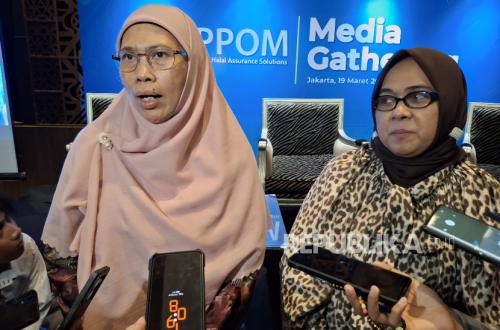
The Chair of the Indonesian Halal Inspection Agencies Association (ALPHI), Elvina A Rahayu, has welcomed the issuance of Badan Penyelenggara Jaminan Produk Halal (BPJPH) Regulation No. 3 of 2026 concerning the form and procedures for displaying non-halal information (KTH). However, she believes several implementation aspects still need clarification so that the regulation can provide legal certainty while being applied fairly.
Elvina said that BPJPH Regulation No. 3 of 2026 is a technical rule derived from Law No. 33 of 2014 on Halal Product Assurance (UU JPH) and its amendments in Law No. 6 of 2023, as well as Government Regulation No. 42 of 2024. The regulation, she said, specifically governs the form and procedures for displaying non-halal information as mandated by Article 110 paragraph (3) of PP No. 42 of 2024.
“This BPJPH regulation only addresses technical matters related to the form and procedures for displaying non-halal information. The forms of information consist of ‘contains pork’ or ‘non-halal’, while provisions regarding sanctions remain regulated in the UU JPH and PP No. 42 of 2024,” Elvina told Republika on Friday (7/8/2026).
Nevertheless, Elvina cautioned that the successful implementation of the regulation depends heavily on the readiness of socialisation efforts and a shared understanding among field supervisors. According to her, Indonesia, as an archipelagic nation, requires massive socialisation efforts to prevent differences in perception when applying such highly technical provisions.
She also highlighted the transitional provision in Article 28 of BPJPH Regulation No. 3 of 2026, which grants a 12-month adjustment period from the regulation’s promulgation on 13 July 2026. In her view, this transition period must be used to ensure all stakeholders share the same understanding regarding the criteria for displaying ‘contains pork’ or ‘non-halal’ labels.
Elvina explained that Article 4 of BPJPH Regulation No. 3 of 2026 establishes two bases for displaying non-halal information, namely based on criteria of ingredients and production processes that do not comply with the Halal Product Assurance System (SJPH). However, she believes several issues remain unaccommodated in the regulation. One of these relates to product criteria.
According to Elvina, in the process of determining halal fatwas by the Fatwa Commission of the Indonesian Ulema Council (MUI), assessment is not only based on ingredients and production processes but also considers product aspects, including the name or form of the product. She gave the example that products using names or forms that do not comply with sharia provisions may not obtain a halal fatwa determination even if their ingredients and production processes meet the requirements.
“In this BPJPH regulation, the criteria regarding products are not mentioned. In fact, if a business operator is unwilling to change the name or form of their product, there needs to be clarity regarding its labelling status,” she said.
Additionally, Elvina questioned the mechanism that will be applied to business operators who already hold halal certificates but are later found during supervision to be using ingredients or production processes that no longer comply with SJPH.
According to her, PP No. 42 of 2024 does regulate the monitoring of SJPH implementation and supervision of Halal Product Assurance periodically or at any time. However, to date there are no technical rules regarding follow-up actions if supervision results find violations of SJPH provisions.
“BPJPH Regulation No. 3 of 2026 does not yet regulate whether in such conditions the business operator is immediately required to display non-halal information or whether their halal certificate is instead frozen or revoked. In fact, this regulation aims to provide guidance and legal certainty for consumers, business operators, BPJPH, and other stakeholders,” Elvina said.
Therefore, ALPHI believes the effectiveness of implementing BPJPH Regulation No. 3 of 2026 will depend on the refinement of several aspects. These include clarity on all criteria requiring the display of non-halal information, the mechanism of proof whether through audit or self-declaration by business operators, arrangements for business operators who already hold halal certificates but subsequently no longer meet SJPH provisions, as well as massive socialisation to all stakeholders.
Elvina also emphasised the importance of aligning perceptions among supervisors. According to her, because the criteria for displaying ‘contains pork’ or ‘non-halal’ labels are highly technical, supervisory officers need to have adequate understanding and competence so that the implementation of the regulation proceeds accountably and does not give rise to differing interpretations in the field.