
ALPHI Backs 2026 Mandatory Halal Policy, Calls for Greater Independence for Auditors
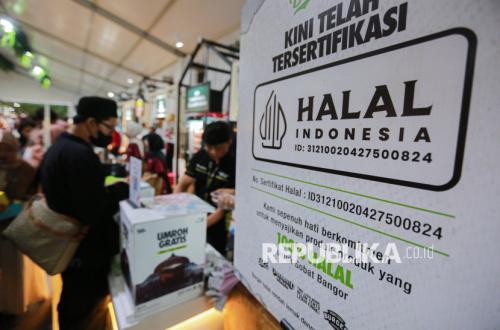
JAKARTA — The Indonesian Association of Halal Inspection Bodies (ALPHI) has praised the Halal Product Assurance Agency (BPJPH) for its significant progress in expanding national halal certification. The number of halal certificates rose from 85,480, covering 73,902 businesses during the Indonesian Ulema Council’s LPPOM MUI period up to 2019, to 4,449,917 certificates covering 3,515,895 businesses under BPJPH.
“This achievement reflects the government’s strong commitment to providing halal product assurance in Indonesia,” ALPHI chair Elvina A Rahayu told Republika on Friday (16 October 2026).
ALPHI fully supports the October 2026 Mandatory Halal policy as a strategic government measure to provide legal certainty, broaden consumer protection and assure Indonesian Muslim consumers that products are halal, in line with Law No. 33/2014 on Halal Product Assurance and its implementing regulations.
Elvina said that, alongside this support, ALPHI was committed to helping strengthen the credibility, integrity and international confidence in Indonesia’s halal product assurance system, particularly by reinforcing the principle of impartiality in the governance of national halal certification.
“ALPHI believes that strong authority does not have to mean concentrating all regulatory functions, technical inspections, certification decisions and operational oversight in a single institution without adequate mechanisms to manage conflicts of interest,” she said.
Elvina said good governance requires clear responsibilities, transparency, accountability and impartiality. ALPHI is therefore calling for stronger governance of halal product assurance through a clear separation of functions and responsibilities, auditable decision-making processes and guarantees of impartiality that can be independently verified.
These measures are consistent with Law No. 33/2014 and Articles 123–135 of Government Regulation No. 42/2024, which provide for BPJPH to co-operate with relevant ministries and agencies in administering halal product assurance. Such co-operation should promote synergy and make the best use of each institution’s duties, functions, expertise and authority under the law.
“BPJPH would therefore continue in its role as the main authority for national halal product assurance, supported by relevant ministries and agencies and by professional, competent and independent Halal Inspection Bodies (LPH), each acting within its authority,” she said.
ALPHI stressed that supporting the 2026 Mandatory Halal policy and strengthening impartiality were not conflicting interests, but complementary measures. Mandatory halal rules provide legal certainty and broaden consumer protection, while impartiality ensures that inspection, verification and certification are conducted objectively, professionally and reliably.
“Mandatory halal must succeed, and that success must be achieved through substantive and sustainable guarantees that products are halal, not merely by increasing the number of certificates issued,” she said.
Source: jawawa.id (https://jawawa.id/newsitem/alphi-backs-2026-mandatory-halal-policy-calls-for-greater-independence-for-auditors-1792140885)
Originally published by Republika (https://khazanah.republika.co.id/berita/tmzpzv430/alphi-dukung-wajib-halal-2026-dorong-penguatan-independensi-pemeriksa), translated from Indonesian