
Alleged fake research scandal under probe in Indonesia, sparks debate over academic integrity
Alleged fake research scandal under probe in Indonesia, sparks debate over academic integrity
An Indonesian researcher spotted fishy behaviour by her compatriots at a conference in Denmark and refused to look away. The case has sparked a wider debate over research integrity in Indonesia.
JAKARTA: Indonesian authorities are investigating a case of suspected academic fraud that transcended borders and could have far-reaching consequences for the country’s researchers.
The case involves research that one of the alleged fraudsters presented at a scientific conference in Denmark in May.
After two Indonesian academics took to social media to voice their suspicions, netizens found that the other alleged conspirators may have done the same at other conferences overseas.
The alleged fraudsters may also have lied about their affiliations, and misused the names of legitimate researchers without their knowledge.
Some researchers fear the case, if proven, could affect the international standing of Indonesian academics and called for measures to strengthen research oversight and integrity, especially amid increasing use of artificial intelligence (AI).
Indonesia’s National Research and Innovation Agency (BRIN) told CNA it is investigating the allegations with the Ministry of Higher Education, Science and Technology.
Together with Yogyakarta State University (UNY), BRIN and the ministry have questioned four of the implicated individuals – Rifaldy Fajar, Prihantini, Rini Winarti and Riana Dwi Kurniawati.
They completed their undergraduate studies at UNY from 2019 to 2021 and later obtained master’s degrees from other universities, Agus Haryono, BRIN’s Deputy for Research and Innovation Facilities, told CNA.
“We still need more accurate information to determine the extent of the alleged violations,” said Agus.
Minister of Higher Education, Science, and Technology, Brian Yuliarto has confirmed that his office has directly summoned the individuals involved.
“They have been summoned, and we will proceed with processing the case,” said Brian on Saturday (Jun 27) as reported by news portal Detik.
Brian said law enforcement officials are now involved in the investigation to determine the specific legal charges against the perpetrator.
“We are currently working with law enforcement agencies to clarify the legal charges. We also intend for this case to serve as a deterrent,” he said.
Meanwhile, the Indonesian academic who first spotted the suspicious activity at the 14th Meeting of the International Society on Pneumonia and Pneumococcal Diseases (ISPPD-14), held in Copenhagen from May 17 to 21, has reported the matter to the symposium’s organising committee.
According to her, ISPPD replied to confirm the list of abstracts submitted by travel grant recipients from Indonesia. The list included who submitted the abstracts, as well as their presenters.
CNA has contacted the ISPPD about the case and the status of the travel grant for the alleged perpetrators.
HOW THE ALLEGED FRAUD UNRAVELLED
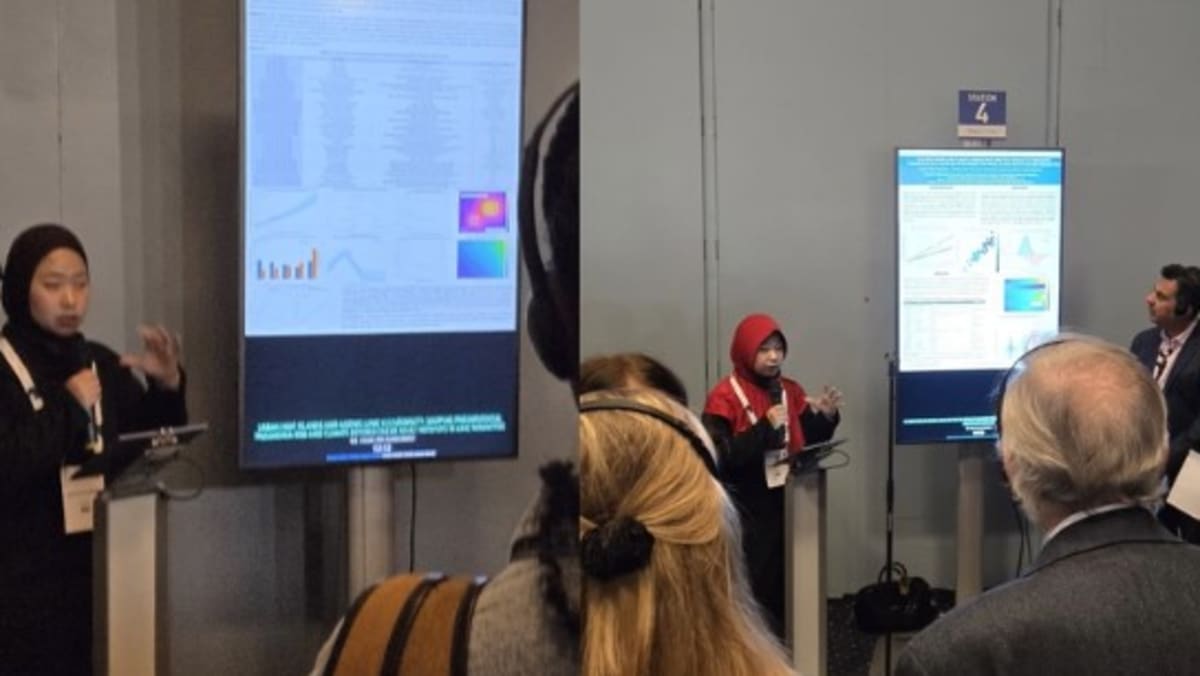
At an ISPPD-14 session, a woman who introduced herself as Riana Dwi Kurniawati presented research examining the relationship between extreme heat and pneumonia risk among older adults.
Roughly 10 minutes later, she appeared at another session under the name Dimas Fajar Prasetyo, and presented another study on AI-driven pneumococcal vaccine booster strategies for elderly populations.
The discrepancy made clinical medicine researcher Wa Ode Dwi Daningrat of the University of Oxford sit up at the conference, because Dimas Fajar Prasetyo is a male Indonesian name.
“I found it bizarre to see one participant with multiple name tags because, typically, even when representing a colleague or teammate, you use your own name tag, introduce yourself, and clarify your role. There’s no need to switch name tags or alter your appearance between presentations,” Wa Ode Dwi told CNA.
Wa Ode Dwi said she chose not to report her suspicion to the organisers right away, opting instead to gather more evidence first.
The following day, Wa Ode Dwi attended another oral presentation scheduled under the name Riana Dwi Kurniawati. The presenter was the same woman who, the previous day, had variously introduced herself to different people as Dimas, Riana and Prihantini.
This time, the woman identified herself as Prihantini. She was asked a question by Keith Klugman, director of the pneumonia programme at the Gates Foundation and, according to Wa Ode Dwi, was unable to answer a seemingly basic question about the research.
After the presentation, Wa Ode Dwi approached Prihantini and asked her to explain the data presented. Once again, Prihantini was unable to do so.
“She stated that she did not know the details of the data and posters, claiming they were ‘generated’ by their ‘leader’, Rifaldy Fajar,” Wa Ode Dwi said.
The explanation raised further questions because neither Rifaldy Fajar nor Prihantini was listed as an author in the study, which named only Dimas Fajar Prasetyo, Aminatus Saadah and Riana Dwi Kurniawati as first authors.
When confronted again by Wa Ode Dwi about the discrepancy, Prihantini reportedly said Dimas was a colleague currently pursuing a master’s degree in Australia.
Prihantini also claimed she had not personally received a travel grant from the conference organisers. Instead, she said her airfare and accommodation had been funded through a grant awarded to Riana Dwi Kurniawati that was later transferred to her.
However, Wa Ode Dwi found out from the conference organisers that the four individuals – Dimas Fajar Prasetyo, Aminatus Saadah, Riana Dwi Kurniawati and Prihantini – had all received travel grants.
Wa Ode Dwi said she reported her concerns to the organisers and formally submitted a written complaint via email on May 19, 2026.
Beyond the alleged identity fraud, she and fellow academic Ida Bagus Mandela Brasica, an Indonesian climate mathematics researcher at the University of Exeter, also suspect some or all of the research data u