
All Communication Cables to be Moved to SJUT, Pramono: PLN Cables Require More Time
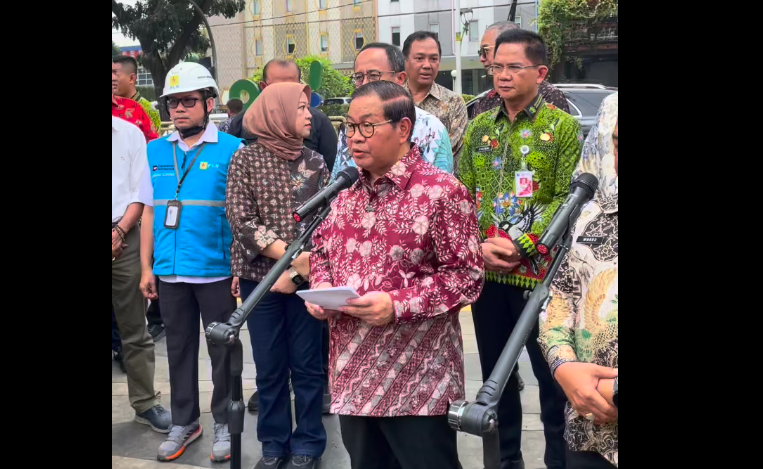
The Jakarta Provincial Government targets all overhead cables and utility networks on road surfaces to be moved underground. Jakarta Governor Pramono Anung stated that the Provincial Government now possesses a strong legal framework through Regional Regulation (Perda) Number 8 of 2025, which was passed last December.
He explained that cables on the road surface are generally divided into two categories: telecommunications cables and electricity cables. Currently, the process of relocating and tidying telecommunications cables is already showing tangible results in several strategic locations.
“In principle, there are two types of cables: one for communication and one for electricity. At this moment, what can already be moved underground are the cables related to communication. However, cables related to electricity still require time. But for communication, in several places such as Jalan Dr. Supili, we have successfully moved and tidied them,” he explained in South Jakarta on Thursday.
To complete a comprehensive rearrangement, the former Cabinet Secretary instructed the Highways Agency (Dinas Bina Marga), along with Jakarta’s Regional Government-Owned Enterprises (BUMD), to develop a long-term strategic plan.
This rearrangement is estimated to cover a network length of up to 6,500 kilometres across Jakarta. “I am frankly planning that within five years, all cables currently on the surface can be moved underground. If this is achieved, the face of Jakarta will certainly change significantly,” he said. He added that the feasibility of this five-year target depends on managing the approximately 6,500 kilometres of cabling involved.
Furthermore, Pramono emphasised the importance of private sector involvement and all stakeholders to ensure that utility infrastructure rearrangement does not become solely a burden on the regional budget, but rather a collective movement that is commercially beneficial.
“If this is handled totally, it means not relying solely on the Highways Agency; I am confident it can be done. Therefore, private sector involvement is very necessary to do this together because the legal umbrella is already in place,” Pramono stated.