
ALKO Bridges Diplomacy, Technology, and Trade in Official Visit by Pakistani Delegation
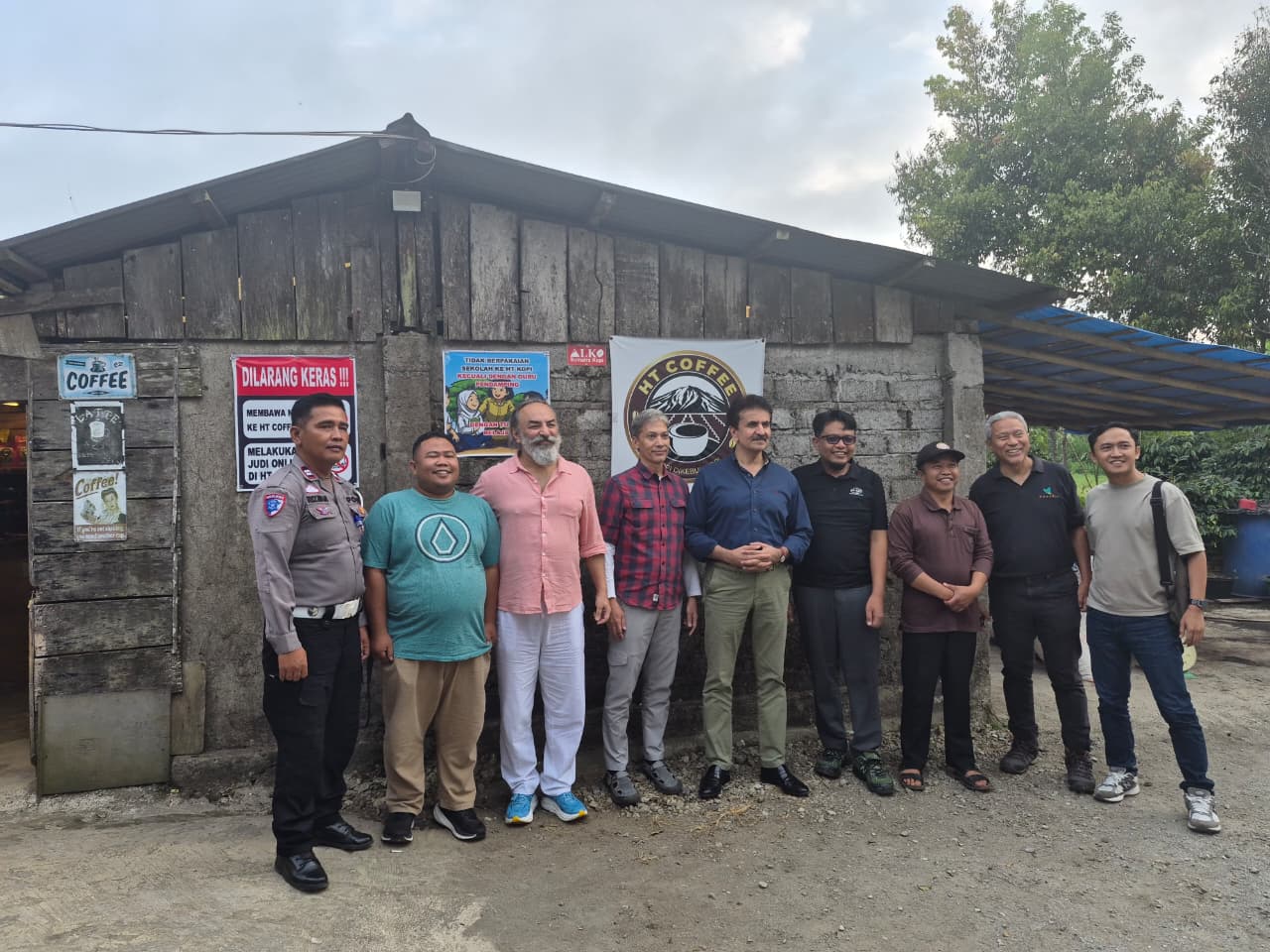
Amid global trade dynamics that increasingly demand transparency, sustainability and supply chain certainty, a significant event took place in Kerinci Regency, Jambi. The Alam Korintji International Farmers’ Cooperative (ALKO) received an official visit from the Ambassador of the Islamic Republic of Pakistan to Indonesia, H.E. Mr. Zahid Hafeez Chaudhri, together with a business delegation led by Mr. Amir, a buyer of coffee and various commodities from Pakistan.
The visit, which took place on 15–19 July 2026, was more than a diplomatic engagement. It served as a strategic forum bringing together economic diplomacy, technological innovation, modern cooperative development and exploration of trade cooperation between Indonesia and Pakistan.
Amid growing global demand for sustainably produced commodities, ALKO used the visit as a moment to introduce a business model integrating farmers, cooperatives, digital technology and access to global markets within a single, complete ecosystem.
Unlike diplomacy typically conducted in the capital, this visit centred on a coffee-producing region. Kerinci was chosen because it is considered capable of representing best practice in community-based economic development, with cooperatives as the primary driver.
The presence of the Pakistani Ambassador reflects the growing attention partner countries are paying to the potential of Indonesia’s agricultural sector. Beyond strengthening bilateral relations, the visit opened new opportunities for coffee trade development, agricultural investment and green economic collaboration between the two countries.
For ALKO, the visit represented recognition that its farmer empowerment model has begun to attract international attention.
Beyond the diplomatic party, particular attention focused on the presence of Mr. Amir, a coffee and commodities buyer from Pakistan.
During his time in Kerinci, Mr. Amir not only conducted field visits but also took part in a series of business matching sessions with ALKO management and cooperative officials.
The agenda focused on evaluating production capacity, quality control systems, supply chain readiness and opportunities for sustainable coffee purchases from Indonesia.
The discussion covered not only coffee but also opportunities to trade other commodities such as cinnamon, gambier, essential oils, spices and agroforestry products with promising prospects in the South Asian market.
According to ALKO, this approach is more effective because buyers can see directly how a product is grown, processed and marketed.
Over the five-day visit, the delegation toured the entire value chain held by ALKO.
At ALKO Academy, they received briefings on the cooperative’s history, institutional systems and farmer empowerment strategies.
The delegation then visited the agroforestry estates to observe coffee cultivation practices developed alongside forest conservation.
There, participants saw how coffee is grown under the shade of various tree species, preserving biodiversity whilst strengthening ecosystem resilience.
The delegation also took part in selective picking of red cherries, post-harvest processing, grading, sorting, roasting and cupping alongside certified instructors.
ALKO CEO Suryono said international markets no longer buy coffee merely as a commodity.
“Buyers want to understand who the farmers are, how the production process works, whether the environment is being protected, how the cooperative is governed, and how economic benefits reach the members. What is being sold today is not just coffee, but the entire ecosystem,” he said in Padang.
One agenda item that drew the most attention from the Pakistani delegation was a demonstration of the QThink-X Traceability system, a digital platform developed by ALKO to document the entire coffee supply chain.
Through the system, farmer identities, estate locations, cultivation and processing practices, warehousing and shipping can all be traced digitally.
For international buyers, the system provides certainty about product origins whilst strengthening trust in the quality of Indonesian coffee.
The delegation was also briefed on the implementation of blockchain to support transaction transparency and compliance with international market regulations.
Beyond coffee, ALKO introduced the agroforestry approach that has been the foundation of the cooperative’s development.
The model integrates coffee with forestry trees, fruit trees and conservation vegetation, generating economic benefits whilst protecting the environment.
The Pakistani delegation was also introduced to the Carbon Project being developed by ALKO with various international partners.
The programme aims to measure and enhance the carbon absorption capacity of farmers’ agroforestry areas as part of green economic development.
This approach is considered increasingly relevant as many countries begin implementing trade policies that take sustainability into account.
In between field visits, ALKO hosted an Indonesia–Pakistan Business Matching forum.
The forum discussed various cooperation opportunities, ranging from green bean purchases and roasting development to establishing distribution networks and investing in post-harvest facilities.
Mr. Amir said Pakistan has a continually growing market for quality coffee.
He judged that Indonesia holds advantages because it can offer diverse flavour profiles, large production capacity and an increasingly robust traceability system.
Discussions also covered international payment mechanisms, logistics, quality certification and the drafting of long-term trade contract schemes.
The Pakistani delegation also attended various training sessions organised by ALKO Academy.
Materials presented included sustainable cultivation, post-harvest processing, quality control, roasting, cupping and the application of international standards.
This approach shows that ALKO is not only building a business but also positioning education as the primary investment in strengthening farmers’ competitiveness.
In its presentation, ALKO explained that the cooperative is no longer positioned merely as an administrative institution.
Instead, the cooperative acts as an orchestrator connecting farmers, collectors, business units, financial institutions, government, investors and international buyers.
Farmers remain the primary producers. Collectors are tasked with safeguarding initial quality. Business units run commercial activities.
Meanwhile, the cooperative ensures the entire system operates transparently, accountably and in favour of its members.
This model attracted the attention of the Pakistani delegation as it was seen as capable of balancing business interests with community empowerment.
The visit by the Pakistani Ambassador demonstrates that economic diplomacy no longer takes place only at ministerial level.
Regions can also become the birthplace of international cooperation if they have a strong development model capable of answering market needs.
Through ALKO, Kerinci has shown that cooperatives can develop into modern institutions capable of forming partnerships with various countries.
To close the visit, the delegation was scheduled to hold a meeting with the Kerinci Regency Government, followed by discussions on cooperation plans in trade, education, investment and sustainable agricultural development.
The meeting is expected to lay the foundation for closer Indonesia–Pakistan economic ties, whilst opening opportunities to boost exports of Indonesian coffee and flagship commodities to the South Asian market.
For ALKO, the visit forms part of a long-term strategy to make the cooperative a centre of innovation, education and global trade. Amid increasingly complex market demands, ALKO aims to prove that the competitiveness of Indonesian coffee is built not only on product quality but also on transparent governance, adaptive technology, environmental sustainability and mutually beneficial international collaboration.
Through this meeting of diplomacy, technology, cooperatives and the business world, Kerinci has once again demonstrated that from a coffee-growing region at the foot of Mount Kerinci, Indonesia can offer a new economic model relevant to the demands of twenty-first-century global trade.
Source: jawawa.id (https://jawawa.id/newsitem/alko-bridges-diplomacy-technology-and-trade-in-official-visit-by-pakistani-delegation-1784199121)
Originally published by Media Indonesia (https://mediaindonesia.com/nusantara/911568/alko-pertemukan-diplomasi-teknologi-dan-perdagangan-dalam-kunjungan-resmi-delegasi-pakistan), translated from Indonesian