
Ali Masykur Musa Urges NU to Become a Global Soft Diplomacy Force
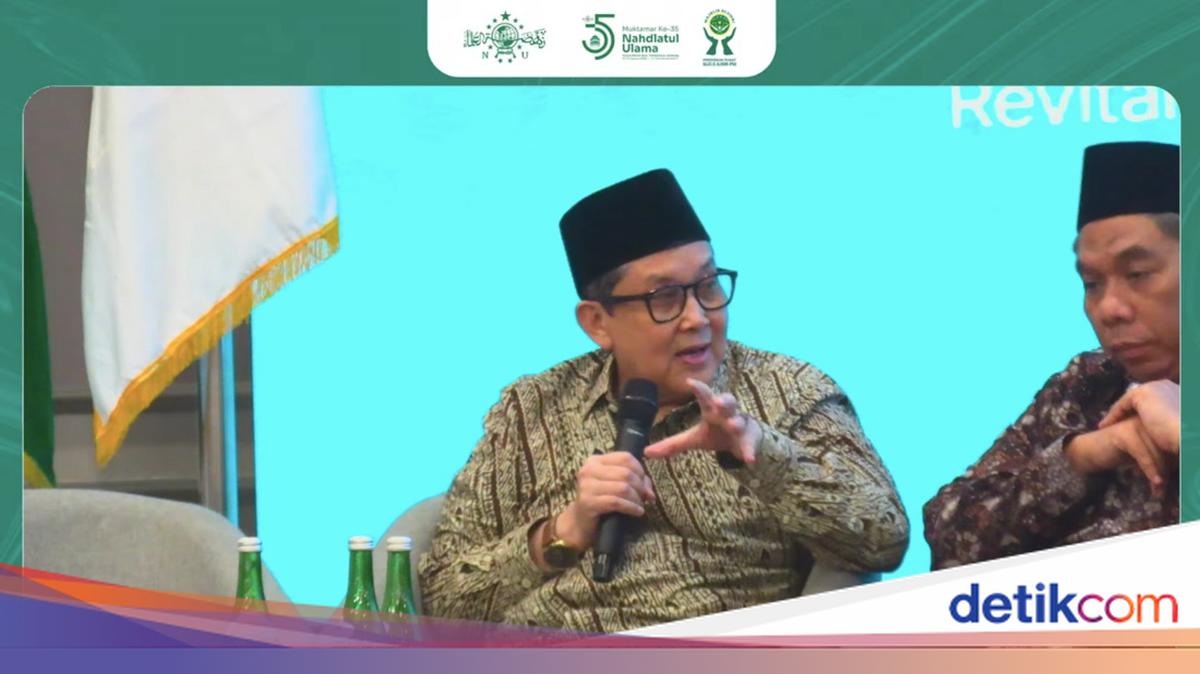
The chairman of the Nahdlatul Ulama Scholars Association, Ali Masykur Musa, believes Nahdlatul Ulama (NU) needs to expand its role to the global level. In his view, the increasingly open development of the world demands that NU take on a broader role in building a peaceful global life.
“NU must become part of the world community, because we are now in a state of borderless states,” he said in a written statement on Tuesday (11/8/2026).
He made the remarks at the National Assembly of the NU Students Association (IPNU) on Friday (7/8).
For Ali, global developments have made borders between countries increasingly fluid. Social, economic, technological and informational interactions, as well as various humanitarian issues, have connected one society with another beyond territorial boundaries.
In such a situation, Ali believes NU needs to position itself as a force that promotes a peaceful and coexistent world life.
He envisions NU as a force that helps build peaceful coexistence — a peaceful shared life amid an increasingly borderless world — through an approach he calls equilibrium diplomacy.
“Because now no power is obtained without moving towards the power of diplomacy,” he explained.
Furthermore, Ali said the next NU chairman must understand that organisational leadership also intersects with geopolitical dynamics and relations between actors at the global level.
He said this role can be realised through a soft diplomacy approach. Unlike hard diplomacy, which is the domain of the state through institutions such as the Ministry of Foreign Affairs, the military and the police, NU can use its social and religious strength.
“If NU is to take on a role, it is called soft diplomacy,” he stressed.
Through soft diplomacy, Ali said NU can exert influence through its social-religious strength, the values of Ahlus Sunnah wal Jamaah Islam, networks of ulama, Islamic boarding schools, civil society, and the tradition of dialogue and peace that is part of NU’s character.
Ali also believes NU’s future leadership needs to have a broader outlook. The chairman is not only required to understand the organisation’s internal affairs, but also geopolitical developments and relations between countries.
“This is a characteristic that must be possessed by future candidates for chairman, who know precisely about geopolitics, geostrategy and grand ideology in the context of national and state life, particularly in the life of this world,” he explained.
Ali delivered the message to place the NU Congress in a broader perspective. This is because the election of leadership is not only about the ability to manage the organisation domestically, but also the capacity to bring NU to interact with an increasingly complex world.
In this context, he believes NU has the opportunity to expand its influence not through formal power, but by building bridges, opening spaces for dialogue, strengthening peace and creating balance in global relations.
After inviting NU to return to the spirit of Ahlus Sunnah wal Jamaah An-Nahdliyah as a religious mandate, Ali also encouraged the expansion of NU’s leadership perspective to the global level. NU is expected to become a civil-religious society force that carries out soft diplomacy to help create a peaceful and balanced world life.