
Ali Masykur Musa to Lead International Naqshabandi Council
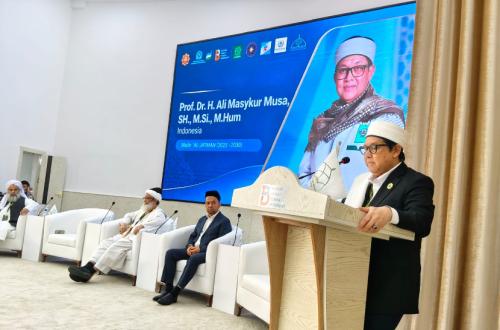
Professor KH Ali Masykur Musa has been entrusted with a new role within the international Sufi network. He was elected unanimously as the Chairman of the International Naqshabandi Council (INC) during the 6th International Naqshbandi Festival and the 2nd International Naqshbandi Conference held in Bukhara, Uzbekistan, on Friday (19/09/2026).
The election took place at Bukhara State Technical University. According to a written statement from Ali Masykur, the forum was attended by practitioners of the tariqa, scholars, murshids, academics, and Naqshbandi delegates from 14 countries.
The meeting also served as the moment for the reading of the Bukhara Charter Declaration, marking the establishment of the International Naqshabandi Council. The organisation was formed to serve as a space for communication and cooperation within the Naqshbandiyah network across borders.
For Ali Masykur, the position is not merely an honorary title. He stated that the mandate carries the responsibility of building communication, strengthening brotherhood, and bringing together the diverse Naqshbandiyah traditions that develop within different social and cultural contexts.
“This mandate is not a crown to be boasted about, but rather a path of service that must be accounted for before Allah SWT,” said Ali Masykur.
Ali Masykur currently also serves as an Independent Commissioner of PT PLN (Persero). Within the tariqa environment, he leads the Jam’iyyah Ahlith Thariqah Al-Mu’tabarah An-Nahdliyyah (JATMAN) as the Mudir ’Ali Idarah ’Aliyah.
Building the Naqshbandiyah Network from Bukhara
The election of Ali Masykur in Bukhara holds particular historical significance. This ancient city in Uzbekistan holds a prominent place in Islamic history and the development of Sufism in Central Asia.
For centuries, Bukhara has been known as one of the centres of Islamic scholarship. Located on the historic Silk Roads, the city developed into a centre for theology and Sufism, particularly between the 9th and 16th centuries.
Bukhara is also inseparable from Khwaja Bahauddin Naqshband, the 14th-century figure after whom the Naqshbandiyah tradition is named. Bahauddin Naqshband lived and is buried in the region.
His tomb complex remains one of the important spiritual centres in Uzbekistan, encompassing tombs, khanqahs, mosques, necropolises, and a museum of Sufi history.
Therefore, the formation of the International Naqshabandi Council in Bukhara carries profound symbolism. A spiritual network that once grew from Central Asia is now reconvening at one of its historical roots to formulate new forms of cooperation for the modern era.
Five Mandates Behind the INC Leadership
The establishment of the INC brings several significant tasks. Based on the Bukhara Charter and Ali Masykur’s statements, there are at least five substantive directions that will form part of the organisation’s leadership.
First, building communication within the Naqshbandiyah network across nations. The tariqa communities developing in various regions have different cultural, social, and historical backgrounds, thus requiring a meeting space that can maintain relationships without erasing individual characters.
Second, strengthening brotherhood amidst diverse traditions. The international network is expected to be a space capable of bringing together Naqshbandiyah communities that develop within different social experiences.
Third, preserving the spiritual chain and the fundamental values of the tariqa. Ali formulated this mandate through five keywords: preserving the sanad (lineage), nurturing adab (etiquette), reviving dhikr (remembrance), strengthening ukhuwah (brotherhood), and bringing about public welfare.
Fourth, bringing Sufi values beyond personal spiritual spaces into social life. This year’s Bukhara forum also placed peace, tolerance, and mutual understanding as important themes.
Fifth, building a sustainable international network. The meeting of scholars and murshids is deemed necessary to continue through knowledge exchange, the education of the younger generation, the development of studies, the documentation of heritage, and international forums that do not cease after the conference ends.
These five areas are not formal articles of the INC constitution; however, these directions can be inferred from the Bukhara Charter and the explanations provided by Ali Masykur following his election.
Source: jawawa.id (https://jawawa.id/newsitem/ali-masykur-musa-to-lead-international-naqshabandi-council-1789991822)
Originally published by Republika (https://khazanah.republika.co.id/berita/tlphut451/ali-masykur-musa-pimpin-international-naqshabandi-council), translated from Indonesian