
Algorithm Strengthens Radicalisation Exposure in Digital Spaces, Minister Warns
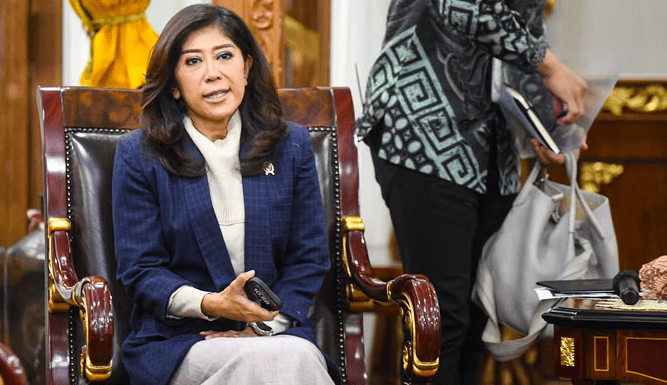
Minister of Communication and Digital Meutya Hafid has cautioned that radicalisation in the digital space does not always begin with an explicit call to violence. The process can start from simple interactions, personal assistance, conversations within online games, or content recommendations that repeat continuously due to the work of algorithms.
“When the power of narrative in the digital era combines with the power of algorithms for something bad, the impact will be multiplied,” Meutya said during a Public Discussion and Book Review of Atas Nama Surga: Algoritma Radikalisasi hingga Manipulasi Kesadaran, quoted on Thursday (30/7).
According to Meutya, the combination of extreme narratives and algorithms can create the illusion that information repeatedly appearing on screen is the truth. Facts are then defeated by emotion, belief, and repeated exposure, shaping a post-truth situation. She stated that the radicalisation process does not happen instantly. Approaches can begin with a helping hand, providing assistance, medical treatment, debt repayment, or promises of better education or life. Once the victim’s trust is formed, networks begin inserting ideological narratives and directing the victim towards actions contrary to humanitarian values.
Meutya also urged parents to observe changes in their children’s communication patterns. The impact of exposure to harmful content is not always visible in one or two days but can develop slowly over months or even years. “A child who usually tells stories from A to Z slowly only tells stories from A to G. Then it reduces to A to C, until finally they tell their parents nothing at all,” she said. These changes, Meutya continued, often go unnoticed because they occur gradually. When exposure has lasted long enough, the child’s relationship with the family can change imperceptibly. Therefore, she assessed that the book Atas Nama Surga is not only relevant for understanding terrorism but also serves as a mirror for various social problems resulting from an unhealthy digital space.
During the discussion session, the book’s author, Alexander Sabar, said algorithms are a crucial element because they continuously present information that matches the user’s interests. When someone clicks on one piece of content about jihad, for example, the algorithm can recommend similar material with increasingly extreme content. Radicalisation is also beginning to enter through digital games. Children can get acquainted within games, join closed chat groups, and then discuss violence, terrorism, and various forms of crime. “The digital space has become a means to spread radicalisation. From games, they discuss, enter closed groups, and then talk about various crimes and acts of violence,” he said.
Spokesperson for the National Police’s Densus 88 Anti-terror unit, Mayndra Eka Wardhana, confirmed a shift in recruitment patterns. Children and teenagers who grow up as digital natives are a vulnerable group because they often understand the use of digital platforms better than their parents. “We have detected that a shift in recruitment patterns is indeed occurring. Various platforms are used by students, children, and teenagers. Algorithms have a very large amplification role,” Mayndra said. He stressed that terrorism cannot be tackled solely through law enforcement because it has ideological roots. Its handling needs to combine prevention, education, counter-narratives, deradicalisation, and cross-sector cooperation between ministries and agencies, local governments, families, schools, media, and digital platforms.
Acting Secretary of the Ministry of Women’s Empowerment and Child Protection, Ratna Susianawati, said children are one of the groups with the highest level of vulnerability in the digital transformation. According to her, technology can provide benefits while also bringing serious risks. “Digital technology for children is like a double-edged sword. Children must be equipped to use technology safely, comfortably, and wisely according to their age limits,” Ratna said. She assessed that massive propaganda is one of the methods most frequently used by extremist networks. In such conditions, families need to maintain open communication, understand children’s digital activities, and not hand over the entire parenting process to devices and platforms.
Meanwhile, Cyber Criminologist Kisnu Widagso reminded that crimes in the digital space do not stop as virtual activities. Their impact can transfer and be felt directly in the physical world. “Crimes do occur in the digital space, but their impact is not only in the digital space; the impact also occurs in the real world,” he said. According to Kisnu, anonymity, confidentiality, encryption, and closed chat rooms provide opportunities for perpetrators to carry out actions that might be difficult to do in the physical world. Algorithms can also create echo chambers that make users only receive similar information, so extreme narratives are slowly considered normal and true.
Journalist Sari Febriane, who was also a speaker at the discussion, observed a significant change in the spread of propaganda before and after the algorithm era. In the past, narratives of violence were spread through VCDs or documents that moved from hand to hand. Today, the digital space allows extreme content to spread faster, more personally, and repeatedly. “The digital space has become a breeding ground as well as a playing ground for various crimes that use narratives as their strength,” Sari said.