
Alfons Manibui Supports Indonesia-South Korea Energy Diplomacy to Strengthen National Energy Resilience
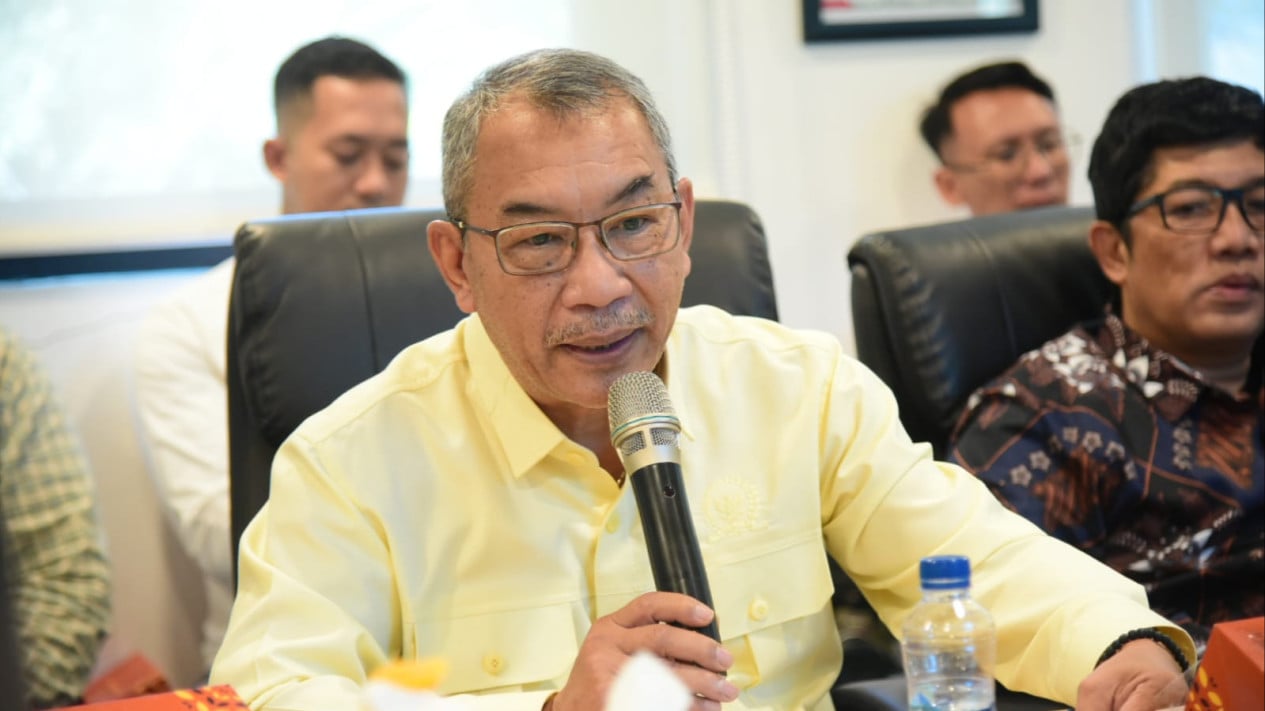
Jakarta – A member of the Indonesian House of Representatives Commission VII from the Golkar Party faction, Alfons Manibui, has expressed his support for the government’s initiatives through the Ministry of Energy and Mineral Resources (ESDM) to strengthen energy diplomacy with South Korea through the signing of three strategic memoranda of understanding in the energy sector.
The cooperation encompasses the development of clean energy such as renewables, hydrogen, nuclear, and smart grids, as well as strengthening Carbon Capture and Storage (CCS) technology and the development of critical minerals that form the foundation of the future energy industry.
“This step demonstrates that Indonesia is increasingly actively playing a strategic role in global energy diplomacy, while also strengthening the direction of policies towards a measured and sustainable energy transition,” said Alfons in his statement on Friday, 3 April 2026.
He assessed that this cooperation is very important in strengthening the downstream processing of critical minerals, particularly nickel, given that Indonesia currently controls around 40 percent of the world’s nickel reserves, which is the main raw material for the electric vehicle (EV) battery industry.
“This momentum must be utilised to ensure that Indonesia not only becomes a supplier of raw materials but is able to enter the global battery and electric vehicle industry value chain,” he emphasised.
Furthermore, Alfons stressed the importance of ensuring that every incoming investment cooperation is also accompanied by concrete and measurable technology transfers, thereby strengthening the national industry’s capacity and creating quality employment opportunities.
Amid global geopolitical dynamics, including potential disruptions to energy supply chains due to conflicts in the Middle East region, he assessed that this collaboration is a strategic step to strengthen national energy resilience through diversification of technology and energy sources.
“This cooperation must be able to strengthen Indonesia’s energy sovereignty, both in terms of supply, technology, and economic value added, so that Indonesia is not vulnerable to global energy fluctuations,” he added.
Alfons hopes that the implementation of this cooperation can proceed optimally while prioritising national interests, including strengthening the domestic industry, increasing value added, and maintaining a balance between the energy transition agenda and national energy resilience.