
ALFI Targets 15% Growth in Logistics Industry by 2026
Jakarta (ANTARA) - The Indonesian Logistics and Forwarder Association (ALFI) is targeting growth in the national logistics industry of around 10-15% by 2026, despite persistently high global uncertainties.
ALFI’s General Chairman, Akbar Djohan, assessed that this target is driven by various government stimulus programmes supporting the real sector. In other words, as long as real economic activities continue to grow, the logistics industry will be boosted accordingly.
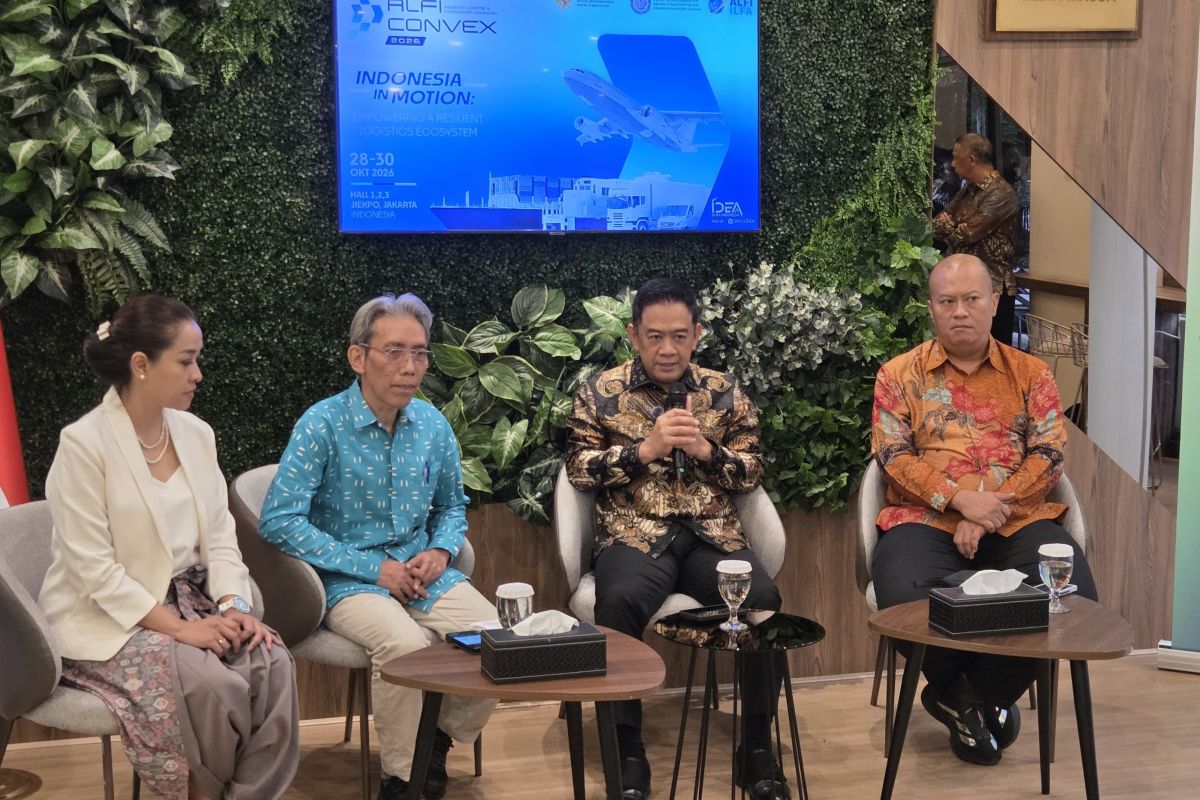
“Growth (in logistics) in 2025 was quite good, even above economic growth. Our hope is that 2026 can exceed it again, at least approaching 10%, or even 15%,” said Akbar during a press conference for the kick-off of ALFI Convex 2026 in Jakarta on Thursday.
Nevertheless, ALFI warns that the 2026 outlook remains overshadowed by global challenges, particularly due to geopolitical conflicts that could disrupt global supply chains.
Akbar explained that disruptions to global supply chains have driven up various logistics cost components, from fuel oil (BBM) to shipping rates and insurance premiums.
Additionally, changes in shipping routes (rerouting) due to conflicts also add to cost burdens.
Therefore, the association is urging the government to promptly harmonise regulations to curb the still-high logistics costs.
Akbar highlighted several policies, including the 2025 Indonesian Standard Business Field Classification (KBLI) regulation from BPS, which he believes could harm national logistics businesses.
According to him, regulations should provide legal certainty and ease of doing business, not add economic burdens.
“We hope the government can harmonise regulations, both those to be made and those already in place. The goal is to avoid creating high economic costs,” he stated.
As is known, the 2025 KBLI regulation issued through BPS Regulation No. 7 of 2025 is considered burdensome for logistics entrepreneurs.
This is because, in the changes to the Transportation Administration Services (JPT) classification, JPT business actors now seem to fall under the Multimodal Transport category.
Technically, this merger has been widely criticised because JPT and Multimodal have different licensing structures and legal responsibilities under Ministry of Transportation regulations.
Moreover, there is an administrative burden to amend deeds and permits in the OSS system, where entrepreneurs fear this regulatory gap will loosen foreign investment restrictions.
If not revised promptly, the policy is feared to kill thousands of local logistics companies and roll out the red carpet for foreign logistics firms to dominate the domestic supply chain.
In this regard, Akbar said ALFI has already coordinated across ministries to provide input on improving policies in the logistics sector.
“Of course, this should be a momentum for the government to accelerate downstreaming. Because logistics without industry would also paralyse logistics,” he added.