
Alert! US Launches Large-Scale Attack on Iran, Lasting Two Hours
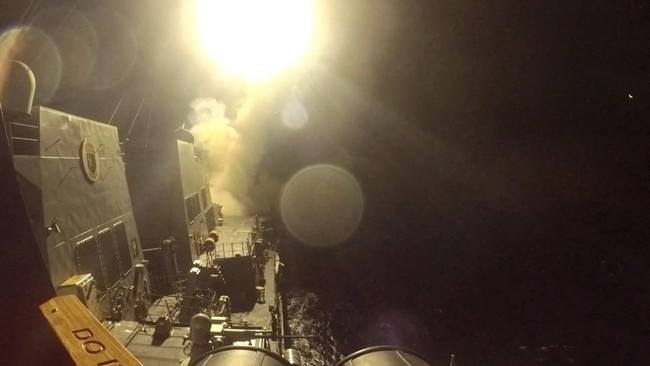
The United States military launched a wave of massive air strikes hitting dozens of Islamic Revolutionary Guard Corps (IRGC) targets in Iran. The two-hour military operation destroyed military command centres, drone facilities, and Iran’s maritime capabilities. The US Central Command (CENTCOM) confirmed the assault operation took place from 00:00 to 02:00 GMT on Thursday. This counter-attack was launched after Tehran fired multiple ballistic missiles towards US forces in Jordan. “These strikes aim to further reduce the threat posed by Iran and its proxy groups to American forces, commercial shipping, and neighbouring Gulf states,” CENTCOM stated. Iranian state media reported three people were killed by the US air strikes that hit Qeshm Island. Simultaneously, the Jordanian armed forces confirmed they successfully thwarted an Iranian attack on the kingdom by intercepting five missiles in the air. The latest US assault was triggered by Iran’s confirmation on Wednesday of the ballistic missile launch at a US base in Jordan, where all projectiles were intercepted. US military bases in Jordan have recently become a primary target for Iranian attacks. Prior to the strikes on Iran, US and Saudi Arabian forces conducted a joint assault on pro-Iran groups in eastern Iraq in retaliation for a drone attack on Saudi oil facilities. The joint action marked a historic first, with Riyadh openly joining Washington in a military strike. On the same day, a drone hit a gas storage tanker owned by a US company at Damietta Port in Egypt. Egypt’s Ministry of Petroleum confirmed a fire at the port, though it did not mention drone involvement. The Popular Mobilisation Forces (PMF) militia in Iraq reported at least 20 of its members were killed and 32 others wounded in the joint US-Saudi strikes. Iran’s Hamshahri newspaper reported that four IRGC advisors were also killed in the strikes in Iraq. The Iraqi Presidency strongly condemned the attack on its paramilitary bases as a clear violation of the country’s sovereignty, while still calling for armed Iraqi groups to cease attacks on neighbouring countries. Following the joint strikes, the Saudi Defence Minister met US Vice President JD Vance in Washington to urge the administration not to expand the escalation into Yemen or Iraq, warning that further escalation could open the door to significant, unpredictable risks. The conflict, which began in February, was initially targeted by President Donald Trump to last only a few weeks. However, a temporary ceasefire agreement in June collapsed due to fierce fighting over the Strait of Hormuz, which is now claimed to be under full Iranian control. Iran confirmed it had fired on three tankers attempting to transit the strait via unofficial routes. A strait governance proposal put forward by Oman with the support of Gulf states was also flatly rejected by Tehran. The Strait of Hormuz is a critical chokepoint, having transported one-seventh of the world’s oil and liquefied natural gas supplies before the war erupted. Following the latest escalation, global crude oil prices soared sharply on Wednesday, with Brent crude futures surging more than 8% to breach the US$90 per barrel mark. President Donald Trump asserted he would retaliate harshly against any Iranian missile attacks on US forces, though Washington stated it remains open to a peace deal to end the conflict that has shaken global energy and financial markets.