
Alert! Iran Attacks Singapore-Flagged Ship with Drone in Strait of Hormuz
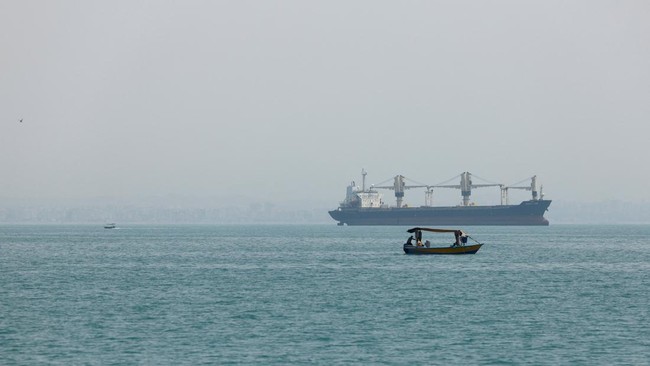
Iran’s Revolutionary Guard forces have reportedly attacked a Singapore-flagged commercial vessel in the Strait of Hormuz. The armed incident was confirmed by a United States official on Thursday (25/06/2026).
According to a CBS News report, the bridge of the commercial vessel appeared to have sustained severe damage on its starboard side from a mysterious projectile strike off the coast of Dahit, Oman. The United Kingdom Maritime Trade Operations confirmed that no casualties or environmental damage were reported from the vessel following the attack.
This unilateral military action by Tehran immediately poses a major challenge to President Donald Trump’s ambition to reopen the world’s oil shipping corridors. As a result of the attack, the UN’s International Maritime Organization (IMO) has temporarily suspended the evacuation plan for thousands of sailors and hundreds of ships stranded due to the war in the Persian Gulf.
‘I have always stressed that the safety of seafarers remains paramount. Therefore, the evacuation plan will be suspended until there is further clarity,’ asserted IMO Secretary-General Arsenio Dominguez.
The IMO clarified that the Singaporean vessel was sailing independently and was positioned outside the official UN evacuation corridor. This is despite the fact that a peace memorandum of understanding (MOU) signed just last week had provided positive sentiment that successfully caused world crude oil prices to plummet.
According to data from analytics firm Kpler, logistics traffic in the strait had actually surged sharply from 6 vessels to 70 vessels in just one week. Based on the draft peace document, Iran is required to guarantee a safe, toll-free passage for foreign ships for 60 days using its best efforts.
However, friction over route determination continues to fuel tension, as Washington prefers a safe route hugging the coastline of Oman. Conversely, Tehran insists on forcing all international commercial vessels to request permission from them and to sail close to the Iranian coast.
‘Any transit via routes outside the framework will not be covered by the safe passage guarantee and will not be entitled to insurance guarantees,’ threatened the Persian Gulf Strait Authority of Iran.
Iran has also not ruled out the possibility of starting to collect commercial sea tolls after the 60-day grace period ends. This move has been firmly rejected by the Trump administration and its Arab allies, as it is deemed to fatally violate international maritime law.
Before the missile damaged the Singaporean ship, US Secretary of State Marco Rubio had stated that his country would only assess Iran’s commitment based on real actions on the ground. Rubio made the statement during a diplomatic working visit to Bahrain to monitor the Gulf energy corridor.
‘If ships move as they should, then that is what we will assess. If this rhetoric is backed by real threats against ships, that is a violation of the agreement and we will take issue with it,’ Rubio stressed.