
Alert: 32 Regions in Central Java to Experience Peak Dry Season in August
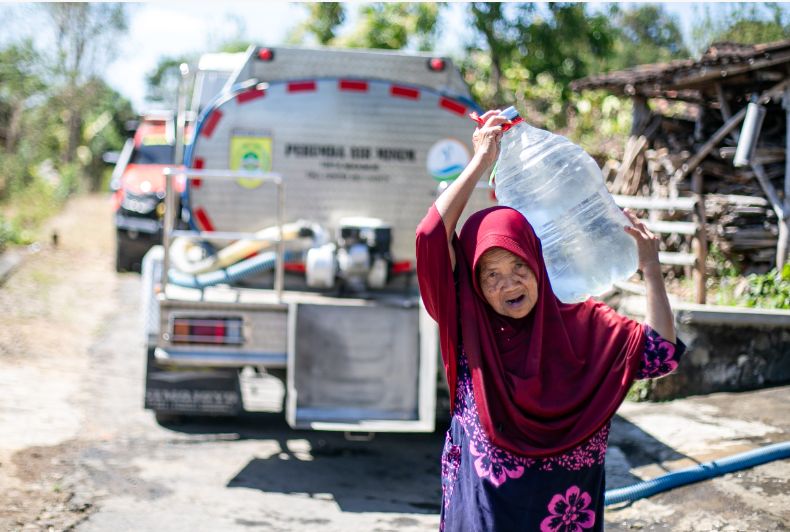
Drought caused by the dry season in Central Java has become a serious threat, leaving residents struggling to access clean water sources. Aid is being continuously distributed to hundreds of thousands of families across hundreds of affected villages.
Despite occasional rainfall in certain areas of Central Java, the prolonged dry season remains a significant threat. In many regions, thousands of residents must rely solely on government-provided clean water for consumption because local springs have dried up. Hadi Sukanto, the Village Secretary of Banjardowo, Kradenan District, Grobogan Regency, noted that residents face extreme difficulties every dry season, with even newly drilled wells failing to yield water.
Similarly, Rochmad, a resident of Pengkoljagong Village, Jati District, Blora Regency, stated that they rely on government assistance as wells and springs have dried up, forcing some to search for water deep within forests. The Acting Head of the Central Java Regional Disaster Management Agency (BPBD), Bergas Catursasi Penanggungan, revealed that drought has affected 24 regencies/cities in Central Java as of early August. To meet the needs of hundreds of thousands of affected citizens, 5.7 million litres of clean water were distributed to 184,643 individuals (61,139 families) across 148 villages by the end of July.
Klaten recorded the largest distribution of clean water at 1.74 million litres, followed by Pemalang (918,000 litres), Banjarnegara (432,000 litres), Grobogan (315,000 litres), and several other regencies. According to the Meteorology, Climatology, and Geophysics Agency (BMKG), 32 out of 35 regions in the province are predicted to experience the peak of the dry season this August.
In addition to the water shortage, the prolonged dry season has increased the risk of forest and land fires (karhutla). The Central Java BPBD recorded 37 fire incidents across 16 regencies/cities up to the end of July, affecting 42 hectares of land, with the largest areas being Sukoharjo, Blater, Klaten, and Sragen.
Central Java Regional Police (Polda Jateng) spokesperson, Kombes Yuliyanto, stated that authorities are strengthening prevention measures by increasing patrols in forests, plantations, and agricultural lands. He noted that most land fires are triggered by human activities, such as clearing land or burning harvest remains, which can quickly escalate due to strong winds. The police are also optimising satellite-based hotspot monitoring and coordinating with the BPBD, TNI, and local communities to mitigate the risk.