
Alberta Rejects Independence from Canada, with 77% Choosing to Remain
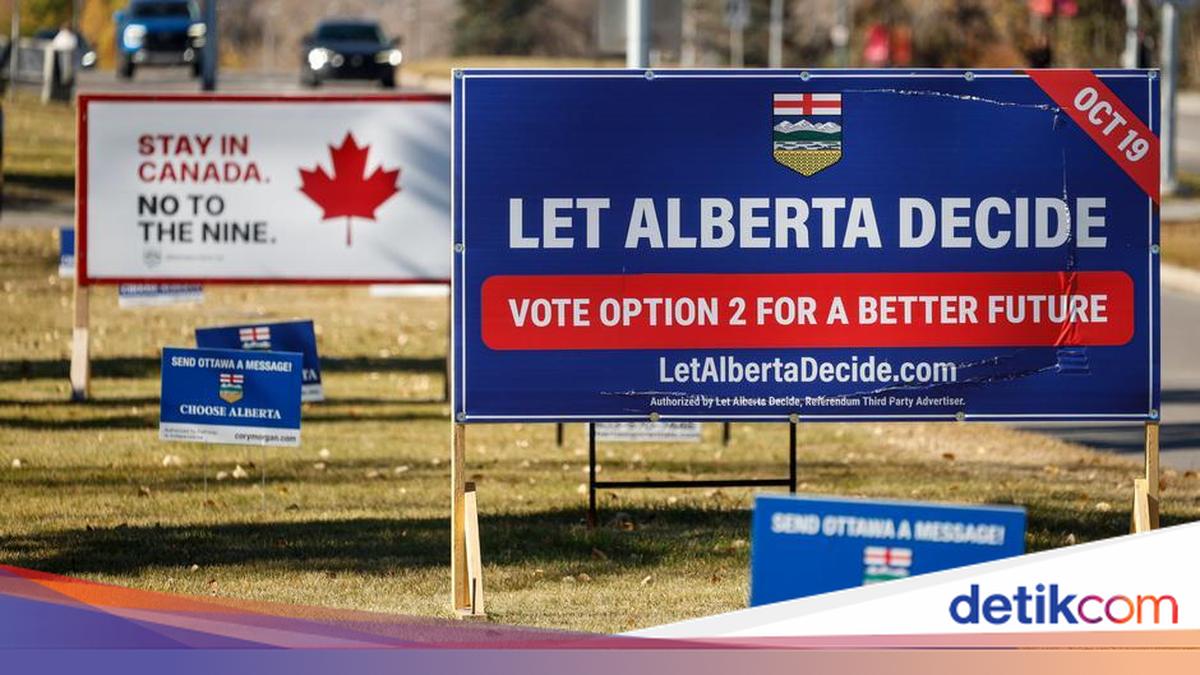
Residents of Alberta, Canada’s oil-rich province, have rejected moves towards independence from the country. Preliminary referendum results show that about 77% of voters support Alberta remaining part of Canada, giving Prime Minister Mark Carney a boost as he seeks to strengthen national unity amid a trade war and annexation threats from US President Donald Trump.
According to unofficial results from Elections Alberta on Tuesday (20 October), more than one million votes had been counted. About 23% of voters supported starting a process towards separation.
The referendum, held on Monday (19 October), was not a direct vote on independence. Had a majority supported the proposal, the result would have paved the way for a subsequent referendum directly deciding whether Alberta should separate from Canada.
“Albertans have made a clear choice. They chose unity, building together and looking after one another. Most importantly, Albertans chose Canada,” Carney said in a statement.
Carney said the result would allow Canada to move forward together. He also wants to accelerate trade diversification, develop major infrastructure projects and make Canada a global energy power, with Alberta at its centre.
Alberta leaders welcome referendum result
Alberta Premier Danielle Smith welcomed preliminary results showing broad support for the province to remain part of Canada. “Albertans have chosen a stronger Alberta in a united Canada,” Smith wrote on social media.
Smith, who opposes independence, had previously called the referendum amid pressure from separatist groups within the United Conservative Party (UCP), which she leads. She was due to make a statement on the referendum result and Alberta’s future on Tuesday evening.
Thomas Lukaszuk, a former Alberta deputy premier who led the Forever Canadian campaign against separation, also welcomed the result. “We are a strong country, united from coast to coast,” he told supporters.
The announcement of the vote count was delayed after polling stations opened late, forcing more than 100 locations to extend voting hours on Monday.
Although preliminary results show opposition to the separation process, the separatist movement said the support it received demonstrated that the independence question would not simply disappear.
Trump’s trade war strengthens calls for unity
Alberta is one of Canada’s most conservative provinces and a centre of the oil and natural gas industry. It has vast oil sands reserves and is among the regions with the largest proven oil reserves in the world.
Despite its significant economic contribution, some supporters of independence say Alberta is politically disadvantaged by the federal government in Ottawa. They also oppose Canadian government climate policies, including the carbon tax and energy-sector regulations, which they say threaten the foundations of the province’s economy.
However, dissatisfaction with the federal government has not always translated into widespread support for independence.
Former Alberta Premier Jason Kenney said separatist parties had previously received only about 1% to 2% of the vote. In his view, anger over restrictions during the Covid-19 pandemic helped mobilise activists who later joined the separatist movement.
Trump’s trade war and threats to make Canada the 51st US state have also strengthened Carney’s calls for unity. Those threats helped the prime minister win support in Alberta, a region that has historically been less supportive of Liberal prime ministers.
Carney had earlier urged Albertans to vote decisively for Canadian unity. “Vote as if Canada’s future depends on it, because it does,” Carney said during a campaign event in Edmonton, the city where he grew up.
Separatist movement says it is not over
Although preliminary referendum results show a majority opposed to starting the separation process, independence supporters say their movement has grown and will continue.
Keith Wilson, one of the separatist movement’s leaders, said the final result could still change. However, he said the support it had received showed there was considerable dissatisfaction with the federal government’s treatment of Alberta.
“We don’t have the final results yet. I think the numbers will still change, but it is fair to say that at least a quarter of Albertans feel Alberta needs to be treated better,” he said.
Jeff Rath, a separatist supporter from the Alberta Prosperity Project, had previously said he would be very satisfied if 30% of voters supported starting the separation process. He also wants Smith removed as UCP leader and predicted that the party could split, paving the way for a new pro-independence party.
Dustin Degenhardt, a voter from Wainwright, said the federal government had treated Alberta unfairly for a long time. “Alberta is basically treated like a colony. They want to keep taking from us, but give nothing in return,” he said after voting on Monday.
Another Wainwright voter, Taylor MacIsaac, also supported separation. “I think separating would be good for Alberta, personally, as someone who is very conservative and grew up in rural Alberta,” he said.
Meanwhile, Dave Malka, a 59-year-old Edmonton resident, criticised the use of public funds for a referendum that he said would only pave the way for another referendum, rather than being spent on healthcare.
With Trump threatening Canada, Malka said the debate over separation had emerged at the wrong time. “This seems to be happening at the worst possible time, when we should be united. Instead, we are fighting among ourselves,” he said.
Jake Graham, 35, from Calgary, hoped the referendum result would end the independence debate for a long time. “I hope this puts the issue to rest for a long time and that the result is clear and decisive, so the debate dies down for a while and we can be a united Canada,” he said.
Canada has previously held two referendums on independence, both in the French-speaking province of Quebec. The separatist Parti Québécois emerged as the strongest party in the provincial election in early October and is seeking a new independence referendum. However, opinion polls show that independence does not currently have majority support in Quebec.