
Albanese Warns Indonesia: Good Intentions in the Board of Peace Could Spell Disaster for Palestinians
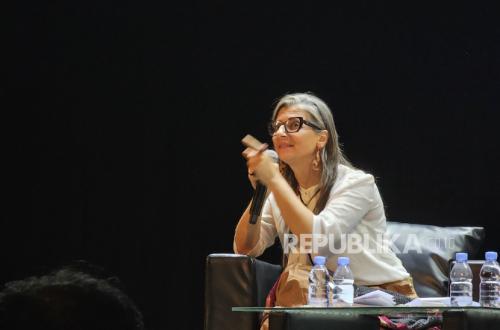
JAKARTA — Francesca Albanese, the UN special rapporteur on the human rights situation in the occupied Palestinian territory, has warned the Indonesian government against sacrificing international law through its involvement in the Board of Peace.
Albanese said the UN Security Council resolution that forms the basis for the Board of Peace was inconsistent with the Palestinian people’s right to self-determination. In her view, the initiative is not the right instrument for achieving Palestinian independence and self-determination.
“I know some countries joined the Board of Peace with good intentions. But, as the saying goes, the road to hell is paved with good intentions,” Albanese said at a press conference after a discussion organised by Amnesty International Indonesia at Taman Ismail Marzuki in Jakarta on Wednesday (21 October 2026).
Albanese specifically criticised UN Security Council Resolution 2803. She said it reflected a tragic moment for multilateralism, as the international order risked shifting away from respect for the law towards a situation in which there was no legal certainty.
She said pressure from influential countries, alongside others that might benefit from the collapse of the multilateral order, threatened the international system that had helped prevent global conflict.
“My feeling is that we are falling into an abyss. We are really plunging into it, towards a world where civilians are no longer protected but are instead targeted,” she said.
Albanese noted that Indonesia had a long historical record of advocating for Palestinian rights, both through the Non-Aligned Movement and alongside other South-east Asian countries, including Malaysia. She said she hoped Indonesia would maintain that position, which also aligned with the aspirations of many Indonesians.
Although she said she had not yet engaged directly with the Indonesian government, Albanese said she had communicated with several governments that consistently supported the Palestinian cause. Political support, she added, was not enough without consistency in applying international law.
“I urge the Indonesian government to be guided consistently by international law in every action it takes,” Albanese said.
She stressed that international law must be the principal basis for deciding whether a policy or diplomatic initiative is acceptable. No political action, she said, should be justified if it contravenes international law or falls outside its scope.
The warning is pertinent for Indonesia, which has long voiced support for Palestinian independence in various multilateral forums. Under Albanese’s framework, participation in international peace mechanisms should not blur the legal principles underpinning that support.
Albanese referred to the International Court of Justice ruling that Israel’s occupation of Palestinian territory was illegal under international law and must end. She said the legal consequences of the ruling included the withdrawal of Israeli forces, the dismantling of settlements, an end to the exploitation of Palestinian resources, and compensation for suffering caused since 1967.
Those measures, Albanese said, should not become bargaining chips in political negotiations that would delay the fulfilment of Palestinian rights.
She also referred to criminal proceedings involving Israeli leaders and the ongoing case at the International Court of Justice alleging genocide. These legal processes, she said, should be taken into account by countries involved in policymaking concerning Palestine.
Albanese said a resolution to the conflict could not be built by setting aside international legal obligations. For Indonesia, the challenge was not simply to participate in a peace forum, but to ensure that its involvement genuinely supported the Palestinian people’s right to determine their own future.
The success of Palestinian diplomacy should therefore be measured not merely by the existence of a peace mechanism or the number of countries involved. More fundamentally, it should be judged by whether the mechanism can end the occupation, guarantee civilian protection and realise Palestinian rights in accordance with international law.
Source: jawawa.id (https://jawawa.id/newsitem/albanese-warns-indonesia-good-intentions-in-the-board-of-peace-could-spell-disaster-for-palestinians-1792601499)
Originally published by Republika (https://news.republika.co.id/berita/tn9m1x393/albanese-peringatkan-indonesia-niat-baik-di-bop-bisa-berujung-petaka-bagi-palestina), translated from Indonesian