
Alasmalang Residents Turn Durian Peel Waste into Economically Valuable Products
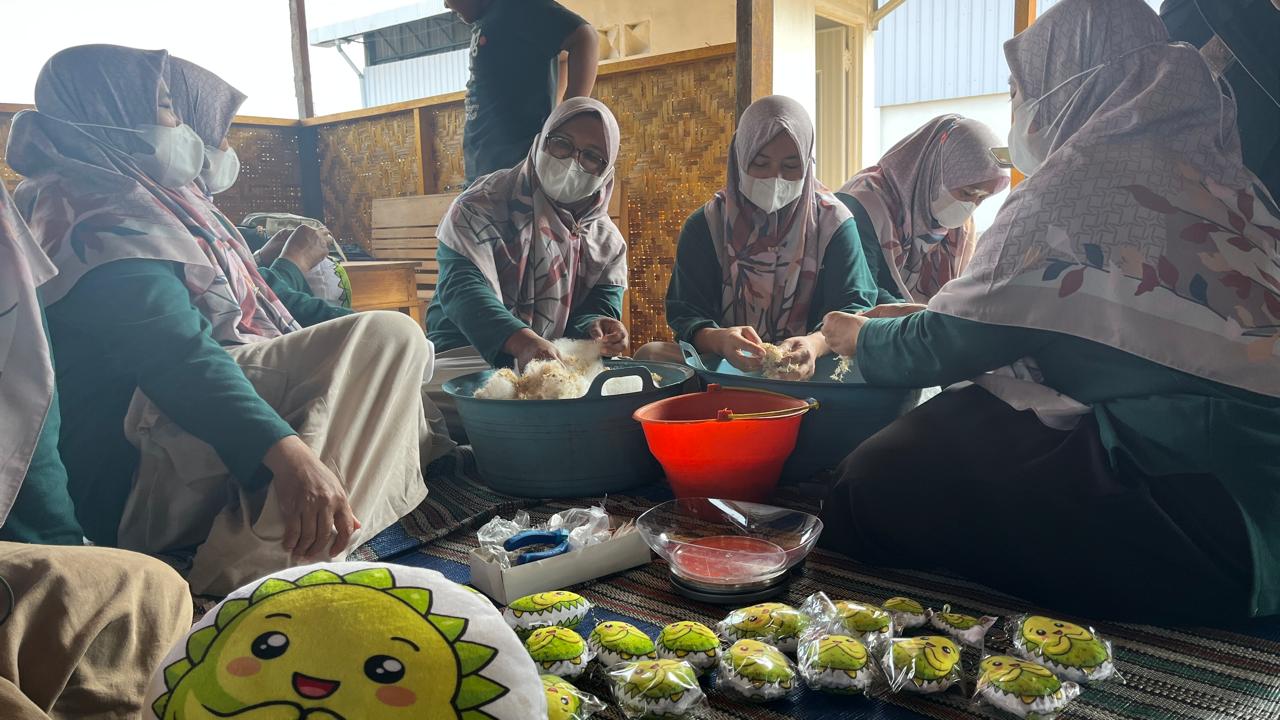
Residents of Alasmalang Village, Kemranjen District, Banyumas Regency, Central Java, are making use of durian peel waste. They are turning the peel into various products with economic value.
The durian peel is processed into fibre that can be used as filling for cushions, key chains, planting media and oil absorbents. Other parts of the fruit are used to make durian peel crisps, basreng from durian seeds, and dodol from lower-grade durian fruit.
Roniyah, chair of the Alasmalang Pokdarwis, said the waste-processing innovation emerged because of the large amount of durian peel produced during harvest season.
“Rather than having no economic value at all, being thrown away and potentially becoming hazardous waste, now we have economic value from it,” Roniyah said when met at the Durian Peel Waste Processing Education Centre in Alasmalang Village.
The collected durian peel is first shredded using a machine until it becomes fibre. After being dried, the fibre can be used for various purposes, including as filling for cushions and key chains.
One souvenir product, a key chain featuring a durian image, is sold for Rp10,000 each. The product is widely purchased by tourists visiting Alasmalang, which is known as one of the durian centres in Banyumas.
The use of durian peel fibre has also been developed for planting media and oil absorbent. The product is even supplied to PT Pertamina Patra Niaga Fuel Terminal Maos in Cilacap Regency.
In addition to being processed into fibre, the white inner part of the durian peel is also used as a base ingredient for crisps. The peel is mixed with flour and seasoning before being fried to produce a crunchy snack.
Not only the peel, but durian fruit that does not meet sales standards is also utilised. Grade C durian, which previously risked being discarded, is processed into dodol, while the seeds are used as raw material for basreng.
These products are sold at varying prices. Durian peel crisps are priced at Rp15,000 for a 250-gram pack, durian seed basreng at Rp20,000, while durian dodol sells for around Rp80,000 per kilogram.
According to Roniyah, marketing is carried out through outlets owned by the group as well as marketplace platforms.
Alasmalang Village Head Katam said the problem of durian peel waste has been faced by residents for years. As a durian-producing village, waste production increases along with rising harvest yields. “In a year, durian peel waste amounts to 6 tonnes, and now because the harvest is increasing it can reach 16 tonnes per year,” Katam said.
Before being utilised, durian peel was generally discarded in yards, drains and rivers. The accumulation of waste then caused environmental problems, including triggering flooding. “Because people did not yet know its function and benefits, a lot of durian peel was thrown into drains, eventually causing river overflows that affected hundreds of families,” he said.
Change began after Alasmalang Village was designated as part of the Climate Village Programme (ProKlim). Residents then started looking for ways to process waste into products with added value.
In 2024, residents began the effort by processing grade C durian into dodol. Durian that did not meet sales standards previously had a selling value of only around Rp10,000.
Further development of waste processing was carried out through cooperation between the village government, the Banyumas Regency Government, Jenderal Soedirman University (Unsoed) and Pertamina. From this cooperation, residents developed the use of durian peel into fibre and various processed products.
Katam said joint research with the university also showed that durian peel waste contains substances with potential for use as fertiliser.
Going forward, the village government hopes that durian’s potential can be developed more broadly, not only as a fruit commodity but also as a source of various processed products. “The hope is that in the future we want to create something like a durian-based community food centre here,” Katam said.
The waste management programme involves various elements of the community, from Pokdarwis, Karang Taruna, BUMDes to the Women Farmers Group (KWT). “Overall, the activity involves more than 100 residents,” he explained.