
Alan Greenspan Dies, Leaving a Complex Legacy of Light and Shadow for the Fed
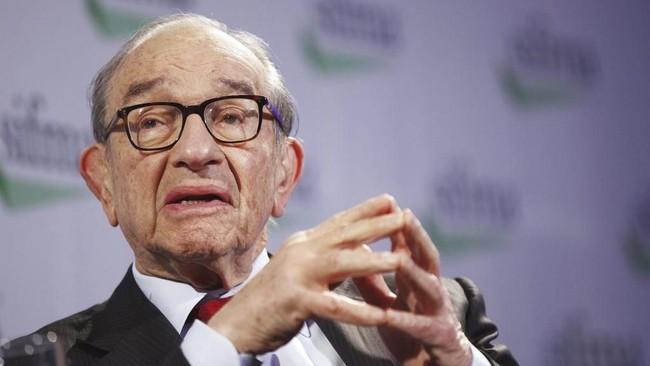
The world has lost one of the most influential figures in the history of modern monetary policy. Former US Federal Reserve Chair Alan Greenspan died on Monday at the age of 100. His passing not only reminds markets of the golden era of the US economy in the 1990s but also reopens a long-standing debate about central bank independence and the complex relationship between monetary policy and politics.
Greenspan’s name is synonymous with one of the most glorious periods in US economic history. Under his leadership, inflation was controlled, economic growth accelerated, the stock market experienced a long rally, and the internet revolution began to reshape the global economy. Yet, his legacy is not without blemish. Academic Peter Conti-Brown described Greenspan as the figure who most represented America’s contradictions in the 1990s. He was a symbol of economic success, but also a figure later criticised for placing too much faith in market mechanisms. During his nearly two decades at the helm of the Fed, Greenspan was praised for maintaining stability, but he was also seen as paving the way for excessive risk-taking in the financial sector, which ultimately contributed to later crises.
Beyond the debate over his monetary policy, one of Greenspan’s most relevant legacies is how a central banker confronts political pressure. His first lesson was one of courage. Shortly after his appointment in 1987, he faced pressure from then-Vice President George H.W. Bush. As the 1988 election campaign heated up, the Fed under Greenspan raised interest rates, fearing the economy was overheating. Bush, who won the election easily, later saw his popularity wane as the economy weakened. In 1991, he pushed for immediate rate cuts, but Greenspan only eased policy gradually. This independence was later reinforced under President Bill Clinton, whose administration adopted an unwritten rule against publicly criticising the Fed, a stance strengthened by the close working relationship between Greenspan and Treasury Secretary Robert Rubin. The lesson for his successors was clear: the most important political task of a Fed Chair is to maintain the independence of monetary policy, resisting the short-term political desire for lower interest rates.
However, Greenspan’s legacy also carries a darker side, where he arguably strayed too far into the political arena. In 2001, he supported the George W. Bush administration’s push for massive tax cuts, a policy that contributed trillions to the national debt and effectively ended the bipartisan commitment to fiscal discipline. Greenspan later admitted this support was a mistake, but the acknowledgement came too late. He also waded into the debate over privatising Social Security. While his technical expertise on the issue was considerable, having chaired a commission on it before joining the Fed, his use of the central bank’s prestige to support a specific political agenda was seen as a misstep that tarnished his own legacy.