
Alan, a Subang Resident, Develops Pineapple Leaves into Eco Fashion
The smoke from burning pineapple leaves was once a daily sight in the skies over Cikadu Village, Subang Regency. Rather than bringing benefit, the post-harvest waste piles from a one-hectare pineapple plantation producing up to 14 tonnes of waste became a boomerang.
Besides contributing to greenhouse gas emissions, the toxic smoke triggered a surge in acute respiratory infection (ISPA) cases, making it the second most common disease in the village in 2020 with 878 cases.
Amid this concern, a glimmer of hope emerged from the skilled hands of Alan Sahroni. Armed with sincerity and extraordinary consistency, this young local mentored by Pertamina EP (PEP) Subang Field succeeded in turning agricultural waste that was often discarded into a commodity of high economic value.
The fruit of this consistency led him to win the Gold award for the Best Local Hero category at the Community Involvement and Development (CID) Upstream Award 2026 held by PT Pertamina Hulu Energi in Jakarta in mid-August.
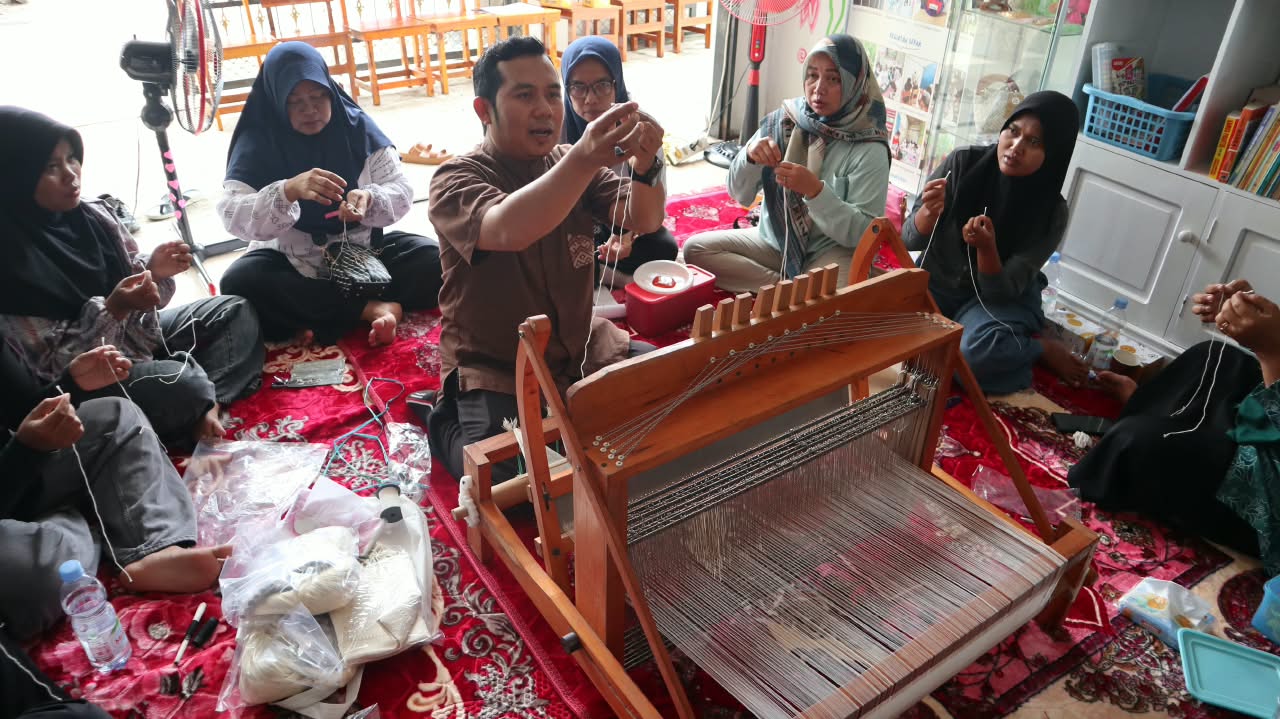
Alan recounted his journey, which was not instant. Together with PEP Subang Field, he initially initiated the Pinlefi (pineapple leaf fibre) group through the Pesona Subang programme to process leaf waste into environmentally friendly textile fibre with a zero-waste concept. The innovation further transformed in 2024 through the Serat Cinta programme (Synergy of People’s Economy based on Renewable Nature through Innovation Creation and Added Value).
Alan modified his homemade decorticator machine into a multifunctional machine capable of extracting not only pineapple leaves but also banana tree stems (gedebog) into yarn, fabric, and eco-fashion and craft products.
The Serat Cinta programme from Pesona Subang also supports Sustainable Development Goal 12, namely waste processing for community welfare, and is part of the implementation of PT Pertamina EP’s Environmental, Social, and Governance (ESG) principles in creating sustainable social, economic, and environmental benefits.
To date, the programme has empowered 44 local residents comprising farmers, youth, and women’s groups with a production capacity of 160 kg of dry fibre per month. Farmers who once discarded waste now earn additional income, while weavers and machine operators gain a decent source of livelihood.
“The success of the programme is not measured solely by the number of products produced, but by how many people are re-empowered, independent, and smiling because their local potential is valued,” said Alan on Monday (31/8).
Meanwhile, Senior Manager of Pertamina EP Subang Field, Despredi Akbar, expressed appreciation for Alan’s achievement while affirming the company’s sustainability commitment.
“The Gold Best Local Hero award is clear evidence that collaboration based on sincere intentions can bring about major change for the community. Pertamina EP Subang Field will continue to accompany and provide full support to local heroes like Kang Alan. We believe true empowerment is born from community independence, and we are committed to being present and growing together with residents around our operational areas harmoniously and sustainably,” he said.
Through appropriate technology and sincere intentions for the benefit of others, Alan Sahroni and PEP Subang Field have proven that from pineapple leaf waste and banana tree stems, hope and a brighter future for Indonesia can be woven, from Cikadu Village, Subang.
Alan Sahroni’s achievement at the CID Upstream Award 2026 illustrates that change can grow from simple potential when communities have space to innovate and develop. It not only improves the management of pineapple leaf and banana tree stem waste but also turns pineapple leaves and banana trees into high-value commodities that can enhance the socio-economic quality of surrounding communities.