
Al-Azhar Egypt: A Crucible of Knowledge, Not a Holding Pen
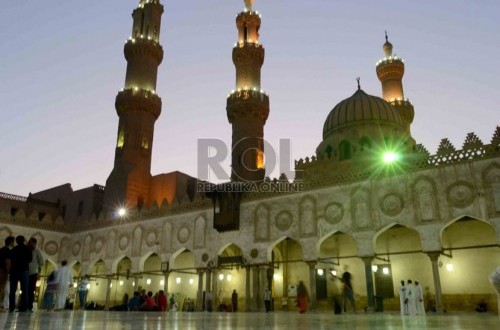
There is something interesting about the thousands of young Indonesians who each year choose to leave their homeland for Cairo. They come from pesantren, madrasahs, Islamic schools, and even from families willing to save for over a decade to fund their children’s departure.
They arrive with a single dream and aspiration: to study at Al-Azhar University, one of the most influential centres of Islamic scholarship that has safeguarded the sanad and intellectual tradition of the world for more than a millennium.
For many Indonesian Muslim families, Al-Azhar is not merely a university, but a symbol of knowledge, sanad, tradition, and religious authority that is firmly connected.
An Al-Azhar graduate does not only return home with a degree as a powerful symbolic asset, but also with life experience in an Islamic scholarly environment that is more than a thousand years old.
However, behind the surge of Indonesian students heading to Egypt, there lies a strategic question far greater than the matter of individual education: has the state developed a sufficiently mature ecosystem to manage this enormous potential as part of the national development agenda?
This question is important because behind the high number of Indonesian students in Egypt, there are complex issues. At the departure stage, there are tangled admission pathways, widespread broker practices, and uneven language proficiency.
In Cairo, these students must grapple with residence permit issues, economic pressures, academic problems, and scattered housing access, which give rise to various social problems that are not easy to resolve.
Ironically, the problems do not end when they graduate. Precisely when they set foot back in their homeland, they face a labyrinth of bureaucratic degree equivalency processes, a job market that struggles to recognise their competencies, or they are forced to serve far below their scholarly capacity.
Herein lies a paradox: Indonesia possesses a large Islamic scholarly diaspora, yet it does not fully have an ecosystem to manage it as a national strength.
Preparing the upstream
So far, our perspective on the problems of Indonesian students in Egypt remains highly fragmented. When a residence permit crisis emerges, the solution offered is limited to partial immigration measures.