
AKPRIND University Helps Bantul Farmers Convert Waste into Biogas
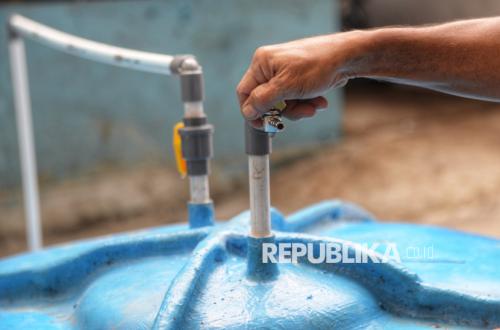
AKPRIND University has applied waste management technology and information technology-based management at the Reja Mulya Livestock Group in Pandes Hamlet, Wonokromo, Pleret, Bantul Regency, Special Region of Yogyakarta. The programme includes utilising livestock waste to produce biogas, using grass chopping machines, and digitising group management.
The activity is part of a Community Service Programme (PkM) carried out by a team of lecturers from AKPRIND University. The programme is led by Suraya as chief executive, with Indri Purwanti and Taufiq Hidayat as team members.
Suraya said that livestock waste has the potential to be used as an energy source while reducing the potential for environmental pollution.
“Livestock waste should not be a problem for farmers. Through biogas technology, waste can be processed into an alternative energy source that is useful for daily needs. In this way, farmers not only get a cleaner environment, but can also save on energy costs,” Suraya said in a statement received on Friday (14/8/2026).
In addition to the biogas installation, the PkM team introduced a grass chopping machine to help farmers prepare feed. The machine is expected to speed up the chopping process and produce a more uniform grass size.
“So far, most farmers still chop grass manually. The presence of a chopping machine can speed up the feed preparation process, save labour, and increase farmer productivity. Simple technology like this will greatly help daily livestock business activities,” Suraya added.
The programme also includes the implementation of an information technology-based group management system. This system is used to help record member data, livestock populations, production, administration, and the preparation of activity reports.
Indri Purwanti said that data management is one aspect that needs to be strengthened in the development of livestock groups.
“Livestock groups today cannot rely solely on field experience. Administration and data management must also be well organised. Through an information technology-based system, administrators will find it easier to record, monitor, and prepare reports needed for group development,” Indri Purwanti explained.
Taufiq Hidayat emphasised that the application of technology must be accompanied by improving human resource capacity so that the equipment provided can be used and maintained independently.
“Good equipment must be accompanied by user capability. Therefore, we do not just hand over technology, but also provide direct training and mentoring so that group members are able to operate, maintain, and develop the technology independently,” he said.
Chairman of the Reja Mulya Livestock Group, Slamet Riyanto, said the mentoring helped the group address a number of needs in livestock activities.
“Biogas helps us utilise livestock waste into useful energy, the chopping machine makes feed preparation faster and easier, while the information technology-based management system helps make group administration more orderly,” he said.
The activity is part of the 2026 Community Partnership Empowerment Grant Programme funded by the Directorate of Research and Community Service, Directorate General of Higher Education, Research, and Technology, Ministry of Higher Education, Science, and Technology of the Republic of Indonesia.
The funding support enables technology developed in higher education institutions to be applied directly in the community.