
AKITO Global Group Partners with Surakarta Chamber of Commerce to Prepare Solo as Host City
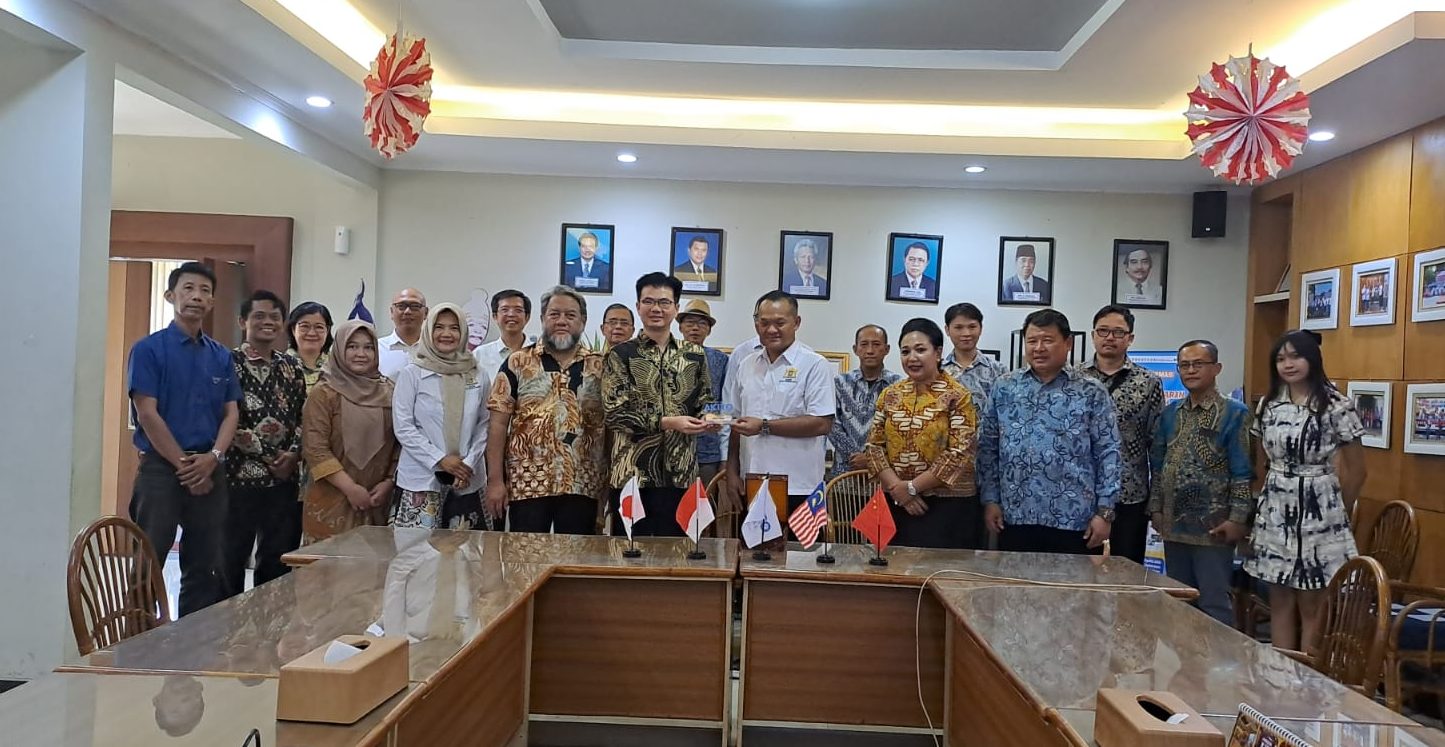
SOLO, MettaNEWS – The Surakarta Chamber of Commerce and Industry (KADIN) has welcomed a visit by AKITO Global Group of Companies, which proposed strategic cooperation in investment, trade, human resources development and international business networks. One of the main topics discussed was a plan to hold a Global Business Forum in Solo on 3–6 June 2027, coinciding with the Javanese New Year, or 1 Suro.
The meeting took place at the Surakarta KADIN office on Saturday, 7 November 2026. It was attended by AKITO Global Group & Companies founder K.R.A. Albert Cheng Ming Hua Condronagoro and a delegation that included Simon Hong, Allen Tang, Takao Kusunoki, businesspeople and representatives of related organisations.
The meeting marked an initial step towards collaboration between Surakarta KADIN and AKITO Global Group, aimed at opening opportunities in investment, trade, marketing, business networking and cooperation at local, national and international levels.
In his opening remarks, Surakarta KADIN executive Farid Sunarto said the chamber welcomed the visit and the cooperation proposals from AKITO Global Group. He said the meeting offered an opportunity to build strategic collaboration, including a proposed Business Networking and Forum.
The forum is expected to bring together businesspeople, investors and potential partners from various countries, while expanding market and investment access for businesses in the Solo Raya region.
Febri Hapsari: Solo chosen for its culture and business potential
Surakarta KADIN deputy chairwoman Febri Hapsari Dipokusumo said that, before visiting KADIN, the AKITO Global Group delegation had met Surakarta Mayor Respati Ardi to explain the purpose of its visit and its cooperation plans.
Febri said the mayor had welcomed the proposal and was ready to connect AKITO’s global business network with local entrepreneurs, micro, small and medium-sized enterprises (MSMEs), and universities in Surakarta.
She said one notable aspect of the visit was AKITO’s reason for choosing Solo as a base for developing international business networks.
“I also asked, ‘Why did you choose Solo?’ They said, ‘Jakarta is too busy and Bali is too crazy’,” Febri said, quoting AKITO’s explanation.
Febri said AKITO’s interest in Solo was based not only on economic opportunities, but also on its rich culture and the character of Javanese society, which she said had particular appeal for international audiences.
The AKITO delegation had earlier visited the Kasunanan Surakarta Palace, the Batik Museum and several other cultural attractions.
Febri said the Global Business Forum was planned for 3–6 June 2027. The dates were chosen because the delegation wanted to witness the 1 Suro traditions in Solo.
“So, in June, between the 3rd and 6th, they will hold a Global Business Forum. Why June? They want to attend the 1 Suro ceremony,” she said.
AKITO is targeting around 40 to 60 businesspeople and investors from various countries, including Malaysia, Japan and China, as well as countries in the BRICS group.
Alongside the business forum, the event is expected to feature promotional booths for local products and businesses, giving them a chance to present their offerings directly to prospective international partners.
Febri also raised the possibility of promoting Solo batik in the Malaysian market. Initial discussions had included a potential order for batik uniforms for around 20 schools in Malaysia through Batik Kauman.
“Yesterday, our chairman had some initial discussions with Batik Kauman. Perhaps other businesses can make offers later. In Malaysia, every Thursday is Batik Day. People wear batik every Thursday, so this is an opportunity,” she said.
Febri said the cooperation could cover both the purchase of fabric and the tailoring work in Solo.
AKITO is also planning to bring six Japanese influencers to Solo in February 2027 to help promote the city’s potential and local products.
Febri said these plans could create new opportunities for entrepreneurs and MSMEs in Surakarta.
She also proposed developing Javanese wellness tourism, based on Javanese culture. This aligns with an opportunity identified previously during a Tourism Ministry sales mission in Sentul.
“The mayor also emphasised Javanese wellness, particularly in June, during the Javanese New Year,” she said.
Febri said she hoped the cooperation would provide fresh impetus for the regional economy and strengthen Solo’s position as an international destination for culture, wellness and business.
Ferry Indrianto: Solo Raya should again become ASEAN’s economic gateway
Surakarta KADIN chairman Ferry S. Indrianto said cooperation with AKITO should focus on creating economic value, raising productivity and connecting the industrial potential of Solo Raya with global supply chains.
Ferry said Solo Raya had a long history as one of ASEAN’s major textile industry areas. That history showed the region had the human resources, expertise and character needed to rebuild its economic strength.
“KADIN is an organisation active in business and driving the economy. The key to driving the economy is creating added value,” Ferry said.
He hoped cooperation with AKITO would help create a more productive economic region, in both goods and services.
“I hope we can also connect with global supply chains, with the new global order. We cannot stand alone. We must meet the requirements needed for productivity in Solo Raya to make it a gateway to ASEAN again,” he said.
Ferry said Indonesia’s large market should be seen as an opportunity to develop industrial areas and leading products in Solo Raya.
He also highlighted the region’s human resources, which he said had considerable potential to support industrial development, even compared with some industrial areas on Java.
Ferry said at least three areas needed strengthening: human resources, legal certainty and access to capital.
First, skills development should be aligned with global supply-chain needs by strengthening science, technology, engineering and mathematics (STEM).
Ferry praised Malaysia for successfully shifting education towards STEM through policy measures and incentives.
“I was also very surprised by Malaysia. It has redirected its human resources towards STEM. Students who might initially have studied law were encouraged to take STEM, and then given incentives,” he said.
He hoped cooperation with AKITO would help Solo Raya develop a STEM ecosystem through collaboration with educational institutions, experts and internationally accredited organisations.
Ferry said universities including Muhammadiyah University of Surakarta (UMS), Sebelas Maret University (UNS) and Slamet Riyadi University (UNISRI), as well as vocational education institutions, could be brought together to develop skills that meet industry needs.
“We are ready to support this. Should the STEM ecosystem be linked to Malaysia’s STEM ecosystem? Let’s do it. Should we bring in overseas experts with international accreditation for STEM? Let’s do it; we are ready,” he said.
The second area is legal and regulatory certainty. Ferry said cooperation between regions was necessary to create a favourable investment climate.
In this regard, Surakarta KADIN has promoted cooperation across the Solo Raya agglomeration, involving seven local government areas.
He noted that, historically, Surakarta covered a much larger area than the present-day city of Surakarta.
“That is why, in the context of creating a region together with AKITO, we are open to it. Should the STEM ecosystem be linked to Malaysia’s? We are ready,” he said.
The third area is financing. Ferry said foreign direct investment (FDI) was needed to drive industrial growth and job creation.
He highlighted differences in financing costs between countries, which he said were an important factor in investment competitiveness.
“FDI in Japan is about 1 per cent a year. In Vietnam it is now 4.5 per cent a year, Malaysia is also 4 per cent, and Singapore is 2 per cent. Indonesia is at 11.75 per cent today. That means we are less competitive, and this is an opportunity for AKITO to help bring in capital,” Ferry said.
He said AKITO could act as a bridge between Solo Raya’s investment needs and international funding sources and business networks.
Ferry also said communication and business collaboration among ASEAN countries needed to be strengthened.
“In the West, countries always talk about complementarity. What do you need, and what can I produce for you? They complement one another. This culture of complementarity is still lacking in ASEAN,” he said.
He added that Indonesia and Solo Raya needed FDI because domestic fiscal and monetary capacity remained limited in meeting investment needs.
“Indonesia and Solo Raya need FDI. From a fiscal and monetary perspective, we are very constrained in Indonesia. Whether from tax revenue, money in circulation or the size of the economy, the capacity is very limited. If we want an easier route, we have to attract FDI,” he said.
Ferry also highlighted how artificial intelligence (AI) was changing industry needs. He said human resources development therefore had to respond closely to changes in business requirements.
He hoped the Global Business Forum in June 2027 would bring these interests together and pave the way for investment in Solo Raya.
“We will also make sure that when we talk about Solo, we do not mean only Surakarta City. Solo means the whole of Solo Raya. Only then will we return to our original definition of Surakarta,” he said.
Albert Cheng: Javanese culture is a window for introducing Solo to the world
K.R.A. Albert Cheng Ming Hua Condronagoro, founder of AKITO Global Group & Companies in Japan, China, the United States and Malaysia, said one of the main aims of his visit was to build international business relationships by drawing on Solo’s cultural strengths and the character of its people.
In his presentation, Albert outlined four main topics: global economic developments towards 2050, Surakarta’s strategic position, business development opportunities, and a proposal to cooperate through a Global Business Conference or Global Business Forum.
Albert said culture was the most effective way to introduce Indonesia to international audiences and businesses.
“I think the programme we discussed would be good: a global business conference or business forum to bring more people from abroad, foreign businesspeople and investors, to learn more about Indonesia,” he said.
He said Solo’s cultural wealth could serve as a window through which foreigners could understand Indonesia before considering business opportunities.
“Culture is the easiest window through which to introduce ourselves to foreigners. From there, they will understand. Japanese people will understand Japan’s connection with Solo, Chinese people their connection with Solo, and then they will understand and start thinking about business,” he said.
Albert also described a principle that had guided his international business relationships.
“I have always believed that friends make business, rather than business making friends,” he said.
He explained that friendship and trust should be established before entering into business cooperation.
“Because of you, we are friends now, so I will think about what business we can do together. It is not that we do business and then become friends. We make friends first, then do business. That is what I hope we can do with KADIN,” he added.
Asked why he had chosen Solo, Albert reiterated that he was looking for a city with a more harmonious and comfortable atmosphere in which to build long-term business relationships.
“I don’t want somewhere as tense as Jakarta or as crazy as Bali. Sometimes we go to Jakarta and it is good, or Bali and it is fine and relaxing, but not every day,” he said.
Aside from the city’s atmosphere, Albert said he was impressed by the harmony of life in Central Java, which he considered distinctive.
He said people with different religions, beliefs, cultures and ethnic backgrounds appeared able to live together well.
“What is very important is the harmony in Central Java. I was surprised that people of different religions can all socialise together. Compared with Malaysia, there are some things that are not easy to do. But here there is Mataram, Javanese culture. I think this is something very unique,” he said.
His visit to the Batik Museum also made a strong impression. Albert said he saw batik as part of Indonesia’s identity and cultural DNA, reflecting harmony.
“So I can see that harmony is in Indonesia’s DNA. Everyone who lives here—Japanese people, people of any ethnicity, and all Indonesians—can be part of it. In Malaysia, it is difficult to find this kind of DNA,” he said.
Albert also proposed promoting Javanese culture more widely through an International Javanese Day.
The idea is based on his belief that Javanese culture has significant potential to gain global recognition and serve as a form of cultural diplomacy, as well as a gateway to the creative economy and tourism.
Regarding the Global Business Forum planned for June 2027, Albert said he hoped it would bring more foreign businesspeople and investors to Solo and give local entrepreneurs opportunities to expand overseas.
“What I hope is that more people will come in June to learn about Indonesia, and that local businesspeople and entrepreneurs will have opportunities to look abroad. That is what I want to see,” he said.
Initially, AKITO is targeting around 40 to 60 participants from various countries through its partners’ business networks.
“Perhaps Captain Simon can bring Malaysian Chinese businesspeople, Allen can bring people from China, and Mr Takao from Japan. So I think 40 or 60 people would be a very good first target,” Albert said.
New opportunities for Solo’s economy and international promotion
The proposed collaboration between Surakarta KADIN and AKITO Global Group is expected to go beyond preliminary discussions and develop into concrete cooperation that benefits regional businesses.
The opportunities raised include attracting foreign investment, promoting MSME products, cooperation in the textile and batik industries, and strengthening vocational education.
Source: jawawa.id (https://jawawa.id/newsitem/akito-global-group-partners-with-surakarta-chamber-of-commerce-to-prepare-solo-as-host-city-1794102662)
Originally published by mettanews.id (https://mettanews.id/akito-global-group-gandeng-kadin-surakarta-solo-disiapkan-jadi-tuan-rumah-global-business-forum-juni-2027/), translated from Indonesian