
AJI and SAFEnet Spotlight Narratives of 'Foreign Agents' and the Surge in Digital Attacks
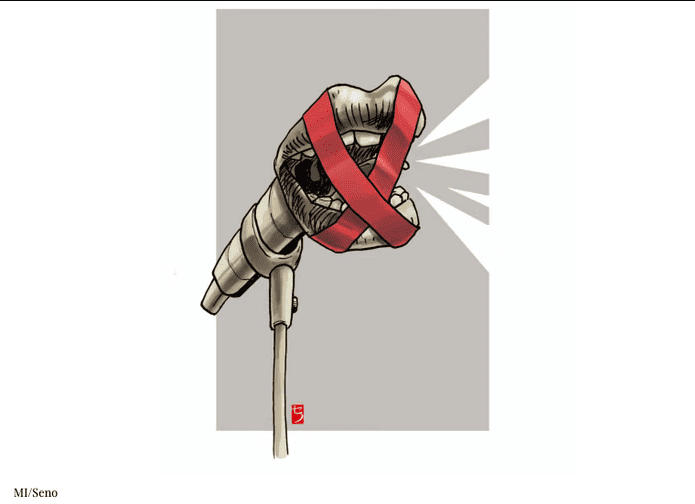
Narratives of ‘foreign agents’—a term repeatedly levelled by President Prabowo Subianto at government critics—are being seen as exacerbating disinformation and heightening attacks on journalists and civilians in the digital space. Nany Afrida, Chairperson of the Independent Journalists Alliance (Aliansi Jurnalis Independen, AJI), said that labeling media and journalists has long existed but is now more widespread, with stigmatisms such as ‘disloyal’, ‘unpatriotic’, and ‘foreign agents’ becoming common. ‘If in the past it didn’t fit, people would be angry. Now it’s more widespread with all sorts of labels—dissidents, criminals, unpatriotic, foreign agents, and so on,’ Nany said during Amnesty International Indonesia’s discussion ‘Imaginary Enemies: Misinformation, Disinformation, and Accusations of “Foreign Agents” in Jakarta’ on Tuesday (19 May). She argued that such practices directly affect the credibility of media and journalists who rely on public trust; disinformation and propaganda make journalism more vulnerable because government criticism is met with personal attacks. ‘Whenever there is a news item that does not align with the government, they label us traitors, unpatriotic, foreign agents, and more.’ Nany stressed that the role of journalists is not to serve as the government’s mouthpiece or simply disseminate positive news. She cited that the push for media to support the government runs counter to the core tenets of journalism, which are grounded in facts and the watchdog function over power. ‘If that is the model, then it is PR work, not journalism. Journalists are always meant to critique and evaluate the current condition of government,’ she said. She noted several issues considered sensitive for journalists today, from the Free Nutritious Meals programme (MBG), the National Strategic Projects (PSN), to issues of social justice. Coverage of these topics often ends in digital attacks on media and journalists. ‘If journalists are brave enough to cover them, they are likely to be called foreign agents, traitors, unpatriotic, and not supportive of development,’ Nany said. AJI records a 190% rise in digital attacks against journalists in 2025, from 10 to 29 cases. Attacks range from doxxing and DDoS to intimidation and fictitious ransom orders. ‘Because they are deemed unpatriotic and foreign agents, it seems permissible to expose journalists’ personal data or dox them,’ she added. Nany also highlighted the emergence of self-censorship in media due to ongoing pressure and intimidation. She warned this is dangerous because the public is harmed when media can no longer freely report facts. ‘In such circumstances, it is the public that loses,’ she said. At the event, SAFEnet Executive Director Nenden Sekar Arum argued that the state is increasingly active in controlling the digital information ecosystem, including through propaganda and labeling content critical of the government. ‘Disinformation is becoming more explicit. Even without in-depth research, as social media users we can see propaganda being carried out openly,’ she said. She cited the government’s use of terms such as DFK—the disinformation, defamation, and hatred label—as a form of branding problematic content. However, she argued such labeling often targets criticism of government policy. ‘How labeling is used to control the narrative. The ’correct’ narrative is the one that only emerges from the government.’ Nenden noted that digital attacks are no longer limited to activists or journalists but also ordinary citizens who actively share criticisms on social media. SAFEnet records digital attacks on citizens tripling in 2025. ‘Most now are ordinary people active in the digital space voicing their concerns, yet they become targets of digital attacks,’ she said. She also highlighted government pressure on digital platforms through content moderation rules that constrict public space for expression. In this context, citizens become the most disadvantaged. ‘If we look at it, the effort to control the digital space and information ecosystem is now being pursued with full force by the state,’ she said. (Dev/P-3) Usman also argued that the accusations by President Prabowo reflect a pattern that is systematic.
Source: jawawa.id (https://jawawa.id/newsitem/aji-and-safenet-spotlight-narratives-of-foreign-agents-and-the-surge-in-digital-attacks-1779546157)
Originally published by Media Indonesia (https://mediaindonesia.com/politik-dan-hukum/891751/aji-dan-safenet-soroti-narasi-antek-asing-hingga-maraknya-serangan-digital), translated from Indonesian