
Airports Closed Due to Anak Krakatau Eruption, Angkasa Pura Suffers Rp 40 Billion Loss
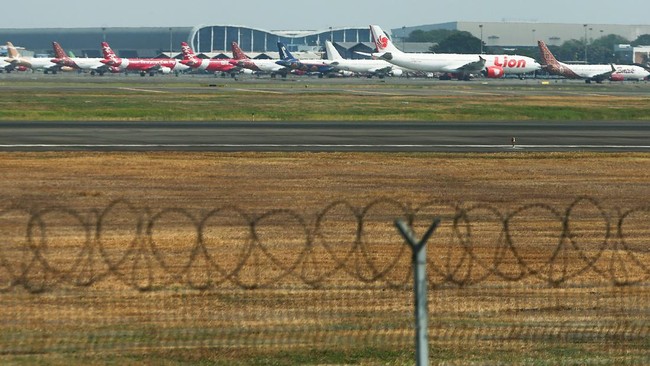
The eruption of Mount Anak Krakatau in September 2026 has disrupted operations at several airports in Indonesia. The spread of volcanic ash has even led to the temporary total closure of Soekarno-Hatta International Airport (Soetta) and several other airports. This closure has not only halted flights to and from Soetta but has also left hundreds of thousands of passengers stranded, triggering a chain effect across numerous other airports.
Under these circumstances, Angkasa Puala has had to divert some passengers to other airports on Java island and prepare shelters for passengers unable to continue their journeys. The Director of Operations of PT Angkasa Pura (Injourney Airports), Agus Haryadi, revealed that the financial impact of the closure of Soetta and several other airports over two days was quite substantial.
“In terms of losses, there are many. It could be around Rp 40 billion during the two days of closure. However, we are not focusing solely on that. Looking at our efforts, we provided buses so that passengers could still be mobilised to other airports on Java. We sent buses to Solo, Jogja, and Surabaya,” said Agus.
In addition to diverting passengers to several airports, Angkasa Pura also had to manage those who had already arrived at Soetta. Several of the company’s internal facilities were utilised to accommodate passengers, including Umrah pilgrims who had arrived from various regions and were unable to proceed with their flights.
“For the stranded passengers, we can accommodate them in several places. One of them is our employee lounge, which is actually a rest area for employees. It is quite suitable, and some Umrah pilgrims who had already arrived from regions such as Palangkaraya were housed there. There were approximately 200 people,” he said.
The situation in the terminals also required management to ensure that stranded passengers received basic necessities while waiting for flight certainty. Angkasa Pura provided snacks and drinking water for passengers affected by the closure.
“Furthermore, for passengers in the terminal, we provided some form of comfort, such as small snacks, drinking water, and so on. Fortunately, the response from the passengers towards us has been quite good,” said Agus.
The total closure of several airports is a matter of particular concern as these airports are among the largest aviation hubs in Indonesia. According to data provided by Agus, activity at Soetta currently reaches approximately 1,000 aircraft movements per day, with a passenger volume of around 130,000 people.
The impact is even greater because the disruption is not limited to Soetta. Halim Perdanakusuma, Tanjung Karang, and Bandung airports have also been affected, meaning the total number of affected passengers is estimated to exceed 200,000 people.
This experience serves as a significant note for airport operators, as the total closure of Soetta is said to be unprecedented in recent decades. Even during the Covid-19 pandemic, Soetta’s operational status remained open, despite flight restrictions.
“As far as I know, having worked at Soekarno-Hatta since 1992—which means 35 years—I have never experienced a total airport closure. Even in my previous checks, Soekarno-Hatta had never been completely closed. This is the first time Soekarno-Hatta has closed entirely. Even during Covid, the airport status was open. But this is a true closure,” said Agus.
Agus stated that the scale of the disruption made passenger management a massive challenge for the airport operators. To face this extraordinary situation, Angkasa Pura immediately activated emergency handling procedures and opened coordination posts during the closure period.
“Soekarno-Hatta currently handles about one thousand movements per day, with approximately 130,000 passengers. If you multiply that by two, and add that Halim, Tanjung Karang, and finally Bandung were also closed, the number of affected passengers might exceed 200,000. You can imagine the challenge of managing 130,000 passengers whose departures were cancelled,” concluded Agus.