
AirNav Strengthens Air Traffic Management in the Asia-Pacific
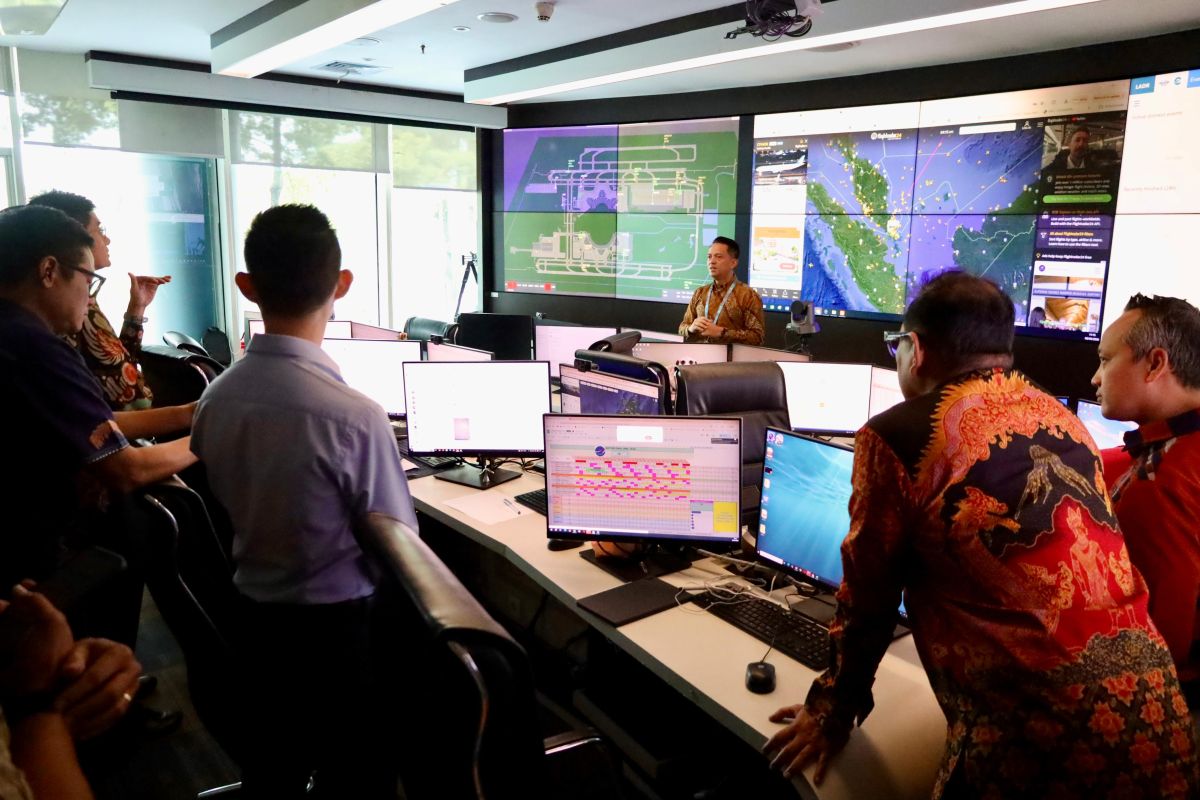
Tangerang - AirNav Indonesia, in collaboration with the Civil Aviation Authority of Singapore (CAAS), is working to strengthen regional air traffic management in the Asia-Pacific.
AirNav Indonesia’s President Director, Avirianto Suratno, explained that the collaboration focuses on developing Air Traffic Flow Management (ATFM), implementing Cross-Border Extended Arrival Flow Management (FlexMAN), and modernising air navigation through the Minimum Implementation Path (MIP).
“CAAS emphasises the importance of strengthening regional collaboration through a Regional Air Traffic Management (RATM) approach that prioritises modernising ATM systems, enhancing situational awareness, and collaborative decision-making among air navigation stakeholders in the Asia-Pacific region,” he stated.
AirNav Indonesia welcomes this step positively, following projections of significant growth in Asia-Pacific air traffic over the next two decades.
“This situation presents new challenges ahead, in the form of increasing airspace complexity, traffic density, and the need for interoperability of air navigation services between countries,” he said.
He added that this collaboration could impact the demands for efficiency and sustainability in aviation operations in the Asia-Pacific region.
Furthermore, it is expected to strengthen the exchange of traffic information, weather conditions, airspace density predictions, and cross-border air traffic flow management in a more integrated manner.
“One of the agendas discussed in the meeting was AirNav Indonesia’s involvement in the APAC Traffic Flow Coordination Call (TFCC), a regional ATFM coordination forum,” he noted.
In this regard, both parties also discussed the development of FlexMAN to support more efficient cross-border aircraft arrival management through sequencing coordination and upstream traffic flow control.
The implementation of this concept is expected to increase aircraft arrival predictability, reduce terminal airspace congestion, improve airspace utilisation efficiency, and lower aviation fuel consumption.
He emphasised that regional collaboration is a key factor in building an adaptive air navigation system to cope with air traffic growth and future operational challenges.
“Future air traffic management cannot be done partially. Strong regional collaboration, system interoperability, and strengthened cross-country coordination are needed so that Asia-Pacific airspace can be managed more safely, efficiently, and sustainably,” he said.
Source: jawawa.id (https://jawawa.id/newsitem/airnav-strengthens-air-traffic-management-in-the-asia-pacific-1778241223)
Originally published by Antara (Indonesian) (https://www.antaranews.com/berita/5560076/airnav-perkuat-pengelolaan-lalu-lintas-udara-di-asia-pasifik), translated from Indonesian