
Airlangga's Office Pushes for Acceleration of Dry Port Development in Batang SEZ
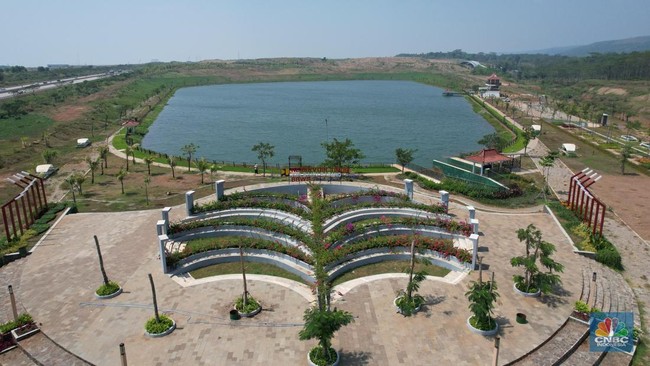
The government, through the Coordinating Ministry for Economic Affairs, has reaffirmed its commitment to strengthening the national logistics sector by promoting the development of the Dry Port in the Batang Integrated Industrial Zone (KITB).
This is marked by the signing of a Memorandum of Understanding (MoU) between several strategic parties, including PT Kereta Api Indonesia, PT Pelabuhan Indonesia, PT KITB, and PT Sarana Pembangunan Jawa Tengah for Cooperation in the Development, Expansion, and Operation of Rail-Based Logistics in the Batang Industropolis Special Economic Zone (SEZ), which took place in Batang, Central Java, on Tuesday (21/04).
“The development of the KITB Dry Port is a concrete step to improve goods distribution efficiency, strengthen the competitiveness of Indonesian products, and position Batang as an important logistics node in Central Java,” stated Deputy for Coordinating Trade and Digital Economy at the Coordinating Ministry for Economic Affairs, Ali Murtopo Simbolon, in an official statement on Thursday (28/4/2026).
On that occasion, Deputy Ali also conveyed directives from Coordinating Minister for Economic Affairs Airlangga Hartarto regarding the acceleration of the Batang Integrated Industrial Zone (KITB) Dry Port development.
As Chair of the Task Force for Accelerating Government Programmes to Support Economic Growth based on Presidential Decree Number 4 of 2026, Coordinating Minister Airlangga emphasised that the dry port will serve as a strategic instrument in enhancing national logistics transportation efficiency. The presence of this infrastructure is expected to reduce distribution costs while speeding up the flow of goods to and from the industrial zone. This infrastructure can become a catalyst for a modern, efficient, and sustainable national logistics system, while opening opportunities to achieve the national economic growth target of 8 percent in 2029 in line with the 2025-2029 National Medium-Term Development Plan.
Indonesia recorded economic growth of 5.11% in 2025, even increasing to 5.39% in Q4. Per capita GDP reached Rp83.75 million or equivalent to US$5,082. Investment also showed a positive trend with realisation of Rp1,931.2 trillion, up 12.7% from the previous year.
The transportation and warehousing sector became one of the main drivers of growth, achieving 8.78% in Q4 2025 and contributing more than 6% to GDP.
“Efficiency in this sector directly impacts the smooth distribution of goods and strengthens the competitiveness of Indonesian products in the global market,” said Ali.
The KITB Dry Port is projected to capture potential of up to 300,000 TEUs from a total of 4 million TEUs passing through the Central Java corridor. To realise this, an initial investment of around Rp2.4 trillion is required, covering the construction of container yards, rail infrastructure, and other supporting facilities.
In addition, the Batang SEZ is targeted to attract investments of up to Rp60 trillion over the next 4-5 years.
“This dry port will become the heart of integrated logistics services for dozens of factories and new industries that will be established in this zone,” Ali concluded.
Since operating, KITB has absorbed 5,500 workers from six companies. With the Dry Port development, workforce absorption is projected to surge to 39,000 people by 2029. This is expected to make a significant contribution to reducing unemployment and improving community welfare.
Deputy Ali emphasised the importance of accelerating the execution of the MoU by all relevant parties. The government, through the Coordinating Ministry for Economic Affairs, is committed to continuing to support and fully facilitate every process to ensure a conducive investment and business climate.