
Airlangga's Calculations: WFH for Civil Servants Saves State Budget Rp6.2 Trillion and Fuel Consumption Rp59 Trillion
The government is continuously strengthening state financial management through strategic measures such as prioritisation, refocusing, and efficiency in ministry and agency spending. One of these steps involves cultural transformation policies related to national work practices and energy policies.
Regarding work culture, the government has decided to implement work from home (WFH) once a week for civil servants (ASN), specifically on Fridays, to anticipate the ripple effects of the conflict in the Middle East. This policy will take effect from 1 April 2026.
The government has also issued technical regulations regarding the one-day-a-week work-from-home policy for certain sectors. In addition, the government is urging the public to save on fuel by implementing WFH for private sector employees and using public transportation for all citizens.
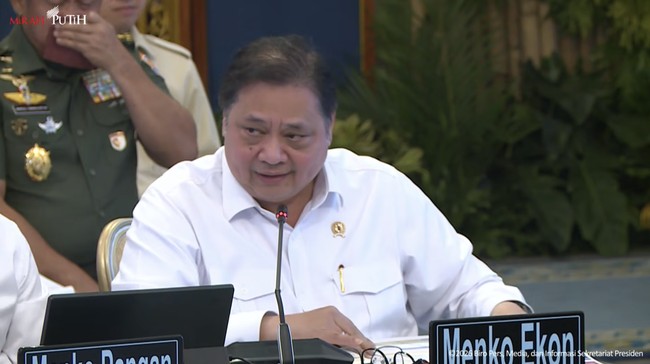
Coordinating Minister for the Economy Airlangga Hartarto calculates that the WFH policy could save the state budget (APBN) by Rp6.2 trillion and reduce fuel consumption by up to Rp59 trillion.
“The potential savings to the APBN of Rp6.2 trillion in the form of temporary fuel compensation savings, while the total fuel expenditure by the public is saved by Rp59 trillion,” said Airlangga during an online press conference, quoted on Monday (6/4/2026).
He emphasised that this policy is aimed at increasing the effectiveness of state spending to make it more productive and directly beneficial to the public.
“Budget reallocation is being carried out from less priority spending such as official travel, meetings, non-operational expenses, and ceremonial activities. This is towards more productive spending that directly impacts the public, including rehabilitation and reconstruction of disasters in Sumatra,” said Airlangga.
Refocusing the APBN
Furthermore, Airlangga explained that the government is also pushing for the acceleration of ministry and agency spending realisation, accompanied by sharpening through the optimisation of budget use.
“The potential for prioritisation and refocusing of ministry and agency budgets is in the range of Rp121.2 trillion to Rp130.2 trillion,” added Airlangga.
On that occasion, Airlangga also conveyed that the government is optimising the implementation of the free nutritious meals programme as part of efforts to improve human resource quality. This programme is directed at providing fresh food for five days a week.
“This programme is directed at providing fresh food for 5 days a week and still considers exceptions such as for dormitories, 3T areas, and areas with high stunting rates,” revealed Airlangga.
Airlangga explained that these efficiency policies are projected to generate potential savings of up to Rp20 trillion. The government continues to ensure that every policy taken provides real benefits to the public while strengthening the foundation of the national economy amid global dynamics.
“All these policies are part of structural transformation towards a more efficient, productive, and resilient economy,” concluded Airlangga.
Source: jawawa.id (https://jawawa.id/newsitem/airlanggas-calculations-wfh-for-civil-servants-saves-state-budget-rp6-2-trillion-and-fuel-consumption-rp59-1775641883)
Originally published by CNBC Indonesia (https://www.cnbcindonesia.com/news/20260406100700-4-724103/hitungan-airlangga-wfh-asn-hemat-apbn-rp62-t-konsumsi-bbm-rp59-t), translated from Indonesian