
Airlangga Urges Faster Implementation of CEPA Trade Agreements
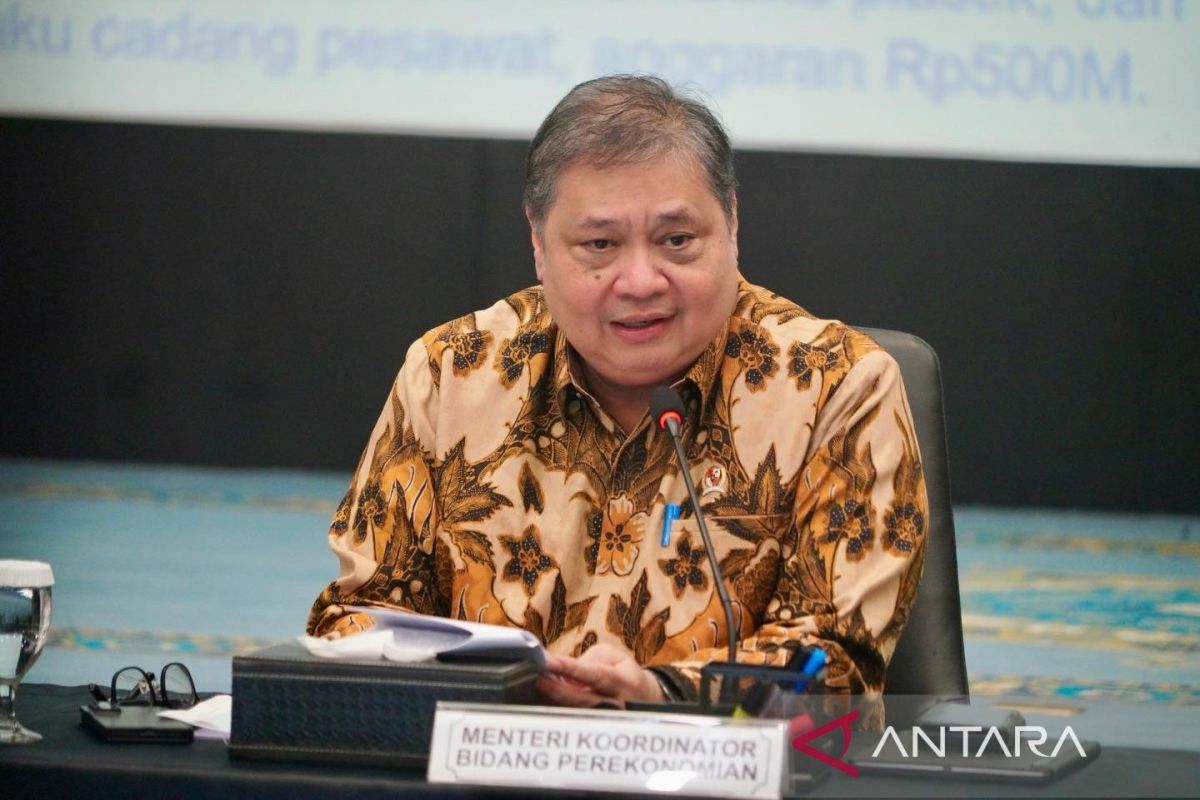
Jakarta (ANTARA) – Coordinating Minister for Economic Affairs Airlangga Hartarto has urged faster implementation of several comprehensive trade agreements (CEPAs).
Three agreements are expected to be implemented in the near future: the Indonesia–European Union Comprehensive Economic Partnership Agreement (I-EU CEPA), the Indonesia–Canada CEPA (I-CA CEPA), and the Indonesia–Eurasian Economic Union Free Trade Agreement (I-EAEU FTA).
Airlangga said in a statement in Jakarta on Wednesday that he wanted CEPA and FTA arrangements to do more than simply provide preferential access, and to translate into a tangible increase in their use by Indonesian exporters.
“Several trade agreements offer opportunities to expand markets through tariff reductions or elimination, greater certainty of market access, and new trading opportunities for products that previously faced relatively high tariffs,” he said.
Several analyses of the agreements’ impacts suggest that the I-EU CEPA could increase Indonesian exports by up to US$10.9 billion, the I-CA CEPA by around US$1.6 billion, and the I-EAEU FTA by between US$2.2 billion and US$2.89 billion.
These figures show that trade agreements offer more than tariff reductions: they also create scope to expand trade in commodities with production capacity and demand potential in partner countries.
Airlangga said that, according to Export Potential Analysis, CEPA opportunities could be pursued in several commodities with substantial export gaps. An export gap is the difference between current export value and the value that could potentially still be achieved in a partner market.
In the European Union, the European Free Trade Association (EFTA) and the United Kingdom, key opportunities include palm oil and its derivatives, motor vehicles, coffee, cocoa, rubber and rubber products, iron and steel, processed wood, and fishery products.
In Canada, export opportunities lie mainly in minerals and metals, chemicals, vehicles, wood and rubber, as well as machinery and electronic equipment.
Food and beverages, seafood, footwear, processed wood products, electronics, automotive goods and handicrafts are among the product groups whose exports could be promoted through the I-CA CEPA.
In the EAEU region, the main export opportunities are in chemicals, plant-based products, vehicles, minerals and metals, as well as wood, paper, rubber and plastics.
At the individual commodity level, palm oil, footwear, prawns, natural rubber, coffee and essential oils stand to gain better tariff opportunities through the I-EAEU FTA.
“Going forward, the Government’s focus is to align the use of CEPAs and FTAs with leading commodities that have a strong domestic production base and significant market potential in partner countries. Through this strategy, the benefits of trade agreements are expected to translate directly into a surge in national export performance,” Airlangga said.
Source: jawawa.id (https://jawawa.id/newsitem/airlangga-urges-faster-implementation-of-cepa-trade-agreements-1791989745)
Originally published by Antara (Indonesian) (https://www.antaranews.com/berita/5786833/airlangga-dorong-percepatan-implementasi-perjanjian-dagang-cepa), translated from Indonesian