
Airlangga Urges AI and Semiconductors to Become New Engines of Growth
“We are promoting artificial intelligence, semiconductors and digital talent because the skills required for these jobs will differ from those needed in labour-intensive and capital-intensive industries.”
Jakarta (ANTARA) – Coordinating Economic Affairs Minister Airlangga Hartarto has urged the development of artificial intelligence (AI), semiconductors and digital talent as new engines of economic growth to increase Indonesia’s productivity and competitiveness.
He said Indonesia needed to strengthen new sources of growth amid changes in the global economy, while also boosting productivity and preparing human resources to meet future economic challenges.
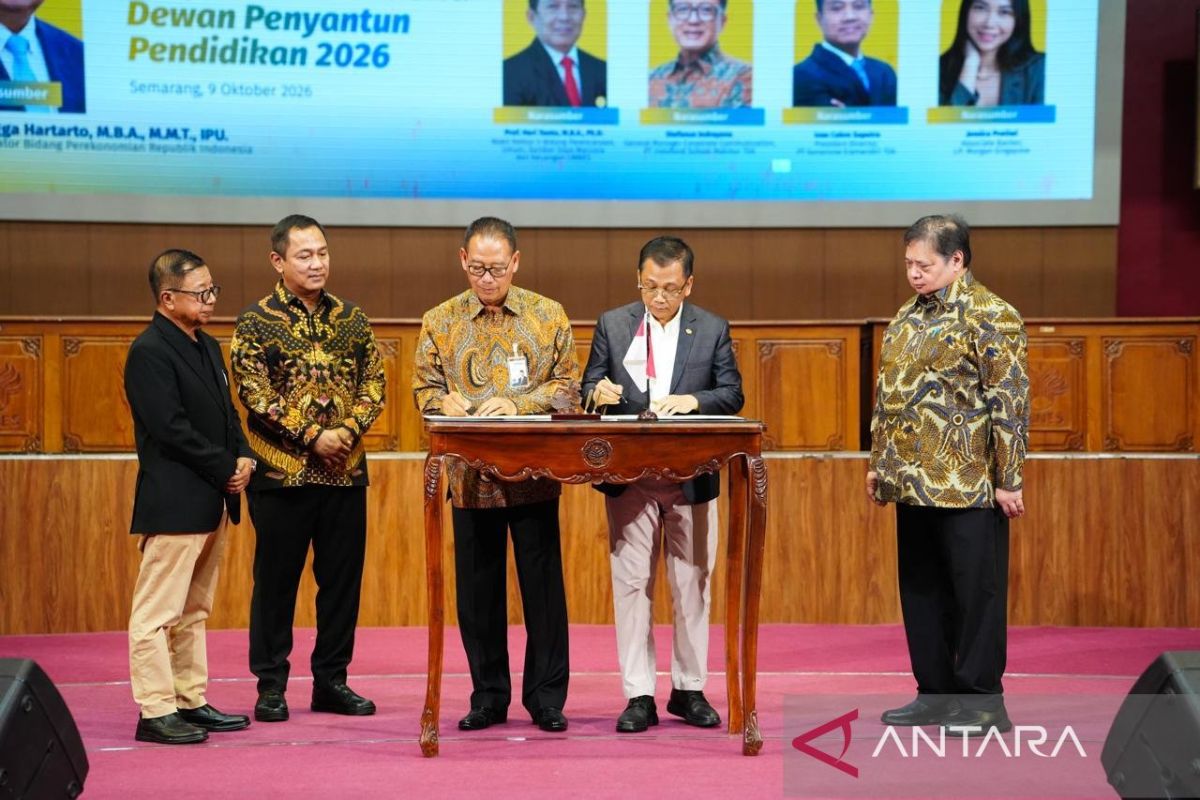
“Indonesia must continue to strengthen its new engines of growth. We need not only to maintain economic growth, but also to increase productivity, strengthen industry and prepare human resources capable of meeting future economic challenges,” Airlangga said at a public lecture and scholarship presentation at Semarang State University (UNNES) for 2026, according to a statement received in Jakarta on Friday.
Airlangga said digital transformation presented an opportunity that should be harnessed to improve productivity.
As the largest digital economy in South-east Asia, Indonesia needed to play a role not only as a user, but also as a developer and producer of digital added value.
To support this effort, developing an ecosystem linking data centres, AI, semiconductors and digital talent would become increasingly important in determining the future competitiveness of national industry.
The Government has also entered into a partnership with UK-based ARM Holdings to develop semiconductor technology.
The partnership is intended to strengthen semiconductor design capabilities and prepare the talent required by the industry.
Indonesia is also a founding member of the World Artificial Intelligence Cooperation Organization (WAICO), an international forum promoting AI development and governance.
At regional level, cooperation is also being strengthened through the ASEAN Digital Economy Framework Agreement (DEFA), which is expected to expand digital economic integration.
Airlangga further urged university students to master digital technology, saying that building human-resource capacity was necessary for Indonesia to meet the evolving needs of industry.
“Young people are more digitally literate than their grandparents and great-grandparents, so this is the next economy that we must master. We are promoting artificial intelligence, semiconductors and digital talent because the skills required for these jobs will differ from those needed in labour-intensive and capital-intensive industries,” he said.
To strengthen workforce readiness, the Government is promoting a range of digital talent programmes. These include technology talent exchanges with Singapore, development of the digital start-up ecosystem, super tax deductions of up to 200 per cent for qualifying activities, and the Digital Talent Scholarship programme.