
Airlangga: Technology must expand development access for vulnerable communities
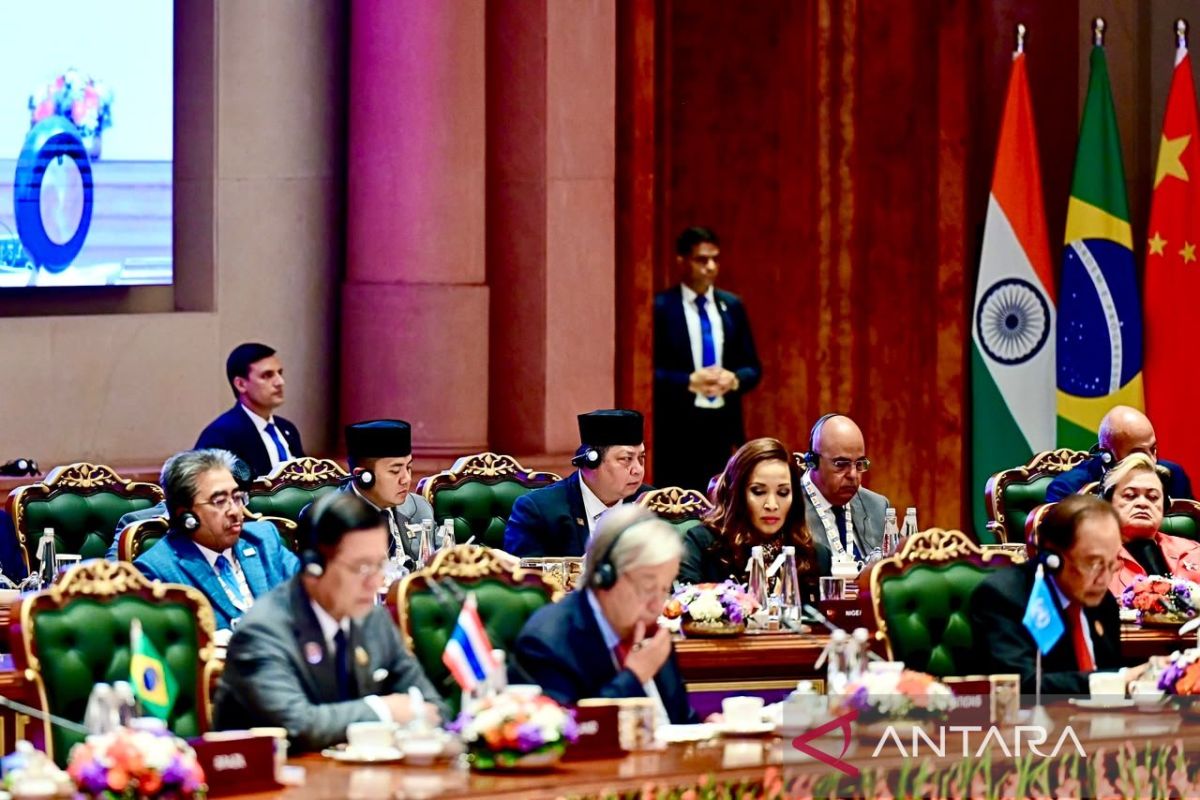
The progress we achieve must be felt by those most in need. We must utilise technology and innovation to ensure that no group of society is left behind, stated Airlangga in a statement in Jakarta on Monday.
These remarks were made while accompanying President Prabowo Subianto during the 18th BRICS Summit in New Delhi, India, on Sunday (13/9).
Airlangga noted that digital transformation serves as a key instrument to expand the benefits of development by enhancing service access and connectivity. The use of technology is also seen as a way to reach community groups that have previously not optimally benefited from development.
However, the Coordinating Minister for Economic Affairs warned that digital transformation must be carried out inclusively so that technological advancements do not inadvertently widen the inequality gap.
In this context, BRICS cooperation could play a role in strengthening knowledge exchange and access to technology, particularly for developing nations.
On the second day of the 18th BRICS Summit, President Prabowo participated in a session themed “Resilience, Innovation, Cooperation, and Sustainability: Shaping the Future for Inclusive Global Growth”.
Unlike the first day’s session, which was dedicated to full BRICS member states, the second day involved partner countries, outreach countries, and several international organisations.
During the forum, Prabowo emphasised the importance of building coherence between sustainable development policies, climate change mitigation, and disaster risk reduction. The President assessed that these three agendas need to be placed within a single, mutually reinforcing policy framework to ensure development outcomes can withstand various future risks.
In addition to promoting resilient and inclusive development, Indonesia also views that BRICS needs to begin playing an active role in discussions and negotiations regarding the direction of the global development agenda post-2030.
Given the population and economic scale of its member states, BRICS is considered to hold a strategic position to contribute to the formation of a more inclusive global development agenda. Indonesia encourages BRICS to not only serve as a forum for discussing various development challenges but also to produce concrete cooperation that delivers a direct impact to society.