
Airlangga: Starting Friday, Civil Servants to Implement One Day of WFH Per Week
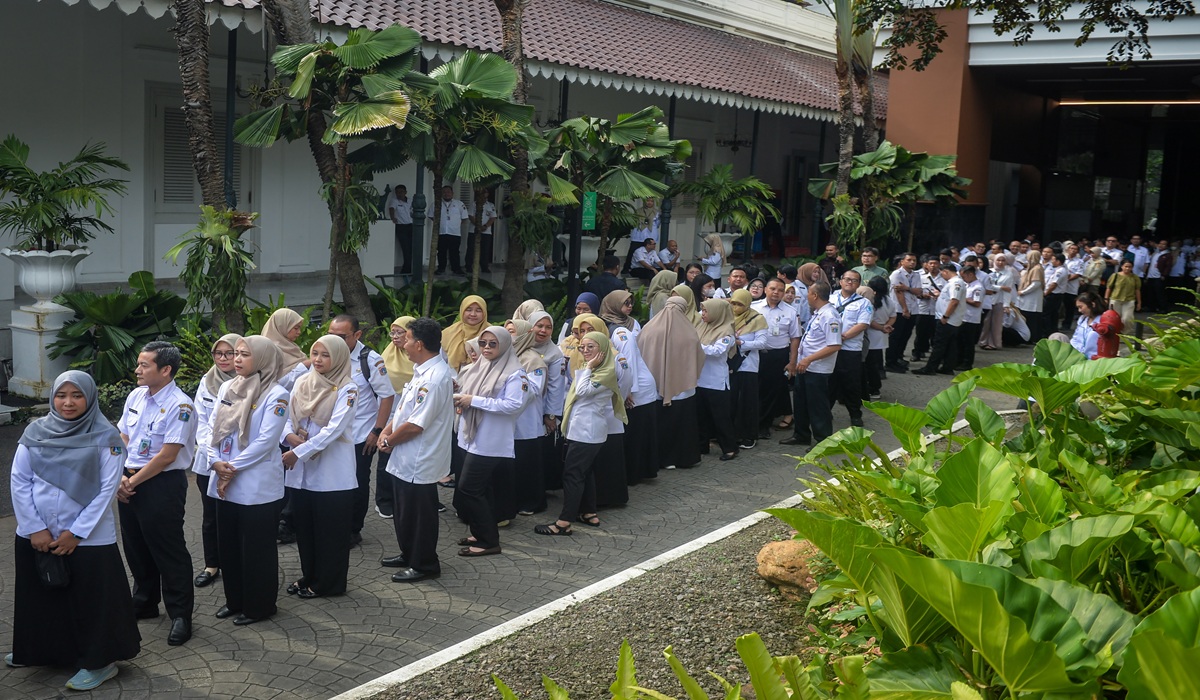
Coordinating Minister for the Economy, Airlangga Hartarto, has outlined the scheme for implementing the work-from-home (WFH) policy for civil servants (ASN) in both central and regional agencies. The scheme mandates one working day per week, specifically every Friday.
He explained that Friday was chosen because some ministries have already adopted a four-day workweek pattern supported by applications, particularly following the COVID-19 pandemic period.
“We also chose Friday because it is already a half-day. Meaning it is not a full shift from Monday to Thursday,” Airlangga stated during an online press conference on Tuesday (31/3).
Nevertheless, public services are assured to continue operating. Productive activities, including in the banking sector, capital markets, and others, will also proceed as usual. The arrangement of work implementation is delegated to each agency with support from specific applications.
The WFH policy will be formalised through circulars from the Ministry of State Apparatus Empowerment and Bureaucratic Reform (KemenPAN-RB) and the Ministry of Home Affairs.
Airlangga noted that this policy forms part of the government’s efforts to promote digital-based governance transformation.
Additionally, the government is emphasising efficiency in ASN mobility by limiting the use of official vehicles to 50%, except for operational needs and electric vehicles. (H-4)
Although ASN are permitted to work remotely, strict digital-based supervision will be enforced to ensure productivity is maintained.
Coordinating Minister for the Economy, Airlangga Hartarto, emphasised that certain business sectors will not follow the work-from-home (WFH) policy, such as the health and energy sectors.
This step is socialised as an anticipation measure against the impact of the global crisis to maintain productivity even while working remotely.
In response to the one-day-per-week WFH proposal, the readiness of digital infrastructure is key to ensuring productivity remains stable.
The policy is a follow-up to directives from the central government regarding efforts to efficiently use fuel amid the impacts of global conflicts.
The implementation of WFH is part of efficiency measures, particularly efforts to save on fuel oil (BBM) usage.
West Java Governor Dedi Mulyadi, commonly known as KDM, stated that his apparatus has already implemented work-from-home (WFH).
The work-from-home (WFH) system for civil servants (ASN) has been applied in Cianjur Regency, West Java, for the past two months.
Agus Pambagio doubts the effectiveness of one day of work-from-home (WFH) per week in saving energy. He suspects that WFH is merely a pretext for raising fuel prices.