
Airlangga Says Special Economic Zone Development Could Help Achieve 8% Growth
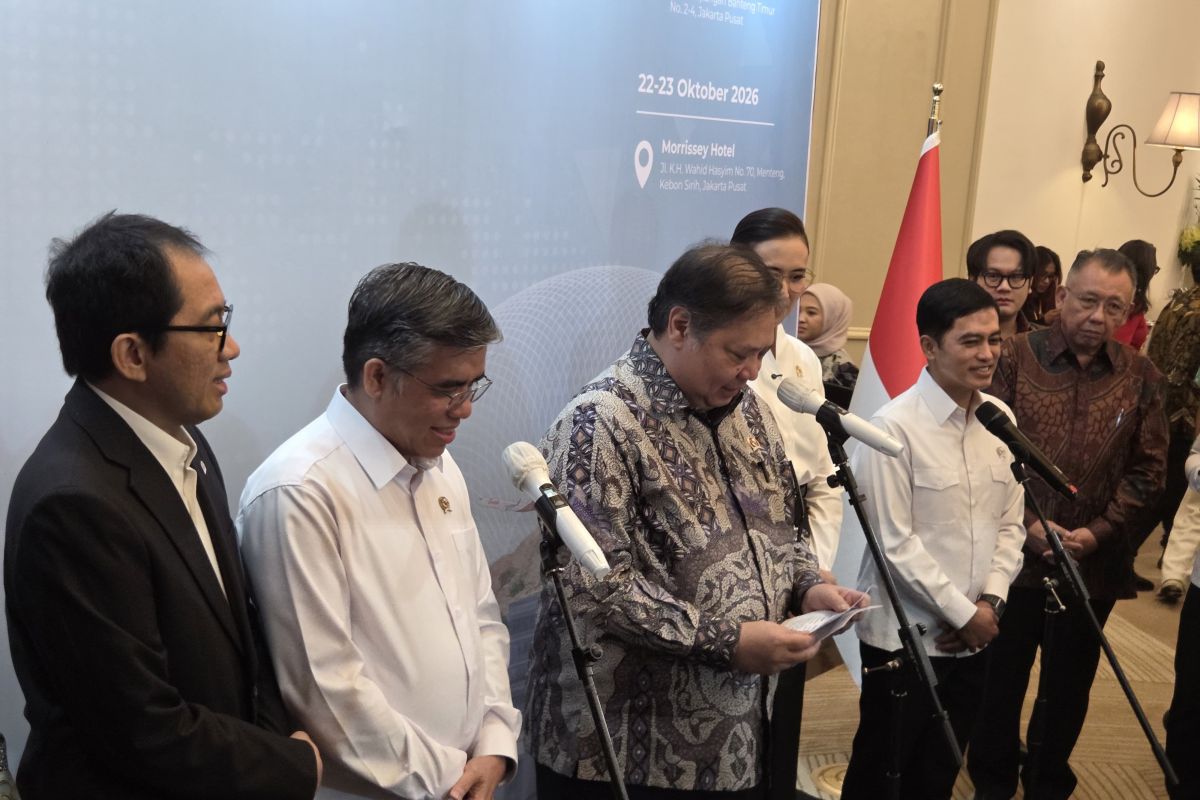
Jakarta (ANTARA) – Coordinating Economic Affairs Minister Airlangga Hartarto said the development of special economic zones (SEZs) needed to be accelerated to help achieve the target of 8 per cent economic growth.
Speaking at the third-quarter 2026 coordination meeting on ministry and agency support for SEZ development in Jakarta on Wednesday, he said SEZs had a better investment efficiency rate than the national average.
This is reflected in the Incremental Capital Output Ratio (ICOR), which is lower in SEZs than nationwide. The national ICOR stands at 6.1, while the average for SEZs is below 4.
“SEZs are one of the areas that must continue to be promoted. If we invest with an ICOR of 4, we can achieve 8 per cent growth,” he said.
Airlangga explained that a low ICOR indicates greater investment efficiency. This is an important factor in reaching the economic growth target: with a lower ICOR, investment can generate more growth than it does at present.
He added that improving investment efficiency was essential to optimise investment’s contribution to the economy.
“Going forward, SEZs are expected to drive economic growth. They have demonstrated that while our national ICOR is around 6, the average in SEZs is below 4,” Airlangga said.
“One way to improve the ICOR is through efficiency in both special economic zones and industrial estates, as this will accelerate growth,” he added.
Airlangga said Indonesia still had considerable room to develop SEZs compared with regional neighbours such as Vietnam and Malaysia. He said the two countries had SEZs covering around 1.8 million to 2 million hectares, while Indonesia’s SEZs covered about 24,000 hectares.
The government recorded Rp382.1 trillion in realised investment in SEZs from 2012 to September 2026. The zones have created 302,262 jobs and involved 509 business entities.
Investment in SEZs from January to September 2026 stood at Rp46 trillion, or 67 per cent of this year’s target of Rp69.1 trillion.