
Airlangga says S&P affirmation reflects global confidence in Indonesia
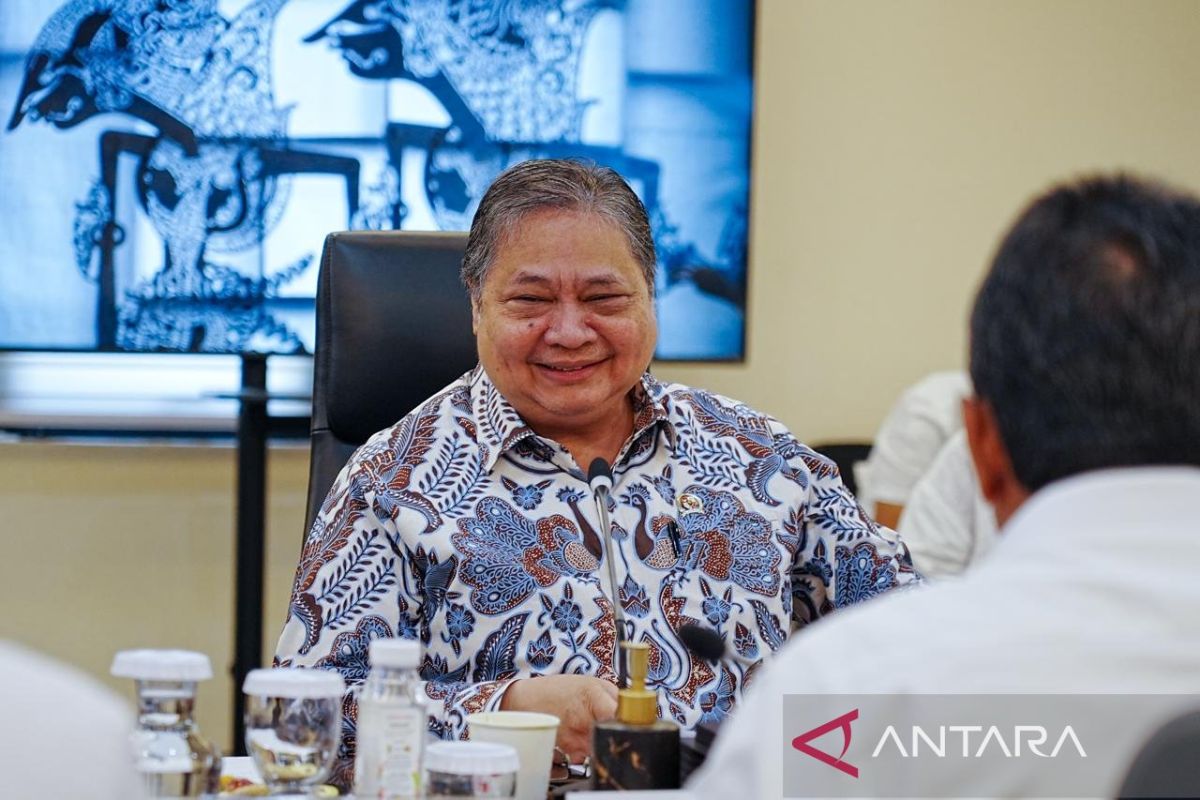
Amid rising global uncertainty, Indonesia has managed to maintain growth of around 5 per cent.
Coordinating Minister for Economic Affairs Airlangga Hartarto assessed that S&P Global Ratings’ affirmation of Indonesia’s sovereign credit rating at BBB with a stable outlook reflects the international community’s confidence in the government’s policy direction.
S&P assessed that Indonesia’s rating is supported by strong economic growth prospects, prudent macroeconomic policies, and relatively light net external debt and government debt burdens compared to peer countries.
“The rating affirmation by S&P at BBB with a Stable outlook is recognition of the Government’s economic policy consistency and credibility. Amid rising global uncertainty, Indonesia has managed to maintain growth of around 5 per cent, uphold fiscal discipline with a deficit below 3 per cent of GDP, and strengthen governance in the natural resources sector,” Airlangga said in his statement in Jakarta on Tuesday.
In its report titled “Indonesia Ratings Affirmed At ‘BBB/A-2’; Outlook Stable”, S&P projected that the Indonesian economy will grow by around 5 per cent per year over the next two to three years, with a real growth projection of 5.1 per cent in 2026 and an average of 4.9 per cent in the 2026-2029 period.
The achievement of 5.6 per cent year-on-year (yoy) growth in the first quarter of 2026 also served as a positive catalyst, driven by Government spending and accelerated budget disbursement. Indonesia’s GDP per capita is estimated to be in the range of 5,200 US dollars in 2026.
One of the main anchors of the Stable outlook is the government’s commitment to maintaining the budget deficit ceiling below 3 per cent of GDP. S&P views the track record of compliance across administrations with this deficit ceiling as an important support for Indonesia’s creditworthiness.
“State revenue performance also received a positive note, with revenue growth of 19 per cent in the first five months of 2026 compared to the same period the previous year. This improvement was driven by the recovery of tax administration, an increase in VAT receipts, and stronger royalty and dividend revenues from the natural resources sector,” explained Menko Airlangga.
Airlangga explained that S&P specifically highlighted the government’s steps to strengthen centralised management and curb leakages in the natural resources and minerals sector, which is considered to have the potential to increase state revenues as well as export foreign exchange earnings.
“The establishment of PT Danantara Sumberdaya Indonesia (DSI) is seen as an instrument that can change the landscape of the commodities sector, among other things through the curbing of miss-invoicing and transfer pricing practices. Together with the strengthening of the Natural Resources Export Proceeds (DHE SDA) policy, these measures are expected to strengthen Indonesia’s external position sustainably,” he explained.
From the financial system side, S&P views the contingent risks to the government as relatively limited, with banking sector assets below 60% of GDP and the banking sector’s country risk at a maintained level.
S&P stated that Indonesia’s rating has the potential to be upgraded (upside) if there is a structural strengthening in fiscal and external metrics, among other things through narrowing the budget deficit to close to 2 per cent of GDP, a sustainable increase in state revenues, a reduction in financing costs, and exchange rate stability.
Menko Airlangga stressed that the government will continue to strengthen the quality and predictability of policy implementation to maintain market confidence.
“The Government is committed to maintaining macroeconomic stability while encouraging economic transformation through downstreaming, strengthening governance of export proceeds, and increasing productivity. Consistency and predictability of policy will be key to pushing Indonesia’s rating up to a higher level,” he concluded.