
Airlangga Reveals Strategy to Maintain Indonesia's Emerging Market Status in MSCI
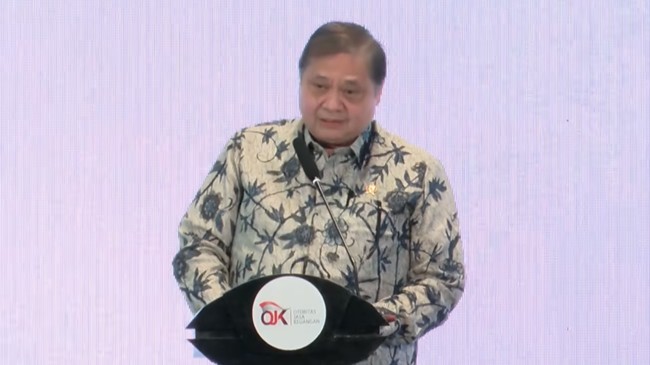
Coordinating Minister for Economic Affairs Airlangga Hartarto has stressed that the MSCI review results on 23 June 2026 serve as momentum to accelerate Indonesia’s capital market reforms. He stated that Indonesia’s retention of its Emerging Market status demonstrates the continued strength of the national economic fundamentals and market accessibility. The government appreciates MSCI’s feedback as part of a joint effort to improve the quality of the capital market. “Our focus is to ensure that every reform agenda does not stop at the policy level, but is consistently implemented to have a real impact on transparency, market integrity, and investor confidence,” said Airlangga in a release on Thursday (25/6/2026). The government is optimistic that Indonesia’s capital market will become increasingly transparent, efficient, and trustworthy, thereby strengthening the country’s position as a prime investment destination in the region while maintaining its Emerging Market status. The Coordinating Ministry for Economic Affairs stated that the government, together with the Financial Services Authority (OJK), the Indonesia Stock Exchange (BEI), the Indonesian Central Securities Depository (KSEI), and Bank Indonesia, is committed to accelerating and demonstrating tangible reforms ahead of the next review. This acceleration is being carried out through strengthened supervision, increased disclosure of share ownership information, improved governance of listed companies, strengthened trading integrity, and more effective law enforcement. The government will also maintain active communication with MSCI and the global investor community so that the progress achieved is clearly reflected in the assessment of the accessibility and investability of Indonesia’s capital market. Additionally, the government will continue to encourage financial market deepening to increase liquidity, expand the domestic investor base, strengthen the quality of price formation, and improve market efficiency. These reforms are part of a long-term agenda to make Indonesia’s capital market more transparent, credible, and competitive globally. These steps are supported by Indonesia’s strong macroeconomic fundamentals. Exchange rate stability, controlled inflation, healthy fiscal conditions, and close coordination between fiscal and monetary policies serve as important foundations for maintaining investor confidence in the national economy. MSCI announced the results of the MSCI 2026 Market Classification Review on 23 June 2026 local time. MSCI did not reclassify Indonesia and did not open a consultation regarding the possible reclassification of Indonesia from Emerging Market (EM) to Frontier Market in this year’s review. Thus, Indonesia remains in the Emerging Market category and continues to be part of the group of global investment destination countries. Specifically for Indonesia, MSCI conveyed several concerns that need continuous follow-up, particularly regarding the transparency of share ownership structures and the integrity of price formation. MSCI noted that global institutional investors still have concerns about the disclosure of share ownership information and indications of coordinated trading, which are considered to potentially affect the assessment of actual free float and the reliability of market prices as a reference for portfolio construction and index replication. This aspect is directly related to the Information Flow and Market Infrastructure pillars within the MSCI market accessibility framework. The decision confirms that Indonesia’s capital market still meets the key characteristics of an emerging market and remains part of the group of global investment destination countries. Amidst international economic and financial market dynamics still fraught with uncertainty, this decision reflects confidence in Indonesia’s economic fundamentals and the various reform measures undertaken by the government together with financial sector authorities. In the same report, MSCI also appreciated a number of reforms carried out by the government together with the OJK, BEI, and KSEI, namely: 1. Increased disclosure of shareholder identities with ownership above 1%. 2. Refinement of investor classification to be more granular, thereby improving the quality of ownership transparency. 3. Implementation of the High Shareholding Concentration (HSC) framework to identify high concentrations of share ownership. 4. A roadmap for gradually increasing the minimum free float to 15%. The minimum 15% requirement officially came into effect on 31 March 2026 through the revision of Stock Exchange Regulation No. I-A, with a phased compliance transition period based on issuer market capitalisation until 2027 and beyond, as well as a tiered scheme (15%/20%/25%) for new share listings.