
Airlangga Reveals Culprit Behind Indonesia's Trade Deficit, Turns Out It's Oil Prices
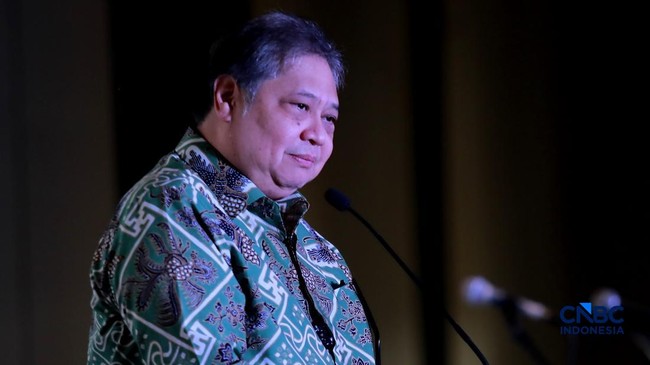
Coordinating Minister for Economic Affairs Airlangga Hartarto has revealed that the surge in global oil and gas prices is the main cause of Indonesia’s trade deficit. The increase in energy prices drove up the value of oil and gas imports, ultimately pushing the nation’s trade balance into the red.
Despite this, Airlangga is optimistic that the condition is only temporary. He hopes global energy prices will stabilise as the conflict in the Middle East eases following a ceasefire agreement.
“So it’s the impact of the change in oil prices, it has a direct impact. Of course, we hope their plan for a peace ceasefire will be seen in a month or two,” Airlangga said at his office in Jakarta on Wednesday (1/7/2026).
According to Airlangga, Indonesia’s trade fundamentals remain quite strong. This is reflected in the non-oil and gas trade balance, which still recorded a surplus, supported by exports of the nation’s leading commodities.
“If we look at the non-oil and gas balance, it is still positive, around US$2 billion. If we look at other figures, exports like our CPO, coal, and ferro alloy are relatively at the same level,” he said.
To reduce the pressure from rising imports due to expensive oil prices, the government has prepared a number of mitigation measures, one of which is providing incentives for the petrochemical industry, which uses a lot of imported oil-derived raw materials.
“Imported raw materials are petrochemicals, petrochemicals are derivatives of oil,” Airlangga stated.
He explained that the government is preparing a temporary import duty exemption policy for several petrochemical products to reduce production costs and the impact on inflation.
“That’s why the government is preparing to zero out the tariffs temporarily for six months, and that also has a knock-on effect on inflation,” Airlangga said.
Regarding implementation, Airlangga said the government is still waiting for the issuance of a Minister of Finance Regulation (PMK) as the legal basis for the policy.
“We are still waiting for the PMK process. So if that is completed, hopefully it will reduce the pressure,” he added.
Previously, the Central Statistics Agency (BPS) reported that Indonesia’s trade balance in May 2026 experienced a deficit of US$1.61 billion. This deficit is the first after Indonesia enjoyed a trade surplus for 72 consecutive months since May 2020.
BPS recorded that Indonesia’s import value in May 2026 reached US$24.81 billion, higher than the export value of US$23.20 billion.
Source: jawawa.id (https://jawawa.id/newsitem/airlangga-reveals-culprit-behind-indonesias-trade-deficit-turns-out-its-oil-prices-1782910324)
Originally published by CNBC Indonesia (https://www.cnbcindonesia.com/news/20260701182911-4-747291/airlangga-ungkap-biang-kerok-defisit-dagang-ri-ternyata-harga-minyak), translated from Indonesian