
Airlangga Proposes Palm Oil Exemption from Trump's 10% Tariff
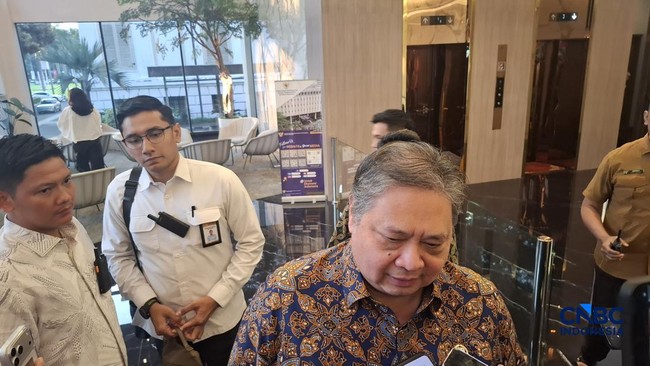
Coordinating Minister for Economic Affairs Airlangga Hartarto is planning to exempt several export commodities from the 10% tariff imposed by the United States. Airlangga stated that the new 10% tariff refers to Section 301 concerning forced labour, and Indonesia has officially been included among 17 countries deemed compliant. Regarding the list, his office is considering requesting an exemption for palm oil exports from the 10% tariff. “If referring to Section 301 on forced labour, it has been announced that Indonesia is relatively compliant compared to other countries. Initially, it was part of a group of 6 out of 60 countries, but in the latest calculation, that number rose to 17. However, regarding palm oil, we are currently requesting that it be exempted,” Airlangga told reporters at his office on Monday (27/7/2026). When asked whether other commodities besides palm oil would be exempted, Airlangga replied that he is still awaiting a decision from the United States Trade Representative (USTR). “Our tariff, this is still under investigation for Section 301. So it depends on the decision from there. The commodities are quite numerous, especially those based on Indonesia’s natural resources,” Airlangga explained. However, he did not detail the list of commodities to be exempted from the tariff, aside from palm oil. Previously, the most interesting part was in Annex II Part L, where the USTR stated that the additional 10% tariff does not apply to a number of Indonesian products listed by HS Code. The legal text reads: “the duty imposed by heading 9903.05.45 shall not apply to articles the product of Indonesia…” (Annex II Part L). The list contains hundreds of HS codes. When translated into commodity groups, most are high-value Indonesian export products, including crude palm oil (CPO), processed palm oil, coconut oil, various vegetable oils, and palm kernel meal. Also included are seaweed, medicinal plants, essential oils, tropical wood, plywood, rattan, and wickerwork. Cork, silk, pearls, and precious stones are also on the list, among many others. This means the additional 10% tariff does not automatically apply to a number of commodities that are mainstays of Indonesian exports to the international market.