
Airlangga: Investment in First Half of 2026 Grows 7.2 Percent
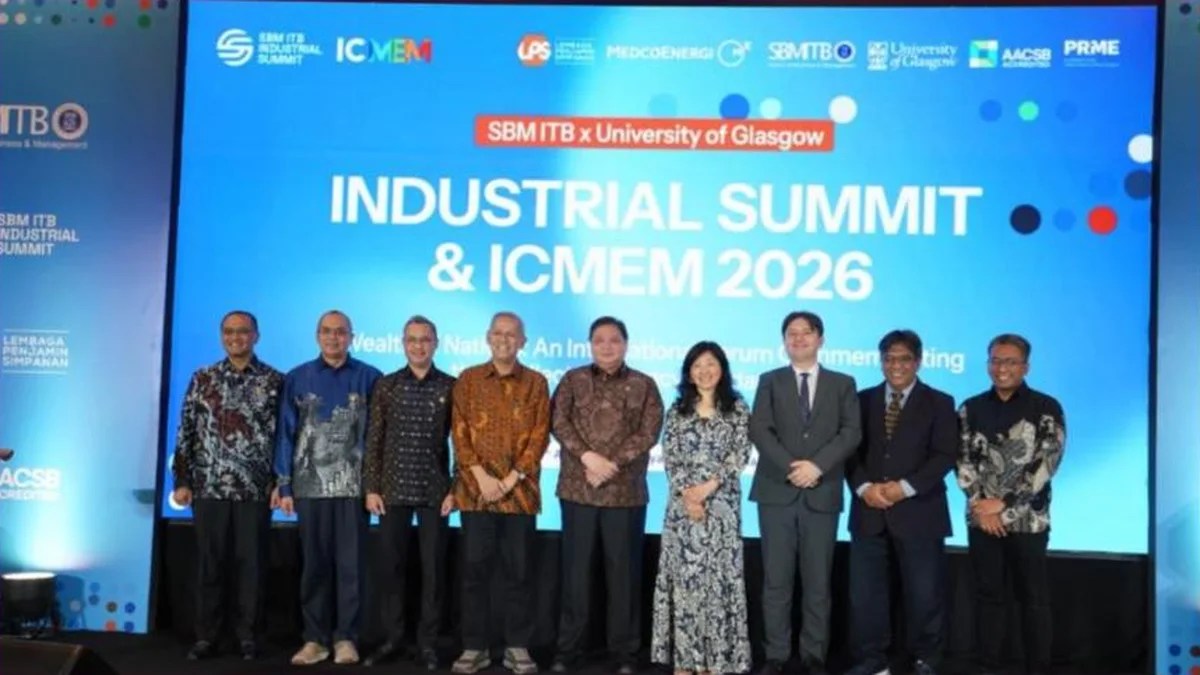
Investment in Indonesia grew approximately 7.2 percent year-on-year throughout the first half of 2026, a figure the government is using as evidence that growth engines beyond household consumption are still working amid global uncertainty. The figure was conveyed by Coordinating Minister for Economic Affairs Airlangga Hartarto during his keynote address at the SBM ITB x University of Glasgow Industrial Summit and International Conference on Management in Emerging Markets 2026 in Jakarta, according to a press release published on ekon.go.id on Wednesday, 19 August 2026.
Airlangga placed the investment achievement alongside two other figures. “In the first half of this year, Indonesia grew by 5.5 percent, and our inflation also remained low, at 2.88 percent. And in my view, that resilience continues to improve amid global economic shifts,” Airlangga said. According to the release, the government attributes this resilience to sustained domestic demand, strengthening of the manufacturing sector and supply chains, and efforts to maintain public purchasing power.
This growth serves as the foundation for a much larger target in 2027. The Ministry of Investment and Downstreaming/BKPM has set an investment realisation target of Rp2,322 trillion for next year, up 13.8 percent from the 2026 target. In a press release published on bkpm.go.id, Minister of Investment and Downstreaming and Head of BKPM Rosan P. Roeslani said the key to achieving this lies in licensing. “The programme focus of the Ministry of Investment and Downstreaming/BKPM next year is to provide greater licensing certainty,” Rosan said. The ministry is preparing the Online Single Submission system version 2.0 and running the Direct Construction Investment Facility programme, which allows investors in 62 industrial estates to build in parallel with the permit process.
Another foundation being highlighted is downstreaming, the policy requiring raw materials to be processed domestically before export so that their sale value increases and the processing industry grows. The government states that the policy does not stop at increasing export value but is directed at deepening the industrial structure through the development of derivative products, including batteries and electric vehicles. The extent to which the programme is progressing is reflected in a Coordinating Ministry for Economic Affairs note from last week, which mentioned that 26 downstreaming projects have commenced construction.
Airlangga linked the industrialisation agenda with the smallest business actors. “Our industrialisation efforts are also inseparable from the millions of small enterprises we have. We have around 25 million micro and small enterprises integrated into the digital ecosystem. In addition, we are also delivering the People’s Business Credit (KUR) programme covering around 4.6 million debtors, of which 60 percent of disbursement is directed towards productive activities,” he said.
The claim has a more detailed background in a Coordinating Ministry for Economic Affairs press release dated 11 August 2026. Credit for micro, small, and medium enterprises in June 2026 was recorded at Rp1,519.1 trillion, growing 1.05 percent year-on-year, improving from 0.60 percent in May 2026 — growth that is far slower than overall banking credit. On that occasion, Airlangga proposed raising the total MSME financing target to Rp2,000 trillion. The digital side is supported by QRIS, whose users have reached 66 million with 44 million merchant outlets, with transaction trails used as a basis for assessing creditworthiness for business actors without banking track records.
Spokesperson for the Coordinating Ministry for Economic Affairs Haryo Limanseto cited the strength of domestic demand as an asset for national industry. “With domestic consumption reaching around 54–55 percent of the economy, Indonesia has significant room to strengthen production capacity, expand supply chains, and increase industrial added value domestically,” Haryo said.
“Regarding global transformation, this is an opportunity to build national competitiveness, financial stability, digital transformation, and global integration,” Airlangga said.
All of these agendas are being tested by targets already agreed between the government and the DPR in the basic macroeconomic assumptions of the 2027 State Budget Draft: economic growth of 6 percent, inflation of 2.5 percent, poverty rate of 6–6.5 percent, and open unemployment rate of 4.3–4.87 percent. The gap between the 5.45 percent realisation in the first half of this year and the 6 percent figure next year is the distance that must be closed by investment, downstreaming, and industry that today is only at the construction stage.
Source: jawawa.id (https://jawawa.id/newsitem/airlangga-investment-in-first-half-of-2026-grows-7-2-percent-1787133016)
Originally published by cekricek.id (https://cekricek.id/investasi-semester-i-2026-tumbuh-7-2-persen/), translated from Indonesian