
Airlangga: Indonesia prioritises solar-based industrial transformation
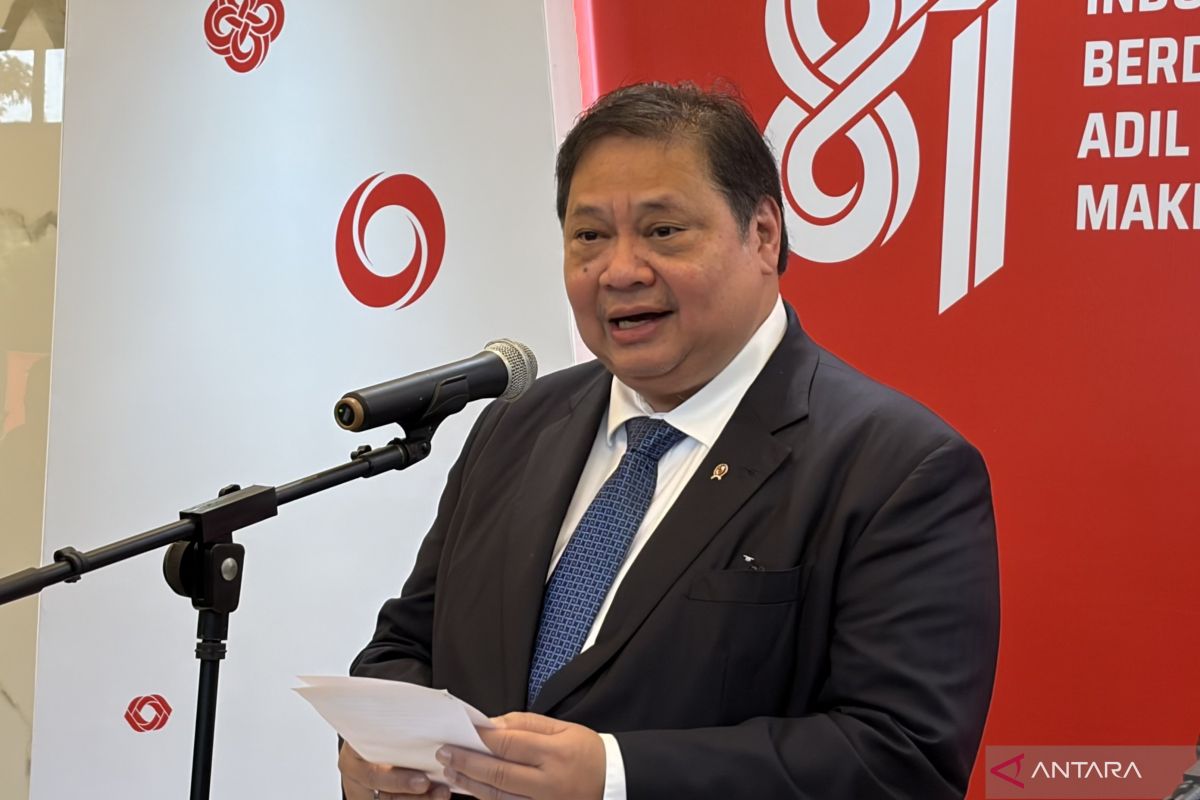
Coordinating Minister for Economic Affairs Airlangga Hartarto has said Indonesia is prioritising a greener industrial transformation based on solar power.
“In line with President Prabowo’s direction, our priorities also include green energy, particularly the transformation towards a solar-based industry, with a capacity target of around 100 gigawatts (GW) within a period of 2-3 years,” Airlangga said in Jakarta on Thursday.
President Prabowo Subianto has set a target of increasing solar power generation capacity to 100 GW as a strategic government measure to reduce dependence on fossil fuels while supporting the ambitious goal of sourcing 100 percent of electricity from renewable energy within the next 10 years.
The development of solar power plants has already been included in state electricity company PT PLN’s Electricity Supply Business Plan (RUPTL) up to 2034, with a target of 17.1 GW.
“In my view, this year’s priority is the diesel phase-out programme, namely converting power generation systems on small islands from diesel to solar power. This is a real need for Indonesia,” Airlangga said.
To realise this target, he said Indonesia requires cooperation from relevant stakeholders, including strategic partnerships with friendly countries such as Germany.
“This means a great deal of technology and capital goods are needed, and this opportunity is open for German participation, given that this transformation was only recently announced by the President,” he said.
Airlangga also noted that Germany is a strategic partner in the Just Energy Transition Partnership (JETP).
Indonesia, he said, has secured an international JETP funding commitment of US$21.4 billion (Rp356–359 trillion) to support the clean energy transition and decarbonisation.
“Indonesia has an allocation of more than US$21 billion, but progress has been rather slow. So far only around US$4 billion has been utilised. So we need to move faster,” Airlangga said.
Meanwhile, German Minister for Economic Cooperation and Development Reem Alabali Radovan said this is in line with both countries’ commitment to achieving the 2030 Sustainable Development Goals (SDGs).
“One of the areas where this is possible is renewable energy, where German companies bring extensive experience and technology,” Minister Radovan said.
“We also have various projects involving collaboration between academia, the public sector and the private sector. So I think this is the right step to jointly develop more sustainable solutions for the future,” she added.