
Airlangga: Downstreaming must become more technology-based through AI utilisation
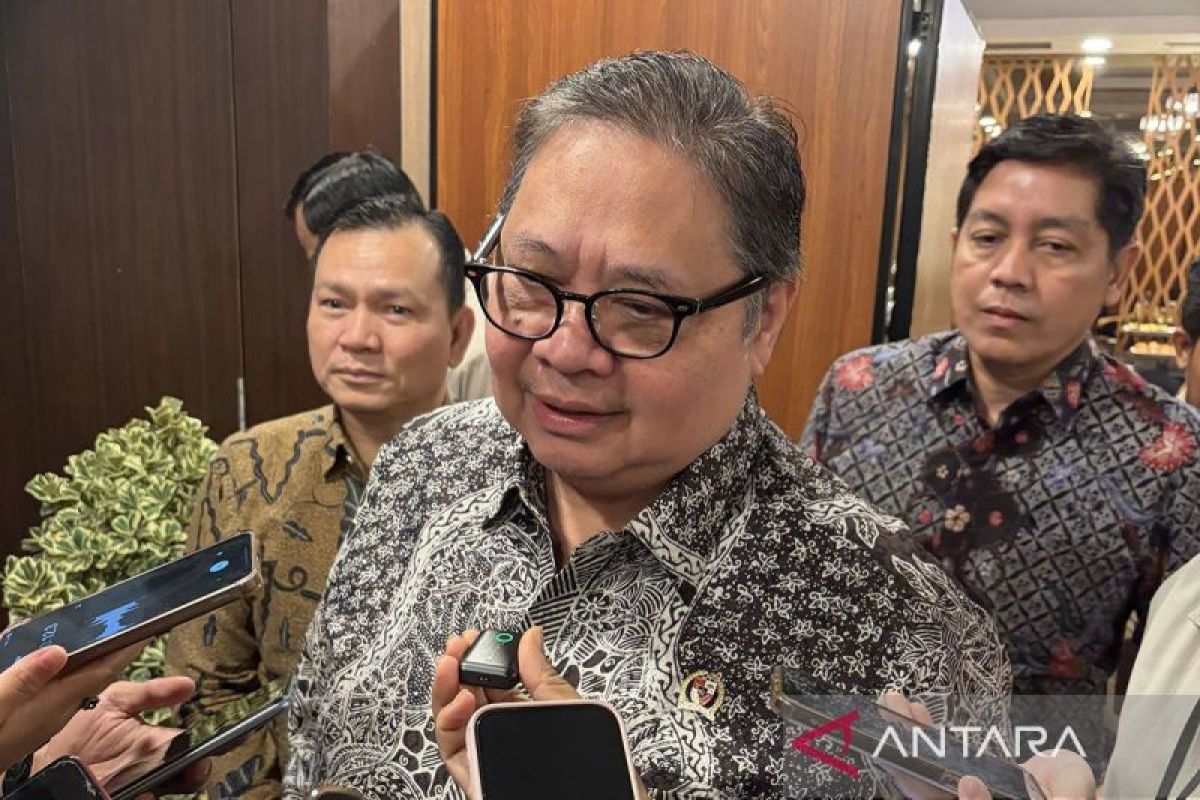
The Coordinating Minister for Economic Affairs, Airlangga Hartarto, stated that downstream processing must become increasingly technology-based through the utilisation of Artificial Intelligence (AI).
Speaking in Jakarta on Tuesday, Airlangga noted that this is essential to ensure downstream activities become more efficient and increase productivity. “Moving forward, downstreaming must also become more technology-based by utilising AI,” he said.
Furthermore, Airlangga cited several industries, including PT Vale Indonesia, which have already implemented AI, particularly in environments that are not human-friendly. “Where compliance has increased from 89 per cent to 95 per cent, and has increased additional production by 182 tonnes of nickel per year. This can only be achieved through AI,” he remarked.
“Similarly, in the manufacturing sector, through the use of machine-to-machine learning with the Internet of Things (IoT) and Industry 4.0. Now, even during power outages, factories can continue to operate because they are using automation,” he added.
He assessed that AI will act as a game changer and establish new industries, such as the data centre industry, supported by Indonesia’s potential in terms of land, energy, water, and the domestic market.
Furthermore, Airlangga stated that the development of the digital economy must be accompanied by the availability of high-quality data and the strengthening of human resources. Through ASEAN cooperation in the Digital Economic Framework Agreement (DEFA), the region’s digital economy is projected to increase from approximately US$1 trillion to US$2 trillion.
Indonesia, which accounts for about 40 per cent of the ASEAN economy, has a significant opportunity to become the driver of growth for the region’s digital economy, according to him.
To support this transformation, he said the government is also continuously strengthening vocational programmes and collaboration with the business world, including the development of AI and semiconductor talent.
Indonesia’s economic transformation, he continued, needs to progress from agriculture to industry, and then towards digitalisation and high-value-added services.
Strengthening downstreaming, industrialisation, green energy, and digitalisation are key to increasing national productivity and competitiveness, as well as opening opportunities to achieve 8 per cent economic growth.
“So, these are the opportunities that we continue to encourage. The government continues to strengthen cross-sector coordination and invites the business community to work together to build upon these opportunities,” said Airlangga.