
Airlangga: Digital payments support national trade transformation
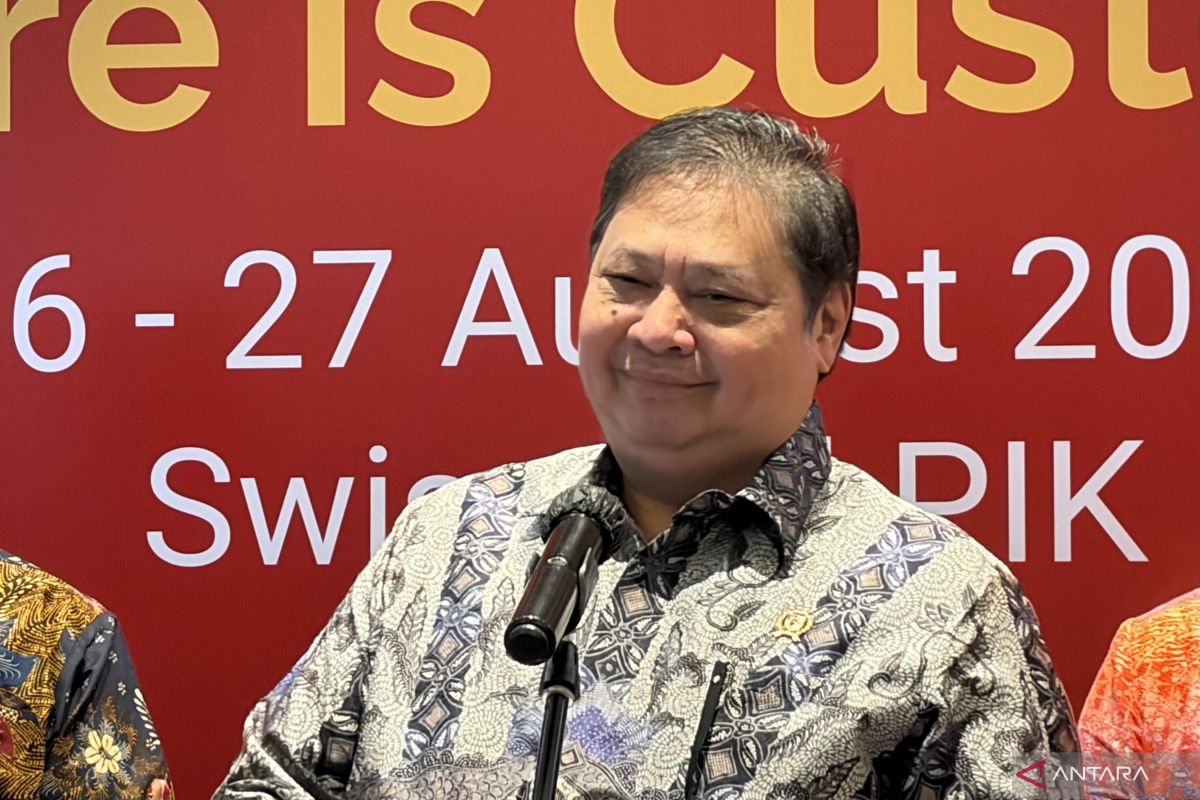
Coordinating Minister for Economic Affairs Airlangga Hartarto has said that the development of digital payments plays an important role in supporting the transformation of national trade.
Airlangga said this is in line with data from Bank Indonesia (BI) showing that users of the Indonesian National Standard for Quick Response Code (QRIS) had reached 65.77 million people as of June 2026, providing greater convenience for businesses and consumers in a more inclusive and seamless manner.
“We see that the QRIS payment system has been used by 65.77 million users and accepted by 44.86 million merchants, with 96.68 percent being micro, small and medium enterprises (MSMEs),” he said in Jakarta on Wednesday.
Furthermore, Airlangga said that this digitalisation development has become one of the important foundations for building an increasingly efficient and inclusive trade ecosystem.
“Of course we encourage trade that is more modern, comprehensive, structural and adaptive,” he said.
In addition, he said that strengthening domestic trade is also in line with the role of consumption as one of the pillars supporting national economic growth.
Airlangga said that in the second quarter of 2026, household consumption grew by 5.06 percent year-on-year (yoy) and contributed 53.32 percent to gross domestic product (GDP).
Meanwhile, the Consumer Confidence Index (IKK) in July 2026 stood at 116.8, remaining above the optimistic threshold of 100.
On the other hand, Spokesperson for the Coordinating Ministry for Economic Affairs Haryo Limanseto added that strengthening the trade sector requires a more comprehensive look at changes in consumption patterns and the development of the business ecosystem.
“Trade transformation is not only about increasing shopping activity, but also about how to create an ecosystem that connects consumers, businesses, domestic producers, as well as payment and distribution systems,” said Haryo.
“With an increasingly integrated ecosystem, the potential of shopping tourism and domestic consumption can provide greater added value for the national economy,” he added.