
Airlangga: Decile category indicators based on economic survey and DTSEN
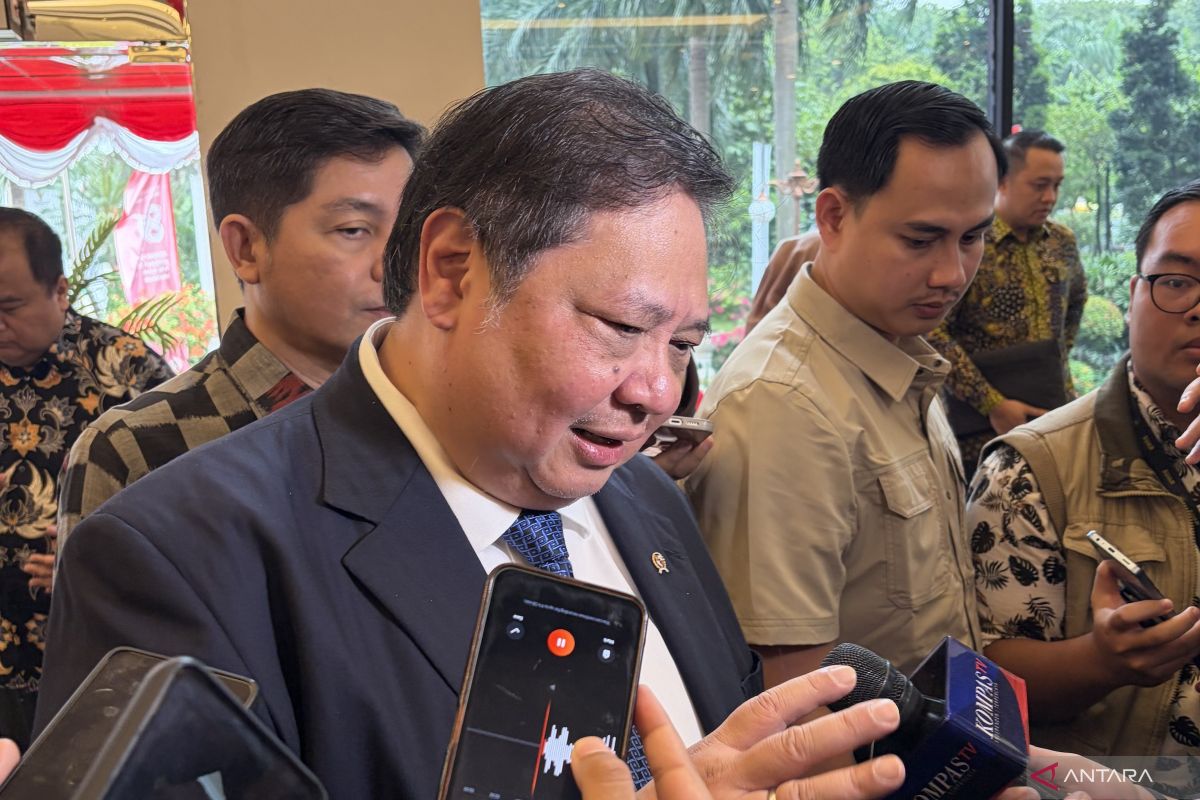
Coordinating Minister for Economic Affairs Airlangga Hartarto has said that decile category indicators are based on the economic survey and the National Socio-Economic Single Data (DTSEN).
“An economic survey is currently being conducted. Previously, specifically for economic deciles, the basis was DTSEN, and now the policy for social assistance (bansos) uses one data source from DTSEN,” said Coordinating Minister Airlangga at the Office of the Coordinating Ministry for Economic Affairs in Jakarta on Thursday.
He further said that data is dynamic, so it is necessary to wait for the results of the economic survey, which he said is being carried out.
“The economic survey is now being conducted; later we will see what the data looks like. Data is dynamic in nature. The survey is being carried out,” said Airlangga.
DTSEN itself is a government database containing social and economic conditions as well as community welfare rankings.
The data was formed by combining a number of government databases and then matching them with population data. The data can also be updated periodically so that the recorded conditions of the community are more in line with the latest situation.
Because the socio-economic conditions of the community can change, decile positions are not always permanent. Changes in employment, housing conditions, asset ownership or other socio-economic factors can affect data updates.
Meanwhile, the government uses social and economic data to determine the targets of various social assistance programmes, or bansos. One term that often appears in this process is decile.
Currently, decile data is part of DTSEN. The data is used by the government as one of the bases for determining the targets of social protection programmes.
The Ministry of Social Affairs’ Cek Bansos data includes a number of variables, such as employment, education, housing conditions, electricity capacity, and asset ownership.
This means that a person with a certain income does not necessarily automatically fall into a particular decile. The overall social and economic conditions of the family are also taken into account.
Based on the Ministry of Social Affairs’ Cek Bansos data, deciles 1 to 4 are groups that can be proposed as recipients of the Family Hope Programme (PKH) and the basic food programme.
Meanwhile, decile 5 has a different position. Official Cek Bansos data states that the decile 5 group can be proposed as participants in the Health Insurance Contribution Assistance Beneficiaries (PBI-JK) scheme.
Deciles 6 to 10 are groups with increasingly higher levels of welfare. Decile 10 is in the group of the top 10 percent of families with the highest level of welfare.