
Airlangga: Danantara's RKAT Revised to Align with DSI and DDMF
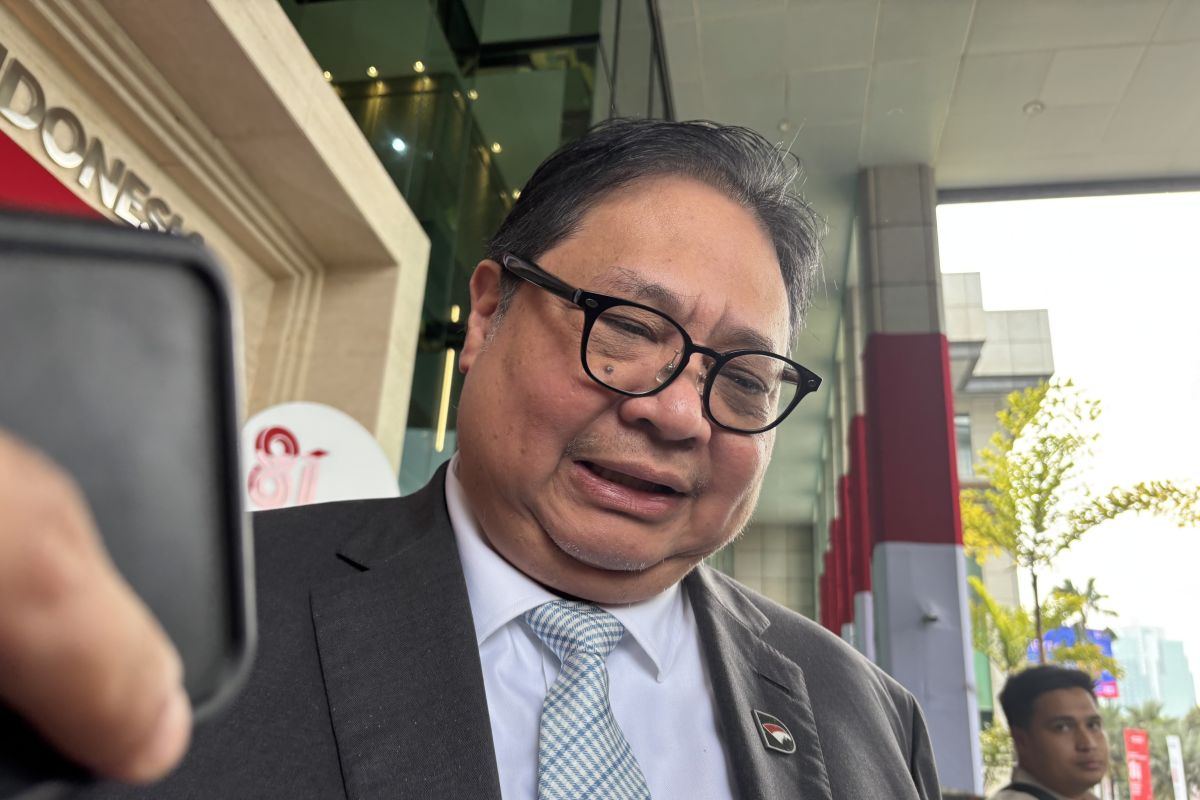
Coordinating Minister for Economic Affairs Airlangga Hartarto has revealed that the annual work plan and budget (RKAT) for Danantara Indonesia is being revised to adjust to several priority programmes. The adjustments include consideration of the establishment of PT Danantara Sumberdaya Indonesia (DSI) and the Danantara Development Management Fund (DDMF).
Speaking to journalists after a Danantara supervisory board meeting at Wisma Danantara in Jakarta on Thursday, Airlangga stated that the meeting approved the RKAT changes to meet the needs of DSI and DDMF. He noted that the process of forming DSI’s organisational structure is still ongoing, so a final decision has not yet been reached, although the budgeting format for directors and commissioners has been completed.
Previously, President Prabowo Subianto stated that PT DSI, a newly formed state-owned enterprise tasked with managing the export of several strategic commodities, had managed state foreign exchange reserves amounting to US$10.5 billion within a month and a half of its formation. During a plenary cabinet session at the State Palace in Jakarta on Monday, President Prabowo explained that DSI was established as a strategy to halt the outflow of national wealth through illegal export practices, such as under-invoicing and transfer pricing.
Meanwhile, CEO of the Danantara Investment Authority, Rosan Roeslani, said the DSI system is capable of detecting under-invoicing through cross-ministerial and institutional data integration. The system integrates data from the Directorate General of Customs and Excise, the Ministry of Trade, the Ministry of Industry, the Ministry of Energy and Mineral Resources, and other relevant agencies, enabling the matching of price data, export volumes, customs duties, and taxes. Since the system was trialled, the average data discrepancy, which previously stood at around 30 percent, has significantly narrowed. DSI is currently monitoring the export of coal, palm oil, and ferroalloys along with their derivative products as the initial phase of implementing the one-door export policy, with a full evaluation period set to run for three months before full implementation on 1 September 2026.