
Air Quality in West Kalimantan Remains Dangerous, Visibility Below 1 km
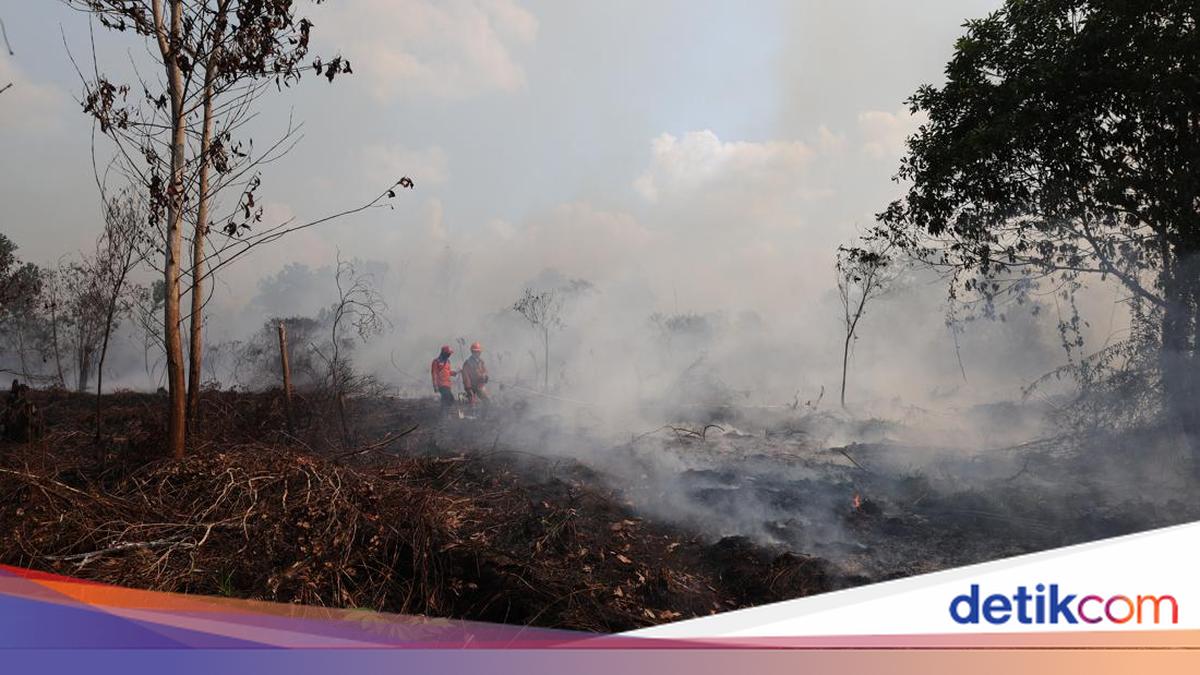
The National Disaster Management Agency (BNPB) has revealed that air quality in several regions of Kalimantan remains dangerous due to forest and land fires (karhutla). BNPB stated that in West Kalimantan, air quality is still in the hazardous category, with visibility reduced to less than one kilometre.
“In West Kalimantan, we have found 46 hotspots with a burnt area of over 528 hectares. Our team has successfully extinguished more than 354 hectares, but air quality remains dangerous with visibility below 1 km,” said the Acting Head of BNPB’s Data and Information Centre, Berton SP Panjaitan, during a press conference on Thursday (3/9/2026).
He noted that firefighting efforts are being conducted through both ground and air task forces, having successfully managed to extinguish more than 352 hectares of land.
“As we have stated, peatlands are making these fires difficult to extinguish. Because of the nature of peat, once it burns to a certain depth—up to 4 or 5 metres underground—it becomes extremely difficult to dampen and fully extinguish the flames,” he explained.
“We require vast amounts of water, and this also contributes to the heavy smoke, which reduces visibility,” he added.
Berton stated that the prolonged period without rain in West Kalimantan poses a significant challenge to managing the forest fires. He mentioned that the lack of rain cloud formation is making the extinguishing process increasingly difficult.
“Teaching and learning processes are still continuing online,” he said.
Furthermore, BNPB recorded 72 hotspots with a burnt area reaching approximately 739 hectares, of which more than 459 hectares have been successfully extinguished. “The air quality is unhealthy, with visibility at only 2.8 km,” he said.
Nevertheless, he noted that school activities in Central Kalimantan are still proceeding as usual. BNPB has advised the public to wear masks correctly.
“Teaching and learning activities in schools are still running as normal, though it is highly recommended to wear masks correctly. Public activities are also continuing as usual, and we continue to advise the use of masks,” he explained.
Meanwhile, in South Kalimantan, there are 31 hotspots with a burnt area of approximately 551 hectares. Of that amount, about 103 hectares have been extinguished. “Air quality ranges from moderate to unhealthy, with visibility below 9 km,” said Berton.
In Riau, he stated that the number of hotspots has decreased significantly to six. However, the burnt area still reaches 159 hectares, with 39 hectares successfully extinguished. “Air quality remains in the moderate to unhealthy category, with visibility above 9 km,” he said.
In Jambi, BNPB recorded seven hotspots with a burnt area of 18.5 hectares, of which 15.5 hectares have been extinguished. He stated that air quality in Jambi is in the moderate to unhealthy category, with visibility at approximately three kilometres.
Meanwhile, BNPB recorded 61 hotspots with a burnt area of approximately 400 hectares in the Nusantara Capital (IKN). The affected areas include the Kutai Kartanegara and Penajam Paser Utara regencies.