
Air Quality and the Direction of Indonesia’s Energy Transition
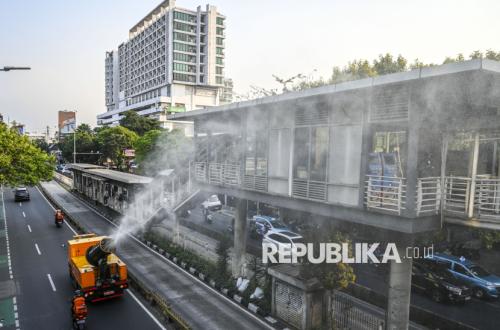
Air quality is the most honest measure of government performance: it cannot be polished with bureaucratic language, nor does it care how many policies have been introduced. When the air is classified as unhealthy, something needs to change in the way the government operates. The problem, then, is not a lack of policies, but the failure to control emissions sources optimally, using measurable and transparent methods and co-ordinated action across regions.
According to IQAir data from the past five months, Jakarta’s air quality has consistently been in the red and orange categories, with PM2.5 concentrations reaching 17.6 times the World Health Organization (WHO) guideline level. Meanwhile, AQin data recorded Jakarta’s PM10 level at 1.6 times the WHO guideline as of 22 October 2026.
PM2.5 and PM10 are very fine pollution particles suspended in the air. These particulates are not merely indicators of dirty air; they can also act as “vehicles” for microorganisms such as viruses, allowing them to survive longer outside a host and penetrate human lungs.
A substantial body of research has established a link between air pollution and an increased risk of respiratory infections, including influenza. A time-series study in China published by ScienceDirect in September 2026 found that short-term exposure to PM10, NO2 and SO2 over one to two days could increase the risk of infectious respiratory diseases, including influenza.
We therefore need to recognise that influenza is influenced not only by individual health, but also by air quality and climate change. In Indonesia, the Ministry of Health announced increased influenza activity in the country and across South-east Asia in September 2026, alongside worsening air pollution caused by El Niño and forest and land fires.
The Ministry of Health’s sentinel surveillance results showed an influenza positivity rate of 56 per cent in Indonesia in the 38th week of 2026. Of 265 specimens tested through sentinel surveillance, 148 were positive for influenza, with Influenza A the dominant virus. Although the ministry said influenza levels in Indonesia remained within the medium range, the increase should not be taken lightly. Unlike a common cold, Influenza A can develop into serious complications such as pneumonia, respiratory failure and even death.
The public has long called on the government to clean up Indonesia’s air. On 16 September 2021, the public, represented by the IBUKOTA Coalition, won a citizen lawsuit concerning the right to clean air at the Central Jakarta District Court. The ruling was upheld by the Jakarta High Court in 2022. The government’s appeal to the Supreme Court was also rejected in November 2023, under Decision No. 2560 K/Pdt/2023, making the ruling final and binding.
The court ruling made clear that air-quality standards must be improved to protect vulnerable groups, and that this is the government’s responsibility. Required measures include monitoring and controlling emissions, compiling an inventory of pollution sources across regions, and strengthening co-ordination between regions and institutions.
Yet three years on, the public has won the right to clean air in court, while air quality in everyday life has yet to reflect that victory.
A high-emissions energy system
The energy and transport sectors are among the biggest contributors to Indonesia’s worsening air quality. The World Bank’s 2026 report, Clearing the Air in Greater Jakarta: Cost-Effective Solutions for Air Quality Management, underscores that air pollution in Jakarta and its surrounding areas cannot be addressed solely by controlling motor vehicle emissions. The report highlights industrial activity and power plants, which together accounted for around 50 per cent of PM2.5 emissions in Greater Jakarta in 2024.
A report by the Centre for Research on Energy and Clean Air (CREA) also shows the scale of the health burden caused by air pollution from power plants, industry and transport. It estimates that around 1,600 deaths linked to air pollution occurred on Java, out of approximately 2,000 deaths attributed to these emission sources across Indonesia. The findings further underline the need to tackle pollution systematically, rather than relying only on interventions focused on individual behaviour.
One root cause is Indonesia’s dependence on fossil fuels. Around 80 per cent of national electricity generation still comes from coal and gas. In transport, most vehicles also run on petrol and diesel. This dependence prolongs public exposure to pollutants from fossil-fuel combustion and makes it more difficult for Indonesia to cut greenhouse gas emissions.
These figures show that air pollution is an environmental issue as well as a health and economic one. When industry and power plants account for a large share of particulate emissions, air-pollution controls must directly target those sources. The public should not continue to bear the health impacts and economic losses caused by industrial activity that is not being adequately regulated.
The government has repeatedly stated its commitment to achieving carbon neutrality, including by accelerating 100-gigawatt (GW) solar power projects and continuing incentives for electric vehicles. This is welcome news for efforts to improve air quality. But commitments alone are not enough unless they are translated into legally binding policies and regulations.
The government has described the 2025–2034 Electricity Supply Business Plan (RUPTL) as its greenest yet. However, the plan still allows for 6.3 GW of new coal-fired power capacity and 10.3 GW of gas-fired capacity, together equivalent to 24 per cent of the total targeted increase in electricity capacity. These planned additions of high-emissions power generation risk keeping sources of pollution in place for the next two decades.
In transport, even as the government aspires to become a major global electric-car player, domestic policy has yet to show a clear path towards ending dependence on fossil fuels. Expanding biodiesel to a 50 per cent blend (B50) would continue Indonesia’s reliance on diesel, which contributes to pollution in densely populated cities.
Other solutions proposed by the government also carry emissions concerns. The government plans to produce fuel from coal, following an earlier proposal to process coal into an alternative to LPG. It is even planning incentives to support these initiatives.
Support for this industry should be scrutinised carefully: coal mining itself accounts for 51 per cent of total national carbon dioxide emissions, not including methane emissions. The risk of increased pollution from this sector therefore remains a serious concern.
The gap between commitments and policy shows that the government’s efforts to provide clean air for Indonesians still need to be strengthened. The promised energy transition, expected to cut emissions from the energy sector significantly, will not be enough without supportive regulations. Meanwhile, poor air quality continues to threaten the public, particularly children, who represent the country’s future.
A shift to cleaner energy should not be understood merely as changing electricity sources. It must also represent a serious government effort to clean the air that has long added to the public’s health burden through a high-emissions energy system.
Energy-transition policy should include a measurable roadmap for Indonesia to end its dependence on fossil fuels and shift to low-emissions energy. It is time for the government to uphold the basic right of all Indonesians to air that is safe to breathe.
Source: jawawa.id (https://jawawa.id/newsitem/air-quality-and-the-direction-of-indonesias-energy-transition-1793371911)
Originally published by Republika (https://esgnow.republika.co.id/berita/tnpryf416/kualitas-udara-dan-arah-transisi-energi-indonesia), translated from Indonesian