
Aipda Frits Launches SIGAP, Bringing Fingerprinting Services Directly to Students in Sitaro
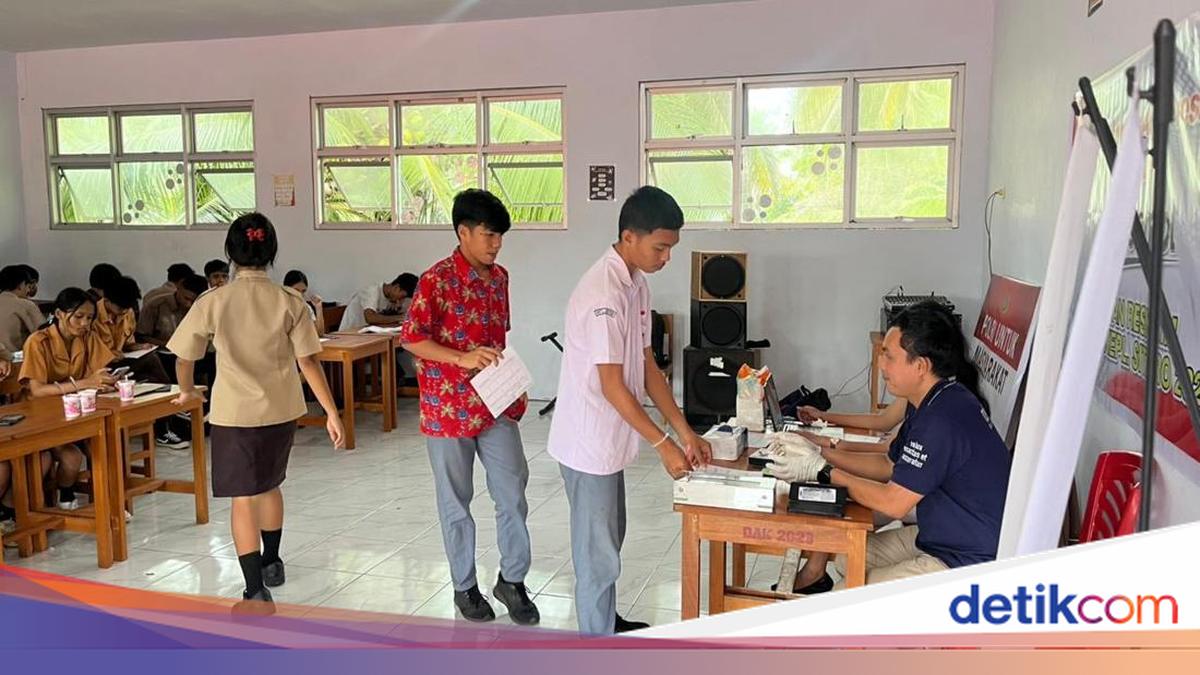
Aipda Frits Bidara is taking the initiative to provide fingerprinting services to the public, particularly students, in the Siau Tagulandang Biaro Islands (Sitaro), North Sulawesi. As the Identification Section Non-Commissioned Officer at the Sitaro Islands Police Resort Criminal Investigation Unit, he has launched the Free Precision Fingerprinting (SIGAP) Goes To School programme to reach remote school locations that struggle to access police services directly.
For his dedication, Aipda Frits has been nominated for the 2026 Hoegeng Awards. He has served in island regions for 20 years, stationed in the Talaud Islands from 2005 to 2019 and continuing his service in the Sitaro Islands since 2020.
One beneficiary of the SIGAP Goes To School programme is Juniver Kalingka, Chairman of the Student Council at SMAN 1 Siau Barat. He discussed the considerable distances between areas in Sitaro and the benefits of the programme for students.
“But through the activities carried out by Mr Frits Bidara, it is very beneficial for us,” said Juniver when contacted on Monday (16/3/2026).
Juniver explained that students usually have to visit the police station for fingerprinting. The mobile fingerprinting service programme, he said, makes it easier for students by eliminating the need to travel long distances.
“Yes, we are greatly helped, in short, by the activities carried out by Mr Frits Bidara,” Juniver added.
Contacted separately, Aipda Frits recounted the origins of the SIGAP Goes To School programme. Launched in 2024, the activities were implemented because the fingerprint database in the Sitaro Islands was still inadequate.
“So we organised one of the programmes to expand the database through the Fingerprinting Goes To School initiative. We go to remote areas, mate. Because there are many remote areas in our region, which is an archipelago. They are hard to reach. So we took the initiative to go directly to school locations, targeting schools for fingerprint collection,” said Aipda Frits.
Aipda Frits stated that fingerprinting has various benefits for students. One key use is when students apply to join the TNI and Police after graduating from high school.
“So we come to them, and with this programme, they can also be assisted,” said Aipda Frits.
He noted that fingerprinting is also useful in case investigations and pursuing criminal perpetrators. Additionally, in the event of unidentified bodies, fingerprint identification plays a crucial role.
“So when we have the database in our system, we can easily uncover cases,” he added.
Origins of the SIGAP Goes To School Programme
Aipda Frits recounted that when he was assigned as Identification Officer, he considered innovative programmes to implement. He observed that the public had long struggled to access fingerprint services due to long distances and lengthy queues.
“Many people complained, ‘Sir, could there be a programme so that we can be served in the subdistrict or village? Come to us so we don’t have to queue for so long, Sir,’” Aipda Frits recalled from his conversations with residents.
In response to this situation, he proposed the SIGAP Goes To School programme to the Sitaro Islands Police Chief. His superior supported the initiative.
“So that the public… the importance of it is that I saw it first saves time for the people, especially schoolchildren,” he said.
Besides time, Frits noted, the public also incurs travel costs to reach fingerprinting locations. With the mobile service, the public can be served efficiently without wasting much time.
“So if we go directly, at least we can help them, and then we can provide maximum service,” he added.
He revealed that distances from various areas to the Police Resort can take hours. Even from the farthest island, residents must travel up to six hours to access services at the Police Resort.
In implementing the SIGAP Goes To School programme, Aipda Frits typically coordinates intensively with school authorities first. Communication is conducted to determine the appropriate timing so that fingerprinting activities run smoothly.
“We coordinate with them on the timing, and we also convey our vision and mission for this programme. We explain it to them. So when we go to the field for fingerprint collection, the schools are very supportive,” said Frits.
Since 2024, the Sitaro Islands Police Resort team has reached seven schools. The number of students participating in the activities has reached 1,200.
“If for schools, there are already many. In our district area, almost all have been covered,” said Aipda Frits.
He expressed gratitude that the programme he runs has received a positive response from the public. Aipda Frits hopes that future SIGAP Goes To School activities can continue to reach students across all points in the Sitaro Islands.
“So the response from the public is very enthusiastic. Especially for people in remote island areas, in remote regions, they greatly appreciate this Indonesian National Police programme in particular,” he added.